
Analysis from a Human Factors Perspective - Cave Double Fatality: Calimba 2004
Introduction
This blog re-examines a cave diving double fatality from a Human Factors perspective. The event took place in System Sac Actun near Tulum, Mexico in December 2004, and is familiar to many cave divers. It was well documented at the time, and generated some spirited and controversial online discussion. It is also often used as the accident analysis case study during many cave courses in Mexico. This is the first of an occasional series of blogs that will look at some historical cave diving fatalities from a Human Factors perspective.
Accident Analysis
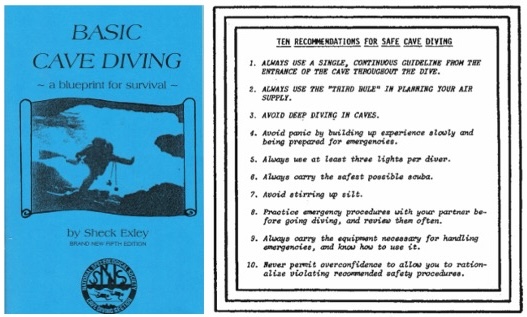
Accident analysis is an important part of all cave diving training, and one of the most significant works is Sheck Exley’s book Blueprint for Survival. Sheck was a pioneering American cave diver, educator, and safety advocate whose groundbreaking explorations and safety principles helped shape modern cave diving practices. He proposed ten rules that were based on a meta analysis of hundreds of cave diving fatalities. The Blueprint can be downloaded free of charge from the National Speleological Society Cave Diving Section website here: https://nsscds.org/blueprint-for-survival/
The traditional reasons for divers to study accident analysis include examining procedures to prevent a similar event from happening, and to seek continuous improvement of training, equipment, protocols and emergency procedures. It is vitally important that any discussion or examination of adverse events is done with compassion and humanity. As this blog from Gareth points out, it is far too easy to simply try and identify and punish those responsible. https://www.thehumandiver.com/blog/blame-or-learn A Just Culture - looking at events from a learning perspective, rather than to attribute blame - is a key facet of Human Factors in Diving.
Resources
As well as the Human Diver Blog page, there are some online resources that have a compendium of reports on cave diving fatalities:
CREER https://creer-mx.com/accident-incident-analysis/
NSS-CDS https://nsscds.org/accident-analysis/
IUCRR - https://iucrr.org/more/accident-analysis/incident-reports/
Most fatality reports from cave diving focus on the proximal cause: the diver entered the water with their CCR oxygen isolated, they went the wrong way, they ran out of gas. A more considered Human Factors approach, that looks at the wider systems and why the decisions made sense to the divers at the time, can be much more insightful and effective in avoiding future adverse outcomes.
The 2004 event - the Dive Plan
Two teams of Full Cave certified divers, one consisting of five divers and one of four, planned a dive from Cenote Calimba towards Cenote Box Chen. The five-person team (Team 1) planned to swim approximately 500m/1500ft before turning left at a Snap and Gap (a semi-permanent jump line with a carabiner, which was replaced with a T intersection after this event), marking their exit with a team cookie. From there, they would swim 20m/65ft to the Box Chen line and make a short 2m jump, using their jump spool with pink line, and use non-directional markers to indicate the exit to Calimba and their own jump spool. Team 1 then planned to follow the Box Chen line for approximately 150m/500ft to a second 1.5m/5ft jump, marking it with a jump spool containing green line. After completing that jump, they intended to swim roughly 300m/900ft clockwise to Cenote Box Chen, surface briefly to talk, and then retrace the same route on their return.
The four-person team (Team 2) planned to follow the same route, using the jump spools and markers that were already placed by the first team, to reach the Box Chen line. Once on that line, however, they intended to travel anticlockwise without making any jumps, turn the dive before reaching the Box Chen cenote, and return along the same route, ahead of the five-person team’s exit.

The Event
Team 1 entered the cave first, followed later by Team 2. The four divers of Team 2 turned the dive as planned on the Box Chen line. When they got back to the jump from the Box Chen line (to Paso de Lagarto), they removed the marker on the jump line. The Team 2 survivors reported seeing the non-directional marker cookie indicating the direction home towards Calimba via the Snap and Gap, but could not explain why they headed in the opposite direction instead, away from their exit. Survivor 1 was taking photos throughout as the team swam another 500m/1400ft, passing at least four opposing arrows. When they reached the end of the line, Casualty 1 deployed their safety spool in an attempt to connect to the Grand Cenote line, which was 20m/65ft away, and Survivor 1 followed. However at this point Casualty 2 headed back towards Calimba, followed by Survivor 2. Survivor 1 also turned round and headed back, so Casualty 1 recovered their spool and followed the other three divers back to Calimba.
Survivor 1 and Survivor 2 led the group out, eventually clipping the camera to the line just before the Box Chen jump. The pink jump spool, previously placed there by Team 1, had already been removed by the exiting five-person team. Team 2 headed across the Snap and Gap to the Calimba exit. There was some separation between the pairs, but the survivors stated that they could see the lights of the two other divers behind them. Survivor 2 started sharing gas with Survivor 1 at some point on the Calimba line, and they eventually surfaced with remaining pressures of 13/200psi bar and 35/500psi bar. The two casualties were later found together, approximately 75m/250ft from Cenote Calimba, on the ceiling with empty cylinders. Casualty 1’s long hose was deployed, their primary light was stowed, and their backup light was turned on and lying on the cave floor.
Original Accident Analysis and Recommendations
The original analysis from the NSS-CDS Safety Officer for the area identified several factors that contributed to the two fatalities. Some of these were rebutted by the IUCRR Central America coordinator, although the substance of the conclusions was broadly similar. The factors identified included:
- Confusion and disorientation on a complex dive.
- Diving with a guide, leading to an abrogation of responsibility for personal dive planning.
- Too many people were diving in too small a cave with too complex a dive plan.
- Diving beyond personal level of experience or ability.
- The two casualties had an average of 100 cave dives, which is a level of experience where they were susceptible to being “incompetent and unaware”. There is a great examination of this in Jenny’s blog here: https://www.thehumandiver.com/blog/the-dunning-kruger-effect-incompetent-or-competent-and-unaware
- Dive team members distracted by using a camera.
- Lack of awareness leading to a critical navigational error - turning left instead of right at an intersection that was created by an installed jump reel.
- Sharing critical safety equipment (spools and markers) between teams.
Diving Deeper with Human Factors
Diving fatalities are rarely attributable to a single cause, and it helps understanding and prevention to consider the wider systems, procedures and actions that contributed to the event. Considering how it made sense for those involved to make the decisions they did, as well as why it happened, contributes to learning opportunities. Doing this within a blame free just culture increases the likelihood of genuine learning, changing behaviours and preventing future adverse events.
Situation Awareness. The counterfactual “well, they should have paid more attention” is depressingly common, but as divers we can learn to recognise situations where we are susceptible to losing awareness. Fatigue, distraction and lack of (recent) experience will adversely impact awareness, and we can improve team Situational Awareness with an effective briefing that establishes a shared mental model. Slowing down and giving the “hold” signal to the team when you feel cognitive overload is a useful technique. Deliberately referencing the cave is essential for cave divers, and a simple way to think of this is as if you are recording a story on the way in, which you play back as you swim out.
Decision Making. A series of poor decisions on this dive, most significantly the navigational error at the Box Chen jump, led to a tragic outcome. Similarly to awareness, an understanding of how we, as flawed humans, make decisions can improve our chances of making the correct choice. In his book, Thinking, Fast and Slow, Nobel Prize winner Daniel Kahneman explains how human decisions are shaped by two systems: fast, intuitive thinking and slow, analytical reasoning. Understanding their interaction helps teams reduce bias and error to make better decisions. In addition, an appreciation of naturalistic decision making, where experience gives more mental models to compare and patterns to match, potentially makes real time decision making more effective.
Leadership, Followership, and Teamwork. A good team will plan together, adapt together and learn together, assisted by a solid briefing and debriefing process. As teams evolve, then the authority gradient will often reduce with a more democratic and less hierarchical approach. Followership was critical during this event - effective team members combine active support with constructive challenge, rather than simply following the leader or guide.
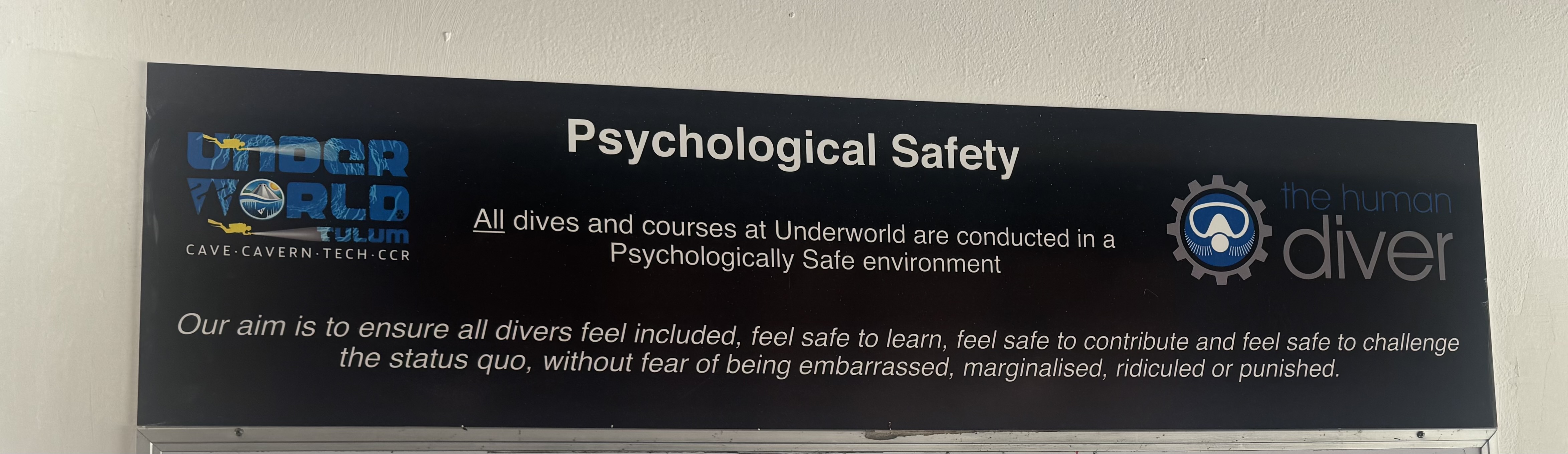
Psychological Safety. Psychological safety is a shared belief within a team that it’s safe to speak up, ask questions, admit mistakes, and express concerns without fear of embarrassment, blame, or negative consequences. Taking positive steps to provide a psychologically safe environment, that encourages honest discussion, challenge, and where leaders show vulnerability, can have a huge positive impact on dive teams. Being able to speak up during a briefing and say “I am a bit uncomfortable with a dive this complex” without feeling you have let the other team members down is a great example of having genuine psychological safety. In this case study, there were also several occasions during their cave dive, where team members chose not to challenge the leader’s decision. There was also no challenge to the plan that involved a large number of divers in each team, and the sharing of lines and markers.
Performance Influencing Factors. All divers are vulnerable to making poor decisions, especially under challenging conditions. Factors that negatively impact performance include environmental conditions, stress, and fatigue. The WITH model (Work Environment, Individual Capabilities, Task Demands, and Human Nature) is a good way to understand how outcomes are dependent on context as well as individual behaviours. Building awareness of the impact of these performance shaping factors will make dives safer and more successful. Significant factors that shaped the outcome in Calimba were the individual capabilities of the team, task demands of the complex dive, distractions of using the camera by the team leader and stress of reducing gas reserves as the team exited.
What are you going to change?
One of the most useful ways to employ accident analysis as divers is through the lens of: “what would be the outcome if my team encountered the same circumstances”. If there is any doubt, then update your procedures and protocols! This could include implementing clearer briefs and debriefs, emphasising psychological safety, considering how to conduct photo dives more safely, working harder on referencing the cave or giving some though to how you can be a better team mate, leader or follower.
The online Essentials and the “in person” Applied Skills classes from The Human Diver cover how employing these principles can improve your diving. You can sign up for Essentials at this link: HFiD: Essentials. Applied Skills classes take place regularly all over the world, and you can see the scheduled classes here: HFiD: Applied Skills. If there is not a class near you, get in touch with the Human Diver team and we can make it happen. You can also check out the youtube channel or visit the website to start your journey into Human Factors in Diving with this introduction blog.
 Lanny Vogel is a full time cave, technical and rebreather instructor trainer based in Tulum, Mexico. He is the co-owner and lead instructor at Underworld Tulum and is part of the local cave line and safety committee. He regularly speaks at dive shows on cave diving and human factors topics and has been a passionate advocate of the integration of human factors principles into dive training for many years.


