
1. The 2026 HF in Diving Conference - What Did You Miss?
In 2021, I was in quarantine in a hotel in New Zealand about to start an investigation into a military diving fatality. During that time, I watched colleagues of mine run the first VetLed Human Factors in Veterinary Medicine conference, and that inspired me to kick off the first HF in Diving Conference in Oct 2021. It was all online. 32 presentations over two days. Was it a success? I don’t know, but it was the first time something like that had been done.
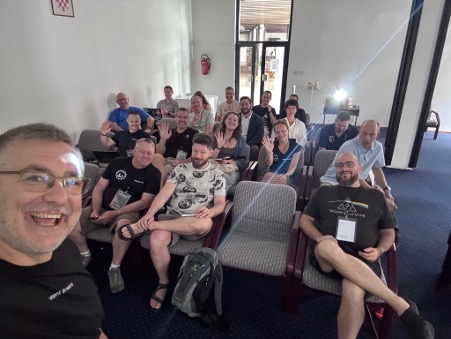
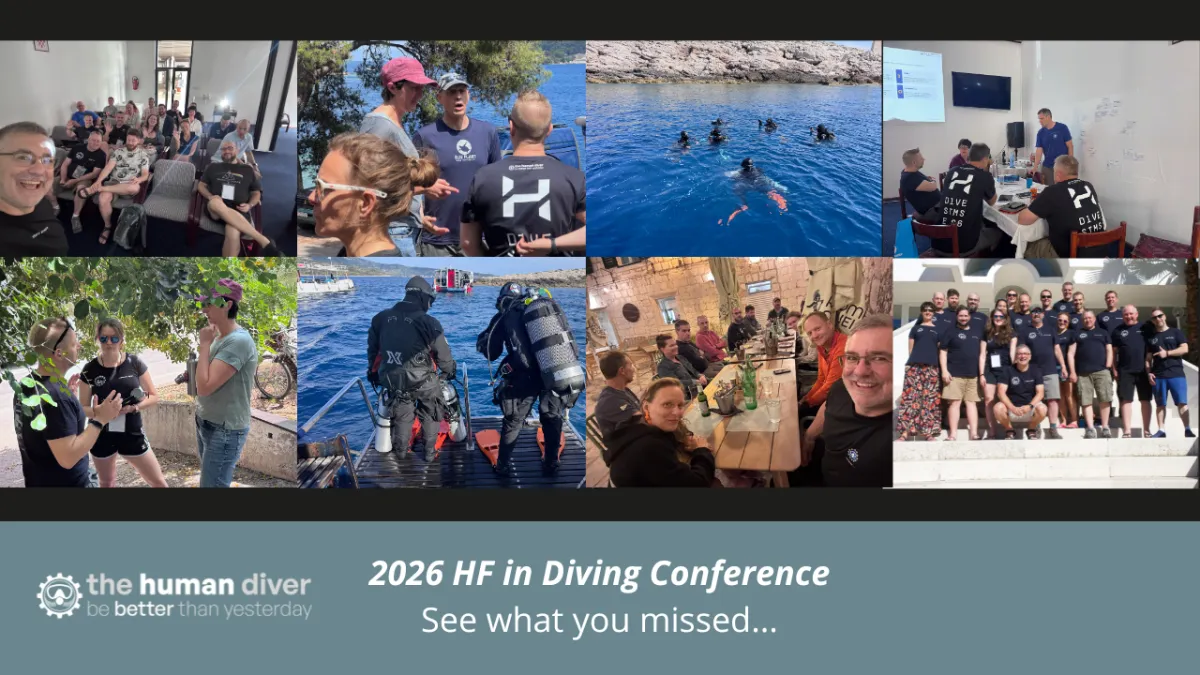
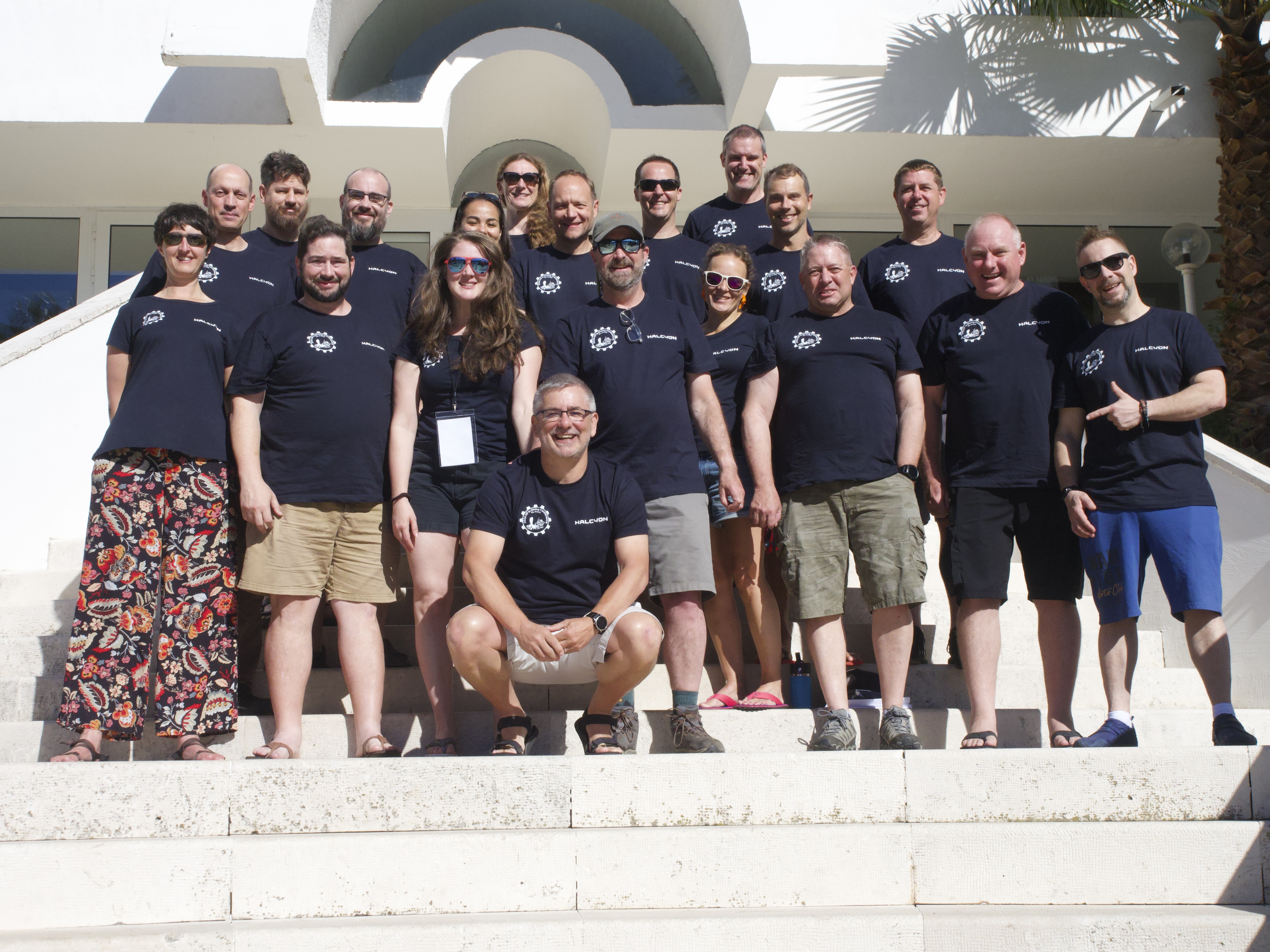
This year, on the 10th anniversary of The Human Diver, and the 5th anniversary of the original conference, we ran another HF in Diving conference. This time, in-person, on the island of Vis, Croatia. It was another experiment. In a complex, adaptive world, experiments (including critical feedback) are really the only way of seeing if something works. The notion of success and failure is based around how we frame the results.
Did it have the number of guests we wanted? No.
Did it create a feeling of ‘community of like-minded individuals’? Absolutely.
Did we learn something about running a multi-activity (conference, training, and diving) with people who had different cultures and different ways of processing information? Absolutely.
Are we all better than we were yesterday? Absolutely.
Can you have too much of a good thing? Yes. We planned to give more value than was able to be consumed and reflected up to during the time available. This burned some people out.
Do we plan to run another one in 2027? Absolutely.
Do we have lessons identified? Incoming as I type this.
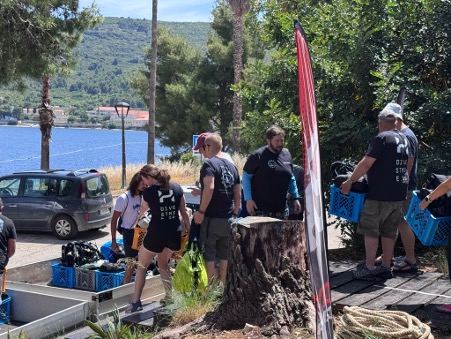
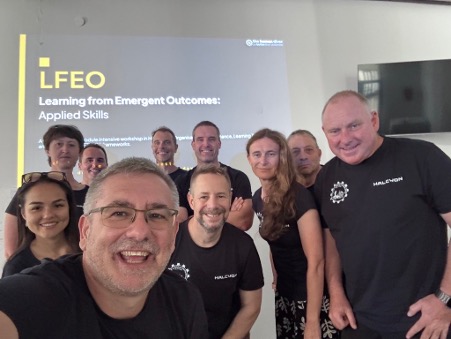
The conference was structured as a one-day conference on Sunday 31 May, with either HFiD: Applied Skills training or Learning from Emergent Outcomes: Applied Skills training in the morning, and then diving in the afternoon, with an evening presentation of Monday to Thursday. Friday was a free day. This model would allow people to learn some of the theory and practice in the morning and then apply it in the afternoon while out diving, transferring theory to practice. In the main, it worked out well. The team’s non-technical skills developed over the week through the application of structured briefing and debriefing and picking up and putting small changes in place as a consequence.
The conference also provided the opportunity for another global first. A structured ‘investigation’ programme that takes human factors, systems thinking, and modern safety science principles into account. Over four days, we went through the concepts, discovery and learning through storytelling, analysis of the event to determine how the situation developed in the way it did, and finally, each team developed three learning products on the back of the incident they were examining. The learning products were aimed at divers, diving instructors, and training agency training staff. Each stakeholder has slightly different needs and this meant the teams had to think differently.
The final event was a presentation by Dave Conlin on the Tulsamerica B-24 bomber and the identification of the remains of missing aircrew contained within; a poignant reminder of the massive loss of life during the Second World War and what we as divers can do to close the loop in terms of research and recovery.
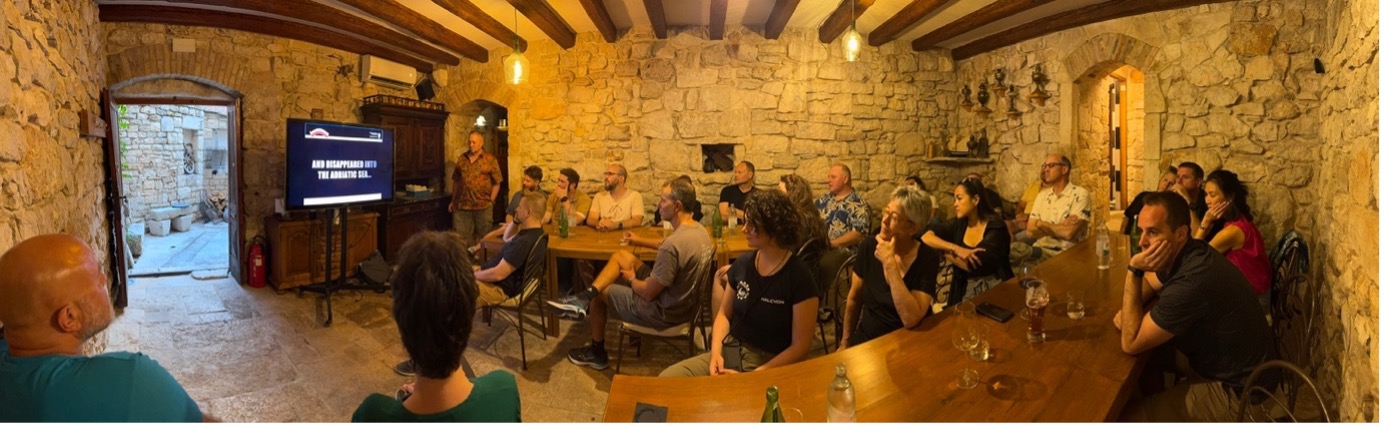
After that presentation, we moved outside for a lovely meal in a local Croatian restaurant to end the week. Some were getting up early for the first ferry of the day at 05:30

The following paragraphs summarise the presentations as they happened on Sunday. None of the presentations were recorded, however, each presenter will be writing a short blog outlining what they delivered, or what people may have got from their talk.
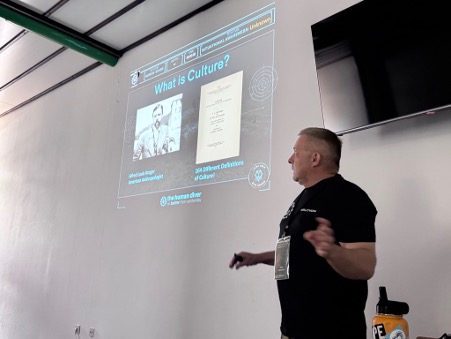
Gareth Lock — Opening Session. I set the frame: human factors isn't about blaming the last person to touch the problem, it's understanding the factors of humans, the factors affecting humans, and the systems we work inside. I used the Resilient Performance Model to show that technical skills alone leave us brittle when conditions change, that we don’t have a clear definition of good, nor do we have a structured way of looking at events to learn. I then presented some of the data available to show the slow but real growth of ‘human factors in diving’ language across the industry over the last decade. The key theme throughout - be better than yesterday.
Dr Dave Conlin — High-Performance Teams in Diving. Dave told the story of his own near-fatal rebreather incident, where two failing cells outvoted the one telling the truth. What kept him alive wasn't technology or policy, it was a team that had planned for the bad day before it arrived. He then walked through a two-year investigation built to find a culprit rather than learn. A powerful, human lesson in the difference between holding someone accountable and actually learning from an event.
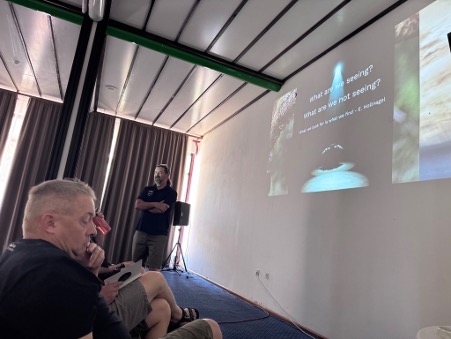
Steve Smith — Don't Wait (For Incidents to Occur). Steve, from outdoor and experiential education, had the room view a real event first through a "find the cause, fix the cause" spotlight, then through the five HOP principles. His message: don't wait for tragedy to learn. Near misses are lottery tickets already paid for, and successes teach us as much as failures, captured in his question "were we lucky or were we good?" Steve wrote the book I wish I had, and as such, everyone got a copy of that book as a part of their goodie bag for the conference. His tagline says it best: do safety with people, not to people.
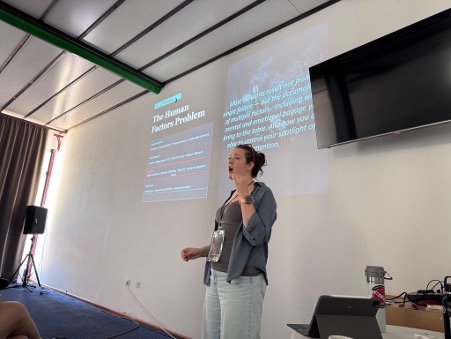
Connor Tate — From Attention to Action. Connor showed where the field of human factors and human performance in diving is heading. Her depth-certified, in-mask eye-tracking system uses where and how a diver looks to detect states we can't currently see in ourselves: hypercapnia, fatigue, narcosis, the onset of panic. Experts move their gaze deliberately; novices scatter. She shared early work modelling how different divers weigh personal safety, team safety and enjoyment under pressure, and opened the technology to the community to ask where it would genuinely help. This was a fascinating insight showing how divers within the same ‘class’ e.g., tech, military, recreational will view an event differently and make different decisions. Very relevant to the recent online judgements around the tragic Maldives fatalities.
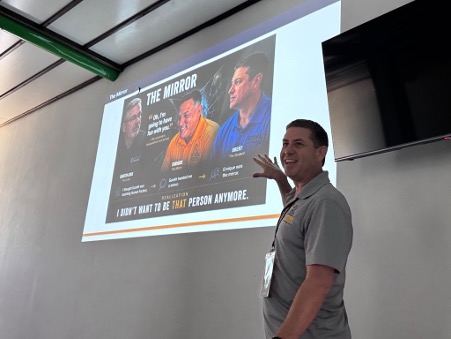
Brent Webb — Making HF Critical to a Profitable Scuba Business. Brent made the commercial case for applying Human Factors in Diving. He arrived at a Human Diver course expecting it to fix his staff and found it fixed him first. His framing stuck: human factors is the operating system for the business, the Process Communication Model (a communication, leadership, and psychometric tool) is the interface for how people talk, and retail, training and travel sit on top. He linked psychological safety directly to performance, building a team where "I don't know" and "I made a mistake" can be said aloud. This has led to Scuba Adventures winning many awards for performance as an operation.
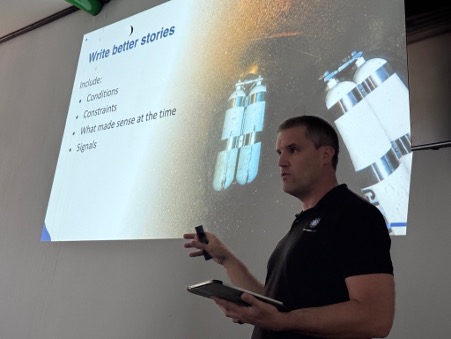
Mike Mason — Before the Report Is Written. Mike turned the lens on social media and the posts/comments made online. This is where many (most?) divers learn about incidents and as such is a critical element of informal learning. Social media provides a double-edged sword. On the one hand, compresses complex events into simple, outcome-focused stories, strips the context that was present at the time, and rewards outrage because that's what the algorithms amplify, creating an illusion of learning. On the other hand, it has reach for the positive aspects of what The Human Diver aims to deliver. His practical fix: write and read stories differently, and replace "she should have checked her gas" with "what might have made that hard to pick up?" Mike’s presentation was mentioned numerous times during the LFEO course.
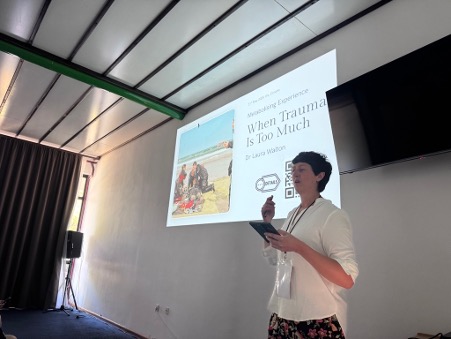
Dr Laura Walton — Metabolising Experience. Laura is a clinical psychologist operating in the diving space and gave the conference day its most necessary contribution. She described how the brain normally metabolises experience, sorting and filing it like clearing lines in Tetris so we can recall an event without reliving it. Trauma occurs when what happens overwhelms our capacity to cope, and the brain hits pause instead of processing. Her message was about building capacity and margin, and a clear reminder that psychological recovery is part of safety, not separate from it.
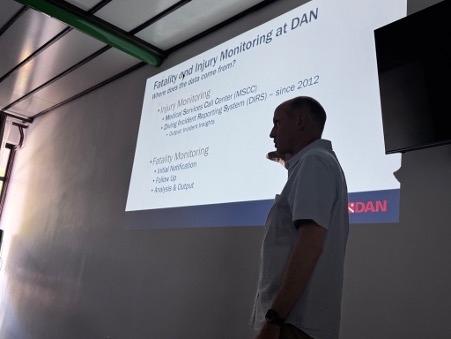
Andrew Leonard — Insights from DAN's Global Fatalities and Injury Monitoring. Andrew is a Human Diver candidate instructor and active supporter of the DAN team in the US. He brought the data-level view, and was candid about the gap between where we'd like to be and where we are. There is a heavy reliance on second-hand information and significant under-reporting which means we have very little clarity of the scale of the problem, recognising that absence of data doesn’t mean absence of an issue. He described efforts to widen investigation beyond medical and equipment analysis to include human factors and environment, and the real limits of people and funding that hold that back.
Gareth Lock — Closing Session. I brought the session to a close, drawing a thread from every talk, then widened out to why change is slow but worth it, from Semmelweis being ridiculed for handwashing to Atul Gawande on checklists. Small changes compound. He shared two stories that reached him that week as proof that people now trust The Human Diver to tell a story in a learning way, not a blameworthy one. I ended by saying that the ultimate goal for The Human Diver is to create global change in the diving industry around diving safety, diver performance, and learning from emergent outcomes by applying human factors and system safety thinking. That requires a community of committed, like-minded individuals, and part of that community was sitting in front of me. We are the change agents.
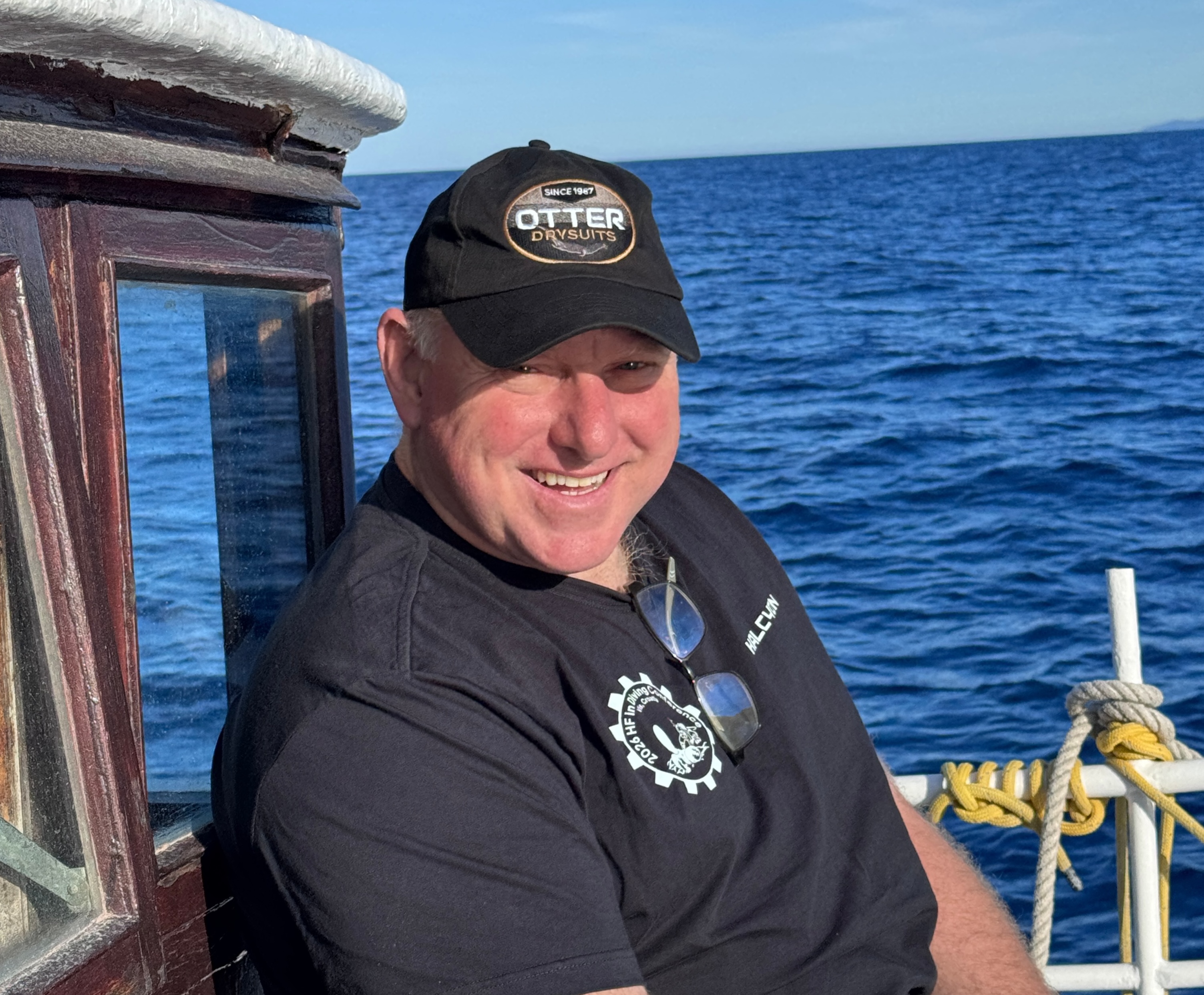
Lanny Vogel - Diving Deeper Into a Fatal Cave Diving Event With Human Factors. Lanny, who wrote the interim report for the Line and Safety Committee, walked the room through a fatal cave dive in Mexico's Sac Actun system, where a cavern guide with limited rebreather experience and no CCR-cave training died, most likely from hypercapnia rather than oxygen toxicity. Rather than stopping at the obvious "lack of training," he used a PETTEOT framework to surface the deeper context: the normalisation of pushing scrubber limits, untrained divers being allowed into caves, a team that split underwater and lost its margin, and an authority gradient where the least-qualified diver was also the local professional. He argued every cave course should include rescue training, and modelled curiosity over judgement even when challenged on social media. His closing question is one every team should ask: if this exact sequence happened to us, would it end well? If not, something needs to change.
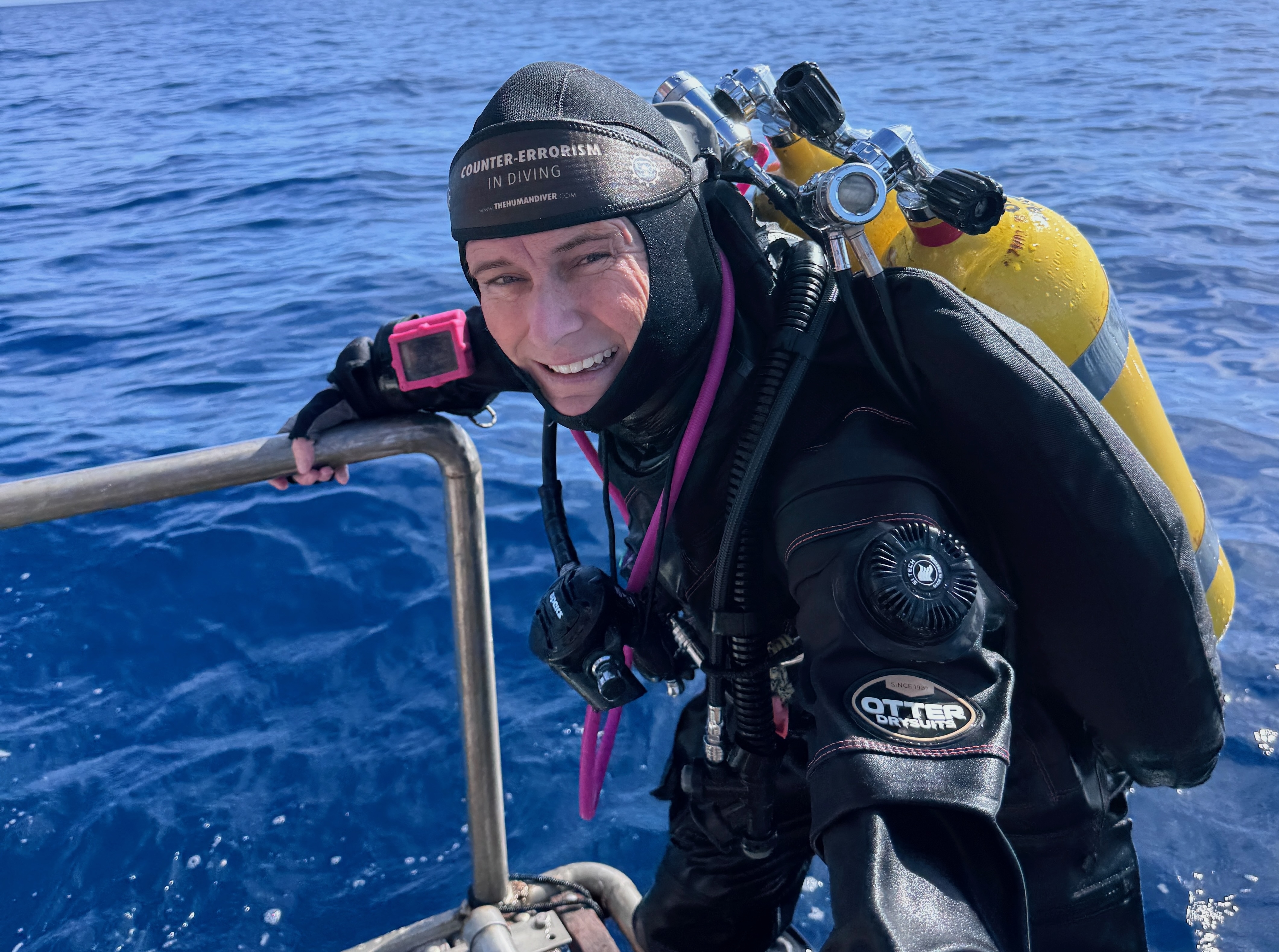
Jenny Lord - The Bits We Actually Use: Human Factors in Real Diving. Jenny, who has taught for 25 years across diving and outdoor education, used a cooking metaphor to capture the difference between competent and superb instruction: experts work from the same recipe books as novices, but know the tiny "herbs and spices" that transform the result. She shared the craft she's added over the years, including the three caveats she sets at the start of every course, can you do the skills to the right level, will you keep your cert card honest, and will your attitude keep you and others safe, and her habit of treating feedback as a gift. She showed how the language of capacity and situation awareness lets her "hold the mirror up" so students see their own limits and self-assess honestly, and how simple, well-chosen debriefs turn tense liveaboards into harmonious ones. For instructors, it was a masterclass in making psychological safety practical.
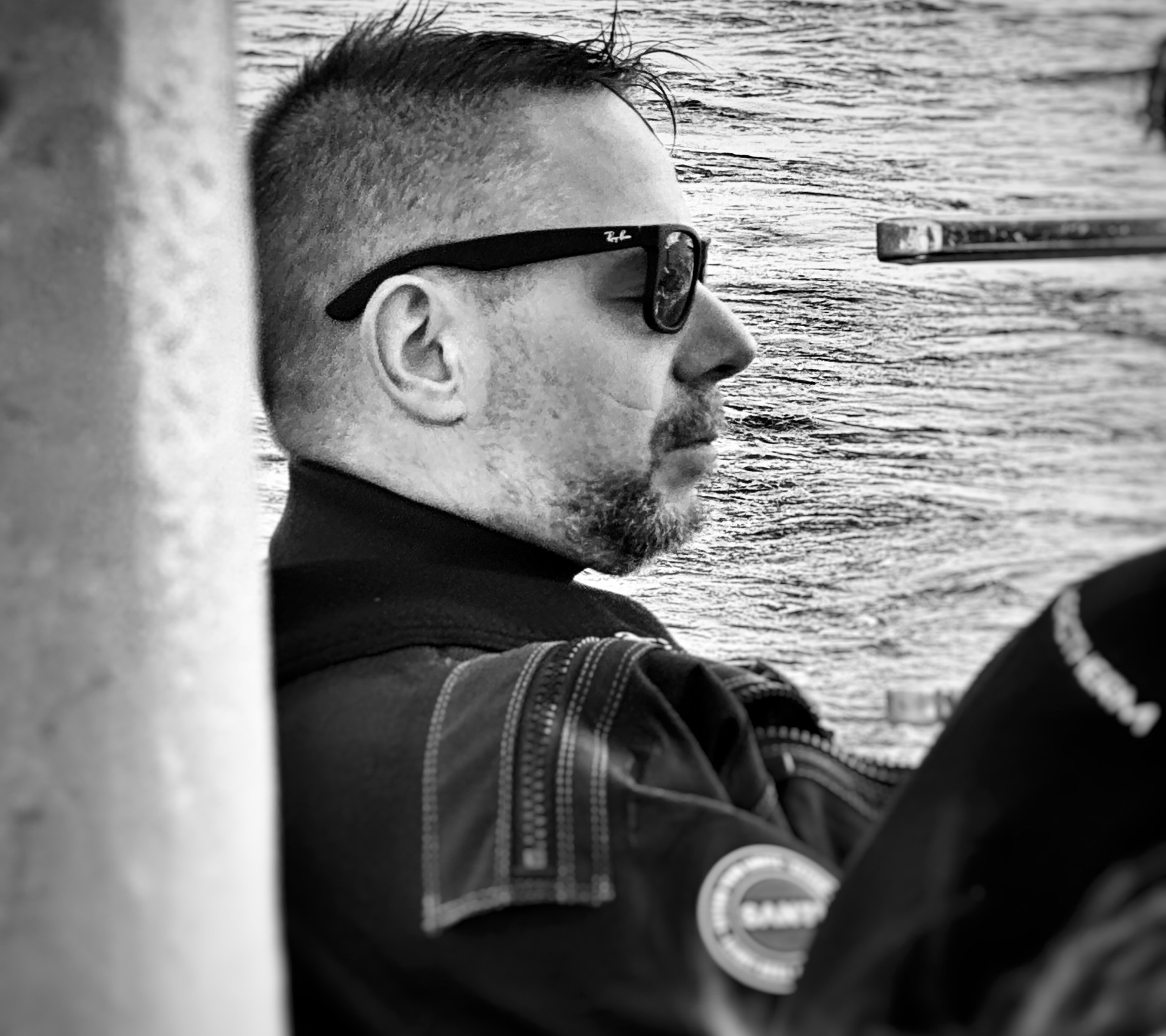
Andrzej Gornicki - Silence on the Surface. Andrzej gave perhaps the most uncomfortable and original talk of all: what happens when people stop believing it is worth speaking up. Through five true dive-centre stories, he showed staff who, having run out of words, reached for actions instead, quietly not filling tanks, abandoning a safety task they had championed, walking a client into the manager's office when the equipment repairs weren't possible, or letting a stubborn diver feel the consequences of ignored advice. Read through a Just Culture lens these look like wilful violations or sabotage, but he reframed them as organisational cries for help from people left with no other way to make their point; the critical factor is what does the organisation do with this information/action. Drawing on the idea of "total institutions," he described how broken communication becomes a factory for invisible weak signals, and how toxic systems leave people only three choices: align with power, stop caring, or leave. A genuinely challenging look at the cultures we build beneath the surface.
2027…
There will be a conference next year. It will be on the west side of the Atlantic, somewhere. It will be somewhere around April/May. We are sorting locations and dates and aim to have something confirmed by mid to the end of July 2026.
In the meantime, we will be releasing two blogs each week covering the presentations of each of the speakers. Stay tuned.


