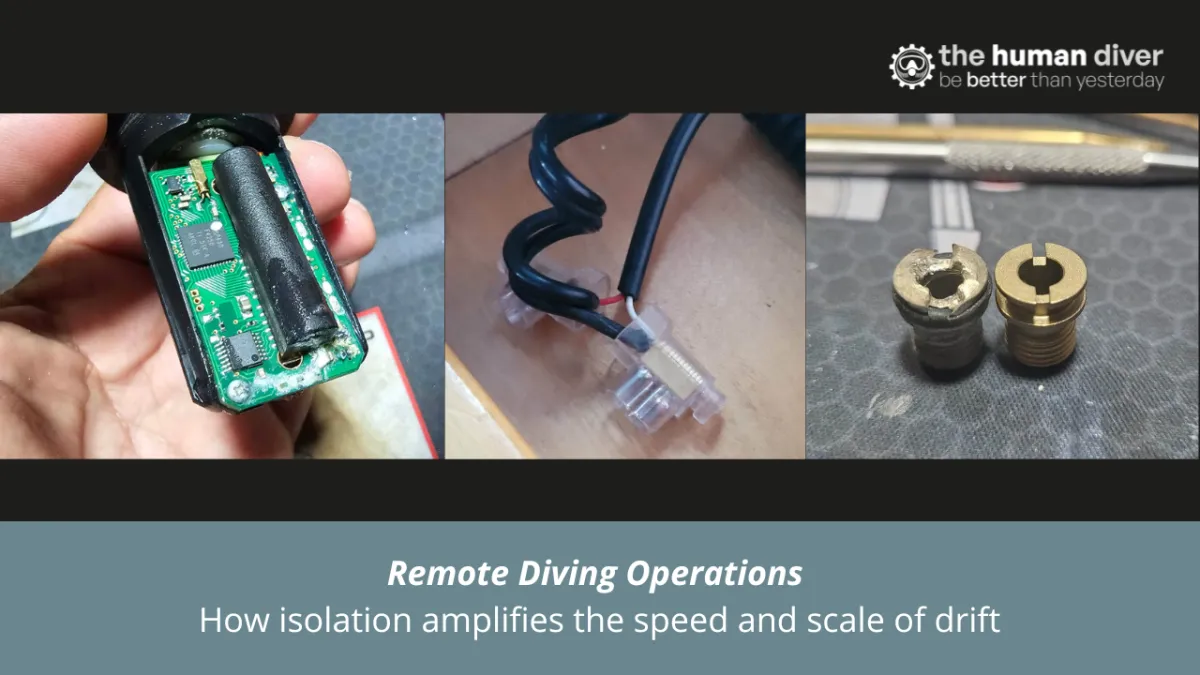
Isolation Amplifies Drift: When Remote Operations Make Small Deviations Invisible
The vessel is midway through a ten-day expedition. The charter has been planned for months. Guests are experienced, expectations are high, and the itinerary depends on a narrow weather window.
On the second day, a minor equipment irregularity appears. Nothing dramatic. A fluctuation that has been seen before. The system continues to function within acceptable parameters. There is no alarm. No hard failure. Just a note in the engineer’s mind: “It’s running slightly differently.”
There is discussion. The irregularity is acknowledged. The decision is to monitor.
The dives proceed. The guests are delighted. The schedule remains intact.
Over the next few days, the irregularity becomes background noise. It does not worsen noticeably. It does not improve either. It simply becomes part of the operating environment.
By the time the threshold is crossed — when performance drops enough to force response — no single decision feels reckless. Each choice made sense at the time. Each was defensible.
What changed was not the equipment.
What changed was the system around it.
Isolation Changes Feedback
In tightly connected environments, deviation is often challenged early. There are more observers, more external references, more friction. Someone questions. Someone audits. Someone compares performance against a broader baseline.
Remote operations are different.
Isolation alters feedback loops in subtle ways:
There are fewer external reference points.
Decisions are reviewed internally, not socially.
Performance is measured against schedule continuity, not procedural purity.
The cost of interruption feels higher than the cost of tolerance.
None of this is malicious. It is systemic.
In isolated marine environments — expedition vessels, remote dive resorts, offshore platforms — teams operate within a bounded social and technical ecosystem. Information circulates internally. Success is experienced collectively. Productivity is visible; deviation is often not.
Under these conditions, drift does not require rule-breaking. It requires only repeated acceptance of “still functioning.”
The Productivity Reward
Remote teams are typically high-performing. They are cohesive, adaptable, and accustomed to solving problems without external help.
This adaptability is both strength and risk.
When a minor irregularity appears, the dominant incentive is continuity:
Guests are onboard.
Weather windows are finite.
Logistics support is days away.
Replacement parts are not on the dock.
The question becomes not “Is this deviation acceptable?” but “Can we manage this safely for now?”
The answer is often yes — and repeated over time, it quietly reshapes the boundary of what is considered normal.

Isolation amplifies this process because interruption carries visible cost. Cancelling dives, delaying itinerary, or shutting down equipment has immediate operational and reputational consequences. Tolerating a small deviation feels rational in comparison.
Over time, the organisation’s risk perception adjusts — not dramatically, but incrementally.
When Irregularity Becomes Background
In remote systems, drift is rarely a sudden shift. It is erosion.
An engineer notes a temperature trend slightly higher than historical baseline.
A technician accepts a marginal reading because output remains stable.
A captain weighs equipment performance against guest experience and elects to proceed.
None of these decisions are inherently unsafe. They are contextual.
The critical shift occurs when the irregularity stops being discussed.
Once a deviation becomes familiar, it is no longer treated as a signal requiring collective attention; it becomes a characteristic of the system.
Human factors research describes this as normalization of deviation — the gradual redefinition of acceptable performance without explicit agreement. In isolated operations, this normalization is often accelerated by three structural properties:
Limited External Challenge
There is no daily audit. No peer vessel alongside for comparison. The system’s performance is evaluated internally.Cohesive Team Dynamics
Strong social bonds reduce overt challenge. Teams that trust each other deeply may also hesitate to question.Latency of Consequence
Degradation unfolds over days or weeks, while operational rewards are immediate.
The absence of immediate negative feedback creates the illusion of stability.
Authority and Ambiguity
Isolation also reshapes authority.
On an expedition vessel, decision-making may be distributed between captain, engineer, expedition leader, and operations manager ashore. Under normal conditions, this distribution is functional.
Under pressure, it can diffuse clarity.
If an irregularity is noted but not formally escalated, it exists in a grey zone. Each role may assume another is monitoring more closely. Because no threshold has been crossed, no single authority feels compelled to interrupt.
Ambiguity rarely produces dramatic failure. It produces delay.
And delay, in isolated systems, is where drift lives.
Threshold Events
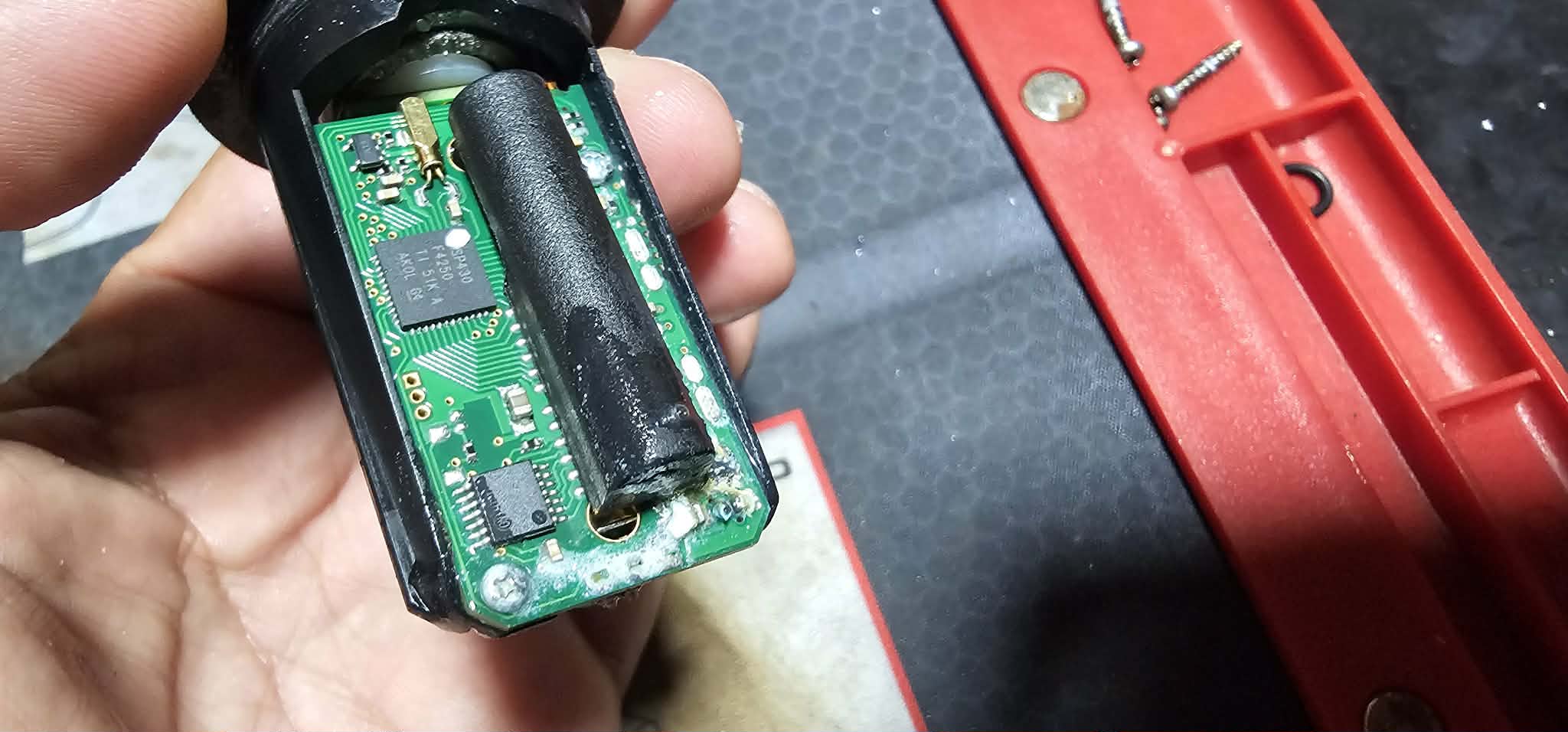
When failure finally manifests — a shutdown, a degraded output, a forced itinerary change — it often appears abrupt.
From the outside, it looks like a technical problem.
From inside the system, it feels like a culmination.
The equipment did not fail at the moment of disruption. It had been narrowing its margin for days. What eroded was the collective boundary around acceptable deviation.
Importantly, this is not a story about incompetence.
Remote teams are often more competent, not less. They operate with constrained resources and high adaptability. The issue is not skill. It is structure.
Isolation reduces corrective friction. It increases tolerance for marginal states. It narrows the distance between “still functioning” and “no longer recoverable.”
Isolation as a Multiplier
In highly connected environments, drift is often interrupted by noise — audits, peer comparison, regulatory presence, or external visibility.
In remote operations, silence prevails.
Silence does not mean safety. It means fewer interruptions to internal logic.
The vessel continues. The guests are satisfied. The weather holds. The system produces output.
Until it doesn’t.
Isolation removes early corrective pressure. Small deviations accumulate without challenge, and the distance between recognition and consequence narrows once thresholds are crossed.
What appears as a sudden technical event is often the visible endpoint of an invisible human process.
A Structural Property, Not a Moral Failing
The temptation after an incident is to ask: Who decided to continue?
A more productive question might be: What in the system made continuation the easiest choice?
Remote operations will always involve uncertainty. They cannot eliminate deviation. What they can do — and what human factors consistently reminds us — is examine how feedback, authority, and incentives shape perception long before equipment stops.
Isolation does not create error. It changes how — and when — error is recognised.
And in that subtle shift, drift finds space to grow.
Structural Controls as a Counter to Invisible Drift
Understanding isolation as a systemic amplifier points toward the kind of response that is actually proportionate to the problem.
Individual performance improvement — better checklists, stronger briefing culture, crew awareness — addresses the upper layers of the operational system. Those interventions matter. But in remote operations, they are often being asked to compensate for failures in the infrastructure layers beneath them. When asset governance is absent or informal, procedural discipline and human performance carry a load they were never designed to bear alone.
What isolated operations need is not more vigilance from individuals but more visibility built into the system itself.
Governance mechanisms that make the operational state of critical equipment continuously observable — structured asset registers, inspection-cycle tracking, barcode-based identity for tanks and regulators — do something that awareness alone cannot: they prevent deviation from disappearing into the background. An irregularity that is recorded, owned, and tied to a review cadence cannot quietly normalise. It remains a signal rather than becoming a characteristic.
This is the distinction between informal memory and governed structure. Remote teams routinely rely on the former: an engineer who knows the compressor's history, a technician who remembers which regulator last had a service. That knowledge is valuable, but it is also fragile. It does not survive staff rotation. It does not transfer between seasons. It creates no audit trail when the threshold finally crosses and questions are asked about what was known and when.
A governance loop — standards, cadence, evidence, clear authority, and containment — does not eliminate uncertainty in isolated operations. It does not make logistics faster or weather more predictable. What it does is keep the operational state of life-support infrastructure legible to the whole system, not just those who happen to be present.
Isolation will continue to shape how drift unfolds in remote marine environments. The corrective pressure that more connected systems receive automatically — from audits, peer comparison, external oversight — has to be built deliberately into the structure of remote operations. Without it, silence remains the default. And silence, as this piece has argued, is not evidence of stability.
It is simply the absence of visible warning.