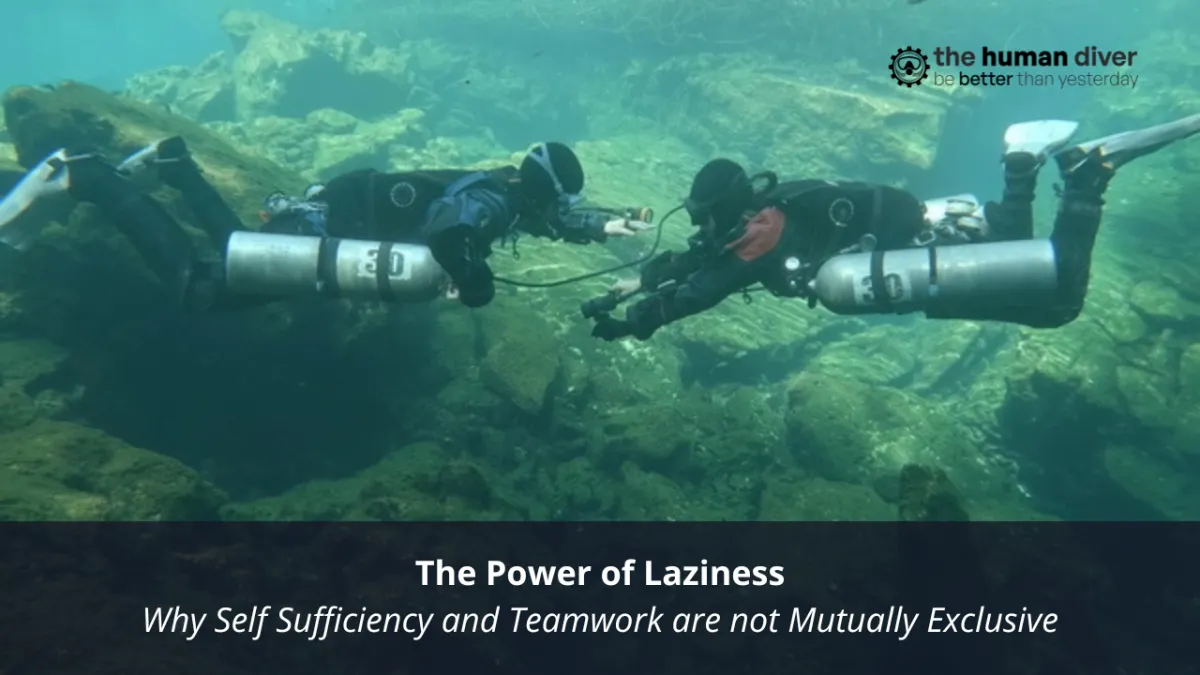
The Power of Laziness: Self-Sufficiency & Teamwork are not mutually exclusive
This blog takes a closer look at the apparent contradiction between self-sufficiency and teamwork. Outside of my role as an instructor with The Human Diver, I work full time as a cave, technical and rebreather diving instructor at Underworld Tulum in Mexico. Solo diving is something that often comes up in discussions during classes, and it regularly features in (often heated) on-line conversations, arguments and good old-fashioned rants.
How many times have you seen this type of comment on a diving-related social media post?
“When diving solo, you only have to worry about you running out of gas, not TWO people”
“There are countless arguments for why diving solo is SAFER than in a team and I am sick of hearing people publicly post the opposite.”
“a competent solo diver would be much safer than the average buddy dive.”
Solo diving is increasingly normalised, via formal training programmes in solo, self-reliant or independent diving. A survey conducted earlier this year by InDepth Magazine and the Business of Diving Institute revealed that 84.4% of the 768 respondents had completed a solo dive, and 53.2% maintained a “self-reliant” mentality when diving with a buddy.
Just Because You Can, Does not mean you should
Cave, technical and rebreather diver training has always emphasised self-sufficiency. When I started technical diving, some advice that stuck with me is that you should be able to deal with two failures comfortably and have a fighting chance of coping with a third. Because higher level technical and cave courses have involved carrying the equipment and having the skills to solve problems on your own, this can morph into always trying to solve problems alone, even if there is a team around you. There were even some agency course materials that until recently stated explicitly that the buddy should be seen as a last resort in an emergency during a technical dive.
The counterpoint to this is that most of the training in technical and cave diving has a team emphasis. Agency and ISO Standards, technical manuals and course content emphasise the skills such as gas sharing that require a team approach to solving problems. The equipment divers use has redundancy built in, and the team is often used to verify a correct response to turning off a failed valve or bailing out from a rebreather. Because the immediate, self-reliant, learned response is often technically harder, this can become the default in a real event. The most hard won or challenging skills are often the “stickiest” – those that people revert to under stress.
The Exception
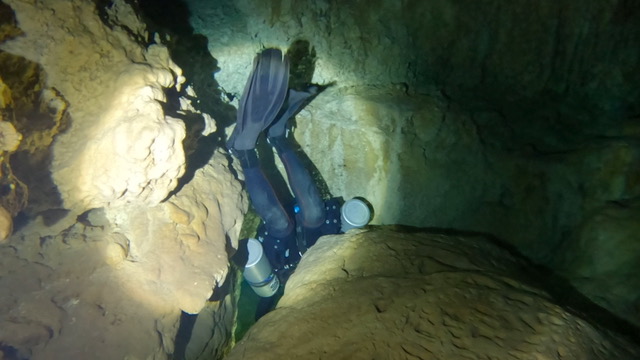
There are some dives where the optimum team size is one. A small, silty, unknown cave with lots of percolation (silt disturbed by bubbles to create poor visibility), or a wreck penetration on a submarine are good examples. An extreme way this was once explained to me is “I do not want a lump of sentient meat between me and the exit, especially if they have not seen the correct route before it silted out”. The Cave Diving Group has been training and mentoring cave divers since the 1940s and emphasise self-sufficiency because of the often zero visibility conditions that they dive in. However, it is worth remembering that these types of genuine zero visibility dives represent a tiny fraction of the dives taking place globally.
Deviance
Humans drift! As a species we are spectacularly bad at judging where the boundary between safe and risky is. Normalisation of Deviance is a term for this that was first coined by Diane Vaughan in her book about the Challenger disaster. She described it as “a cumulative directionality that too often is discernible only in hindsight”, or in simple terms, you don’t know how far you’ve drifted until after the accident. This applies to all sorts of diving and non-diving situations, from speeding on the motorway to surfacing with less than the recommended reserve gas. You can read more in this blog. In the specific context of self-sufficiency in diving, this means you don’t know how many barriers you have removed until things go wrong. I have had many conversations with divers who have precise criteria for their solo dives. These included limiting their depth, diving a familiar site, not too far from the cave exit or not too many navigational decisions. It is easy to imagine how these soft rules could be eroded incrementally.
The Power of Laziness
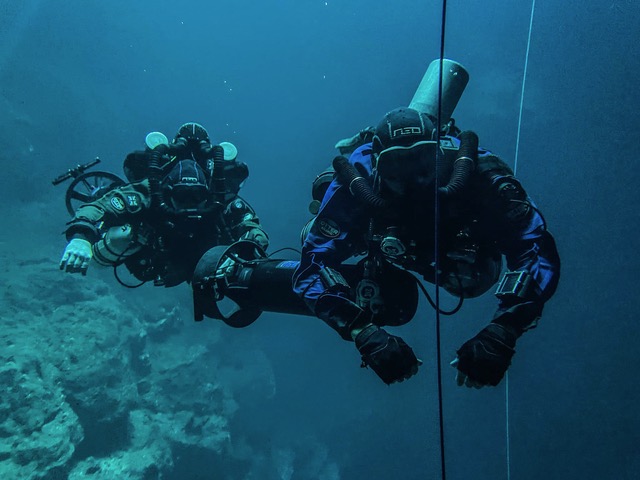
Cave diving in particular is often viewed as an extreme sport, but most divers are not seeking an adrenaline rush and the stated aim of most of my dives is ”stay safe, see some cool shit, have fun”. Anything we can do to increase efficiency and make things easier should be embraced with enthusiasm. Diving is very different to professional cycling, but Sir Dave Brailsford’s well-known concept of the aggregation of marginal gains is quite insightful. This means that we want to make things as easy as possible for ourselves. When running classes, it is very common to see divers pushing through problem scenarios with huge determination and effort, when a stabilising moment of touch contact from a buddy, an extra hand to hold some equipment or a stable visual reference would make their life a whole load easier. This is the power of laziness.
Self sufficiency in a Team Context
For most dives, being able to resolve issues on your own if you have to, but getting the team to help if they can is the optimum solution. If you are separated or your team’s capacity is maxed out, then you have the skills, training and equipment to cope with emergency scenarios alone. However, asking for help and having a well-trained team around you will mean that any adverse event is far less stressful and the chances of a positive outcome are increased. The most cursory examination of the online resources that report diving incident and fatalities (such as CREER, NSS-CDS, BSAC and DAN) reveals that many outcomes could have been improved with a more effective team around diver facing problems.
For dives that are completed solo through necessity or choice, here are three actions that can stack the deck in your favour:
Build redundancy into your plan. This covers the obvious tangible resources like independent gas reserves, spare lights or back up computers. It also includes ensuring you have spare capacity to deal with unexpected events. If your “bucket” is already full with routine tasks, a failure or emergency will not end well.
Brief yourself. Review the plan in detail as if you were briefing a detail focused and pedantic team member. Include contingencies, hard limits and detailed checks
Decision making. Decisions made under pressure are more likely to be flawed. Build a process into your in-water responses that slows down your decision making. This could be a deliberate two inhales and exhales before responding, a single back kick, a deliberate two second pause or the traditional “stop, breathe, think, act”.
So What? What can you do as a diver or instructor
Be the diver that you would want to dive with. Think about a dive where your teammate contributed to your enjoyment or success on a dive. Is there anything you can work on to be that legendary buddy?
“Practice emergency procedures” was one of Sheck Exley’s recommendations from the original Blueprint for Survival. Whether in a team or solo, think about and rehearse the “what-ifs” regularly to build capacity.
Minimise drift by challenging your assumptions. Analyse your decisions and areas for improvement during briefs and debriefs or reviews of your dives.
Do everything you can to stack the deck in your favour if choice or circumstances involve a solo dive.

Teamwork in HFiD Classes
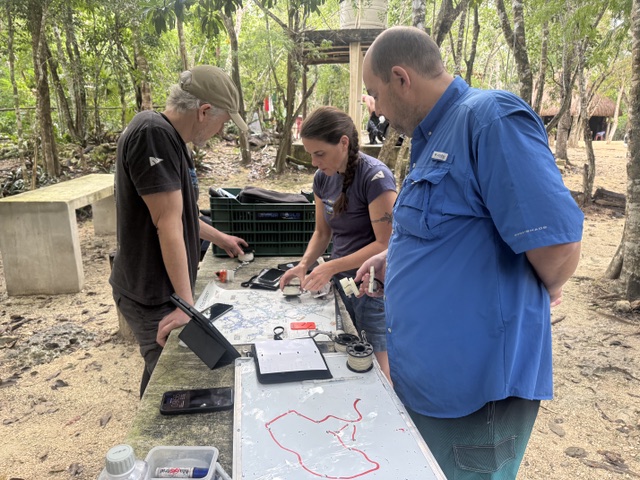
Teamwork forms a big part of the Human Diver’s in person and on-line classes. We emphasise that building a dive team isn’t just about pairing up divers, it’s about establishing psychological safety, building trust, shared understanding, and adaptability. Effective teams work interdependently toward a shared goal, adapt as situations change, and rely on each other’s strengths. This is especially important in a dynamic and uncertain environment like diving. We also explore how teams are formed, how they learn, and how they share mental models through effective briefs and debriefs. All this combines to maximise performance and make diving more enjoyable. You can check out available two-day Applied Skills classes here, or click on the link for the on-line Essentials programme.