Restorative Just Culture: Repairing Trust After an Event
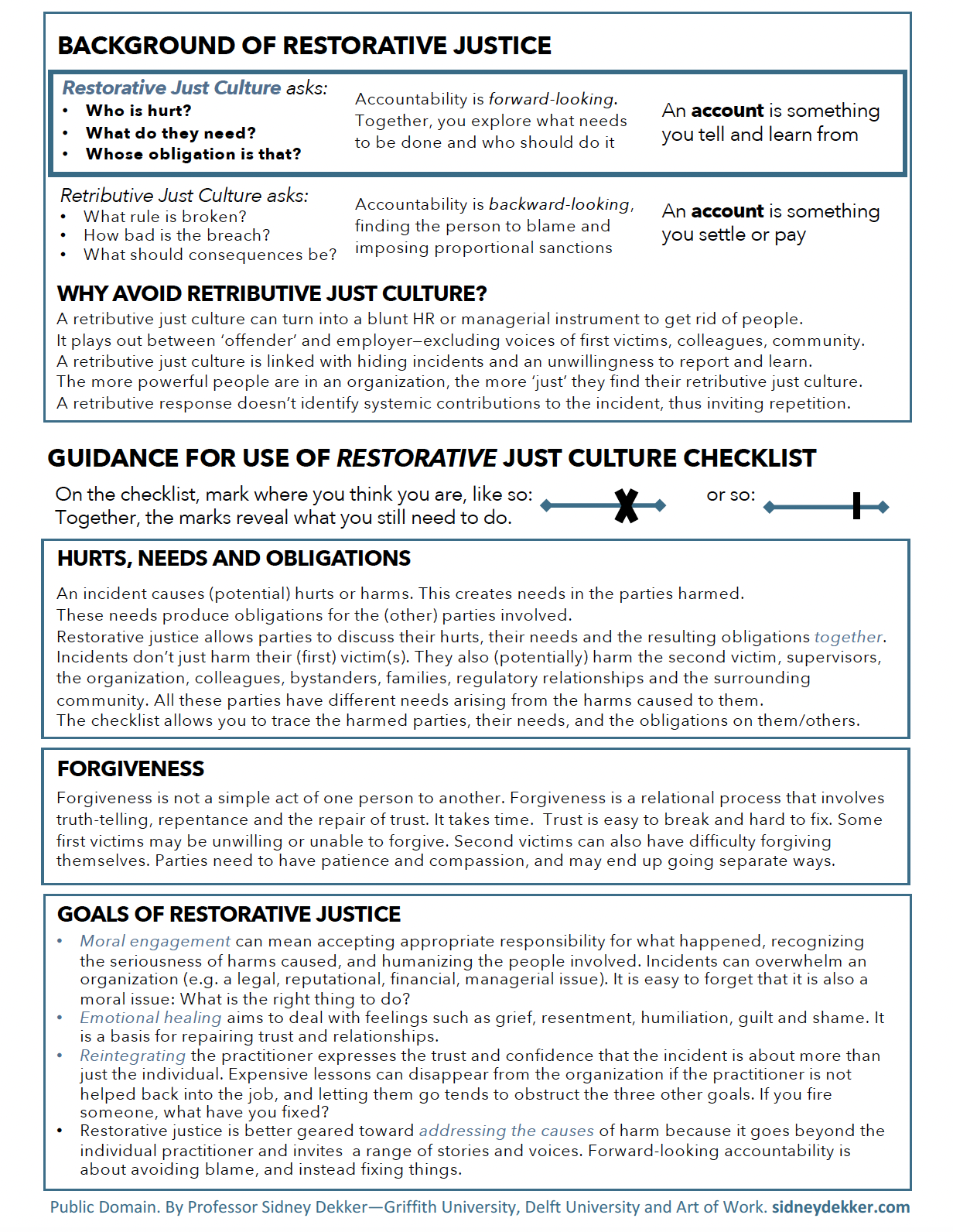
When something goes wrong in diving, the instinct is often to find out who broke which rule and to decide what should happen to them. This is a retributive approach. It asks what rule was broken, how serious the breach was, and what the consequences should be. It feels decisive, but it rarely makes anyone safer. A retributive response tends to drive incidents underground, discourage reporting, and leave the systemic conditions that produced the problem fully intact, ready to produce it again.
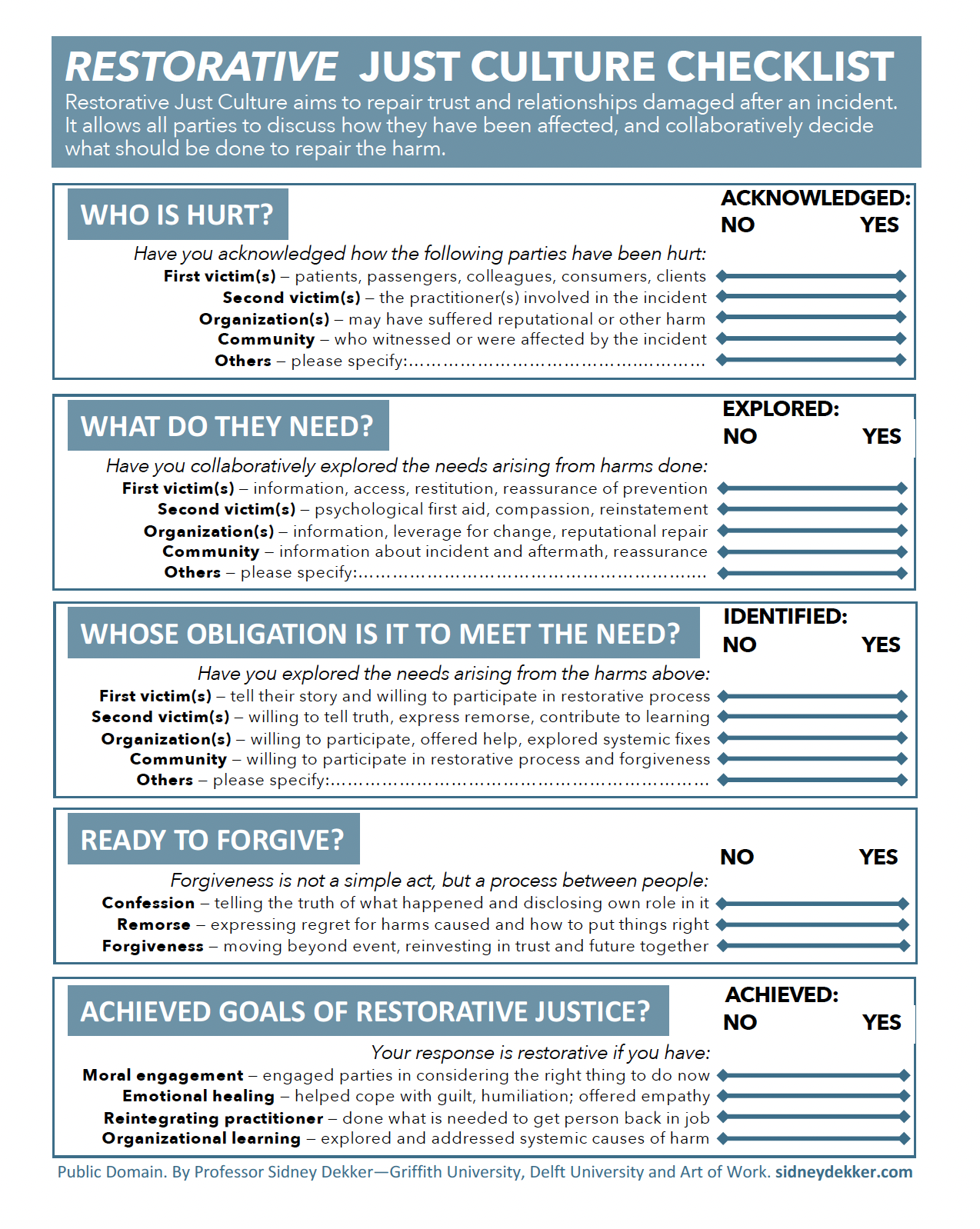
A restorative just culture starts from a different place. Instead of looking backward to assign blame, it looks forward to repair the harm and to learn. It asks three questions: who is hurt, what do they need, and whose obligation is it to meet that need. These questions move the conversation away from punishment and toward accountability that actually fixes things.
The first step is to recognise that incidents rarely hurt only one person. There is the first victim, who may be a patient, a passenger, a student, or a buddy. There is the second victim, the practitioner involved, who often carries guilt and shame. There is the organisation, which may face reputational or financial harm, and there is the wider community that witnessed or was affected by the event. Each of these parties carries different needs, and naming those needs honestly is where repair begins.
Once the harms and needs are clear, the focus turns to obligations. Who is best placed to provide information, restitution, reassurance, or support? The first victim may need to tell their story and to know that prevention is being taken seriously. The second victim may need psychological first aid, compassion, and a route back into their role. The organisation may need to explore and address the systemic causes rather than removing one individual and declaring the matter closed.
This is also where forgiveness enters, although it is never simple. Forgiveness is a relational process built on truth-telling, genuine remorse, and the slow repair of trust. It takes time. Trust is easy to break and hard to rebuild, and some people may be unable or unwilling to forgive at all. Patience and compassion matter more here than speed.
A response is genuinely restorative when it achieves four things.
It engages people in considering the right thing to do now.
It supports emotional healing for those carrying grief, guilt, or humiliation.
It reintegrates the practitioner so that hard-won lessons are not lost from the organisation.
It explores and addresses the systemic conditions that allowed the harm to occur. If you fire someone, what have you actually fixed?
The Restorative Just Culture Checklist, developed by Professor Sidney Dekker, gives you a practical way to work through each of these stages. You can mark where you are, see what still needs doing, and keep the conversation honest as you move from acknowledging hurt toward shared obligation and repair. It is a simple tool for turning a difficult moment into genuine learning.
Download the checklist as a PDF from here and use it the next time your community needs to repair trust rather than apportion blame.