Chac Mool - Diving Deeper into a Triple Fatality with Human Factors
This case study examines a historical overhead diving triple fatality using Human Factors principles. Most investigations and analysis of adverse events in diving identify the immediate cause, but do not look at the wider systems, procedures and influences.
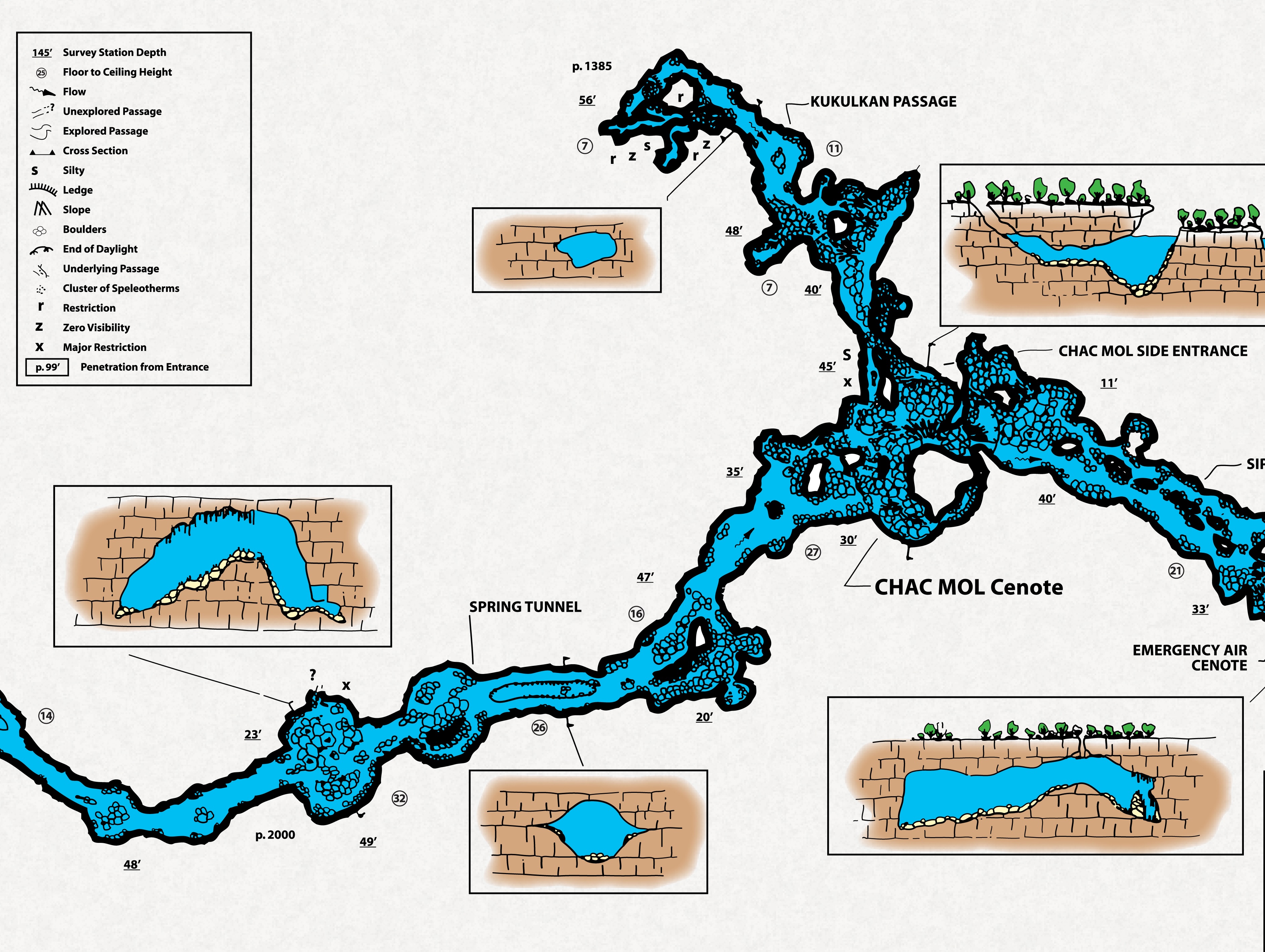
The event in question took place in April 2012 at Cenote Chac Mool , just outside Puerto Aventuras, Quintana Roo, Mexico. Chac Mool is a well known and regularly dived cenote, and this was the first incidence of recreational divers losing their lives on a guided cenote dive.
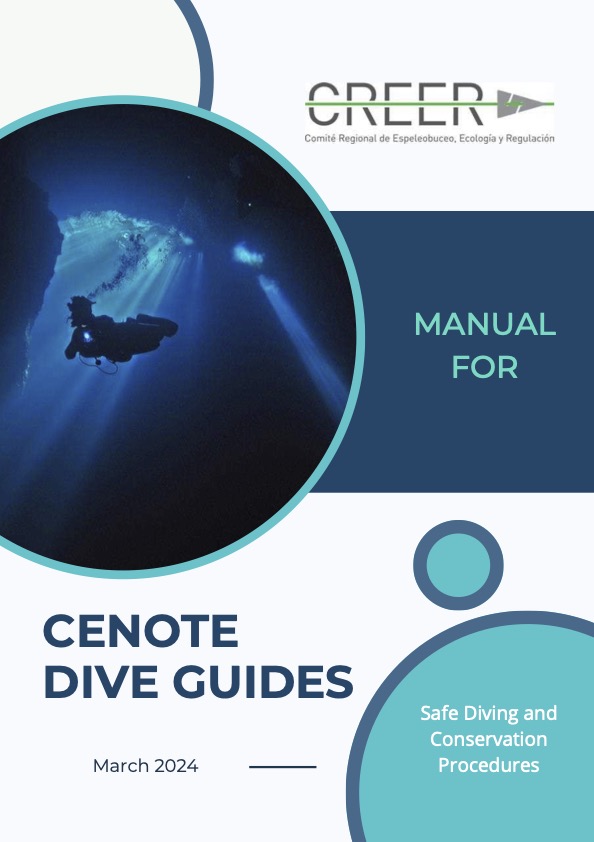
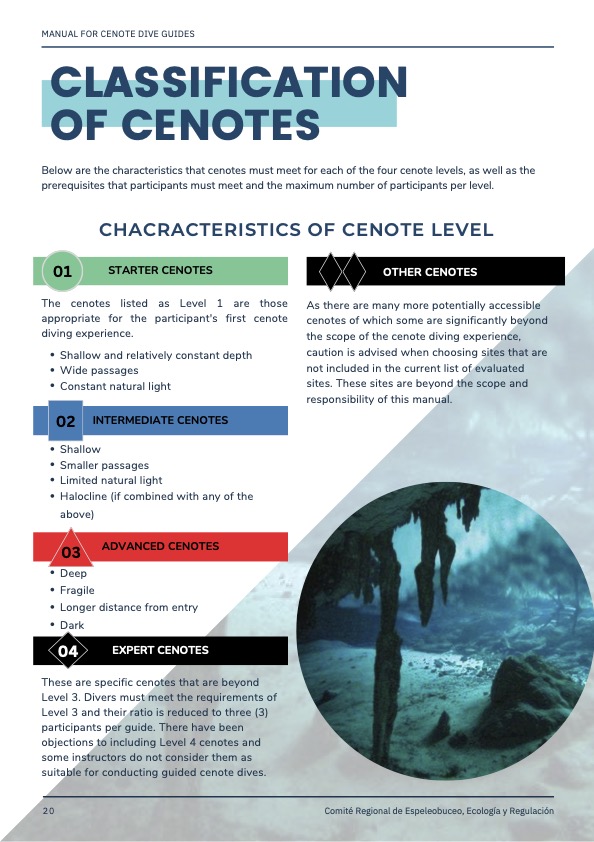
Guided diving in cenotes has a good safety record overall, with thousands of dives taking place every year. TheCREER (Comité Regional de Espeleobuceo, Ecología y Regulación)line and safety committee in Mexico have published a manual that details sensible rules and procedures for safe guided cenote diving, and this incident is one of those included to help train new guides. The full manual is available to download free of charge here: https://creer-mx.com/wp-content/uploads/2024/03/Manual-for-Cenote-Dive-Guides-vs010324.pdf
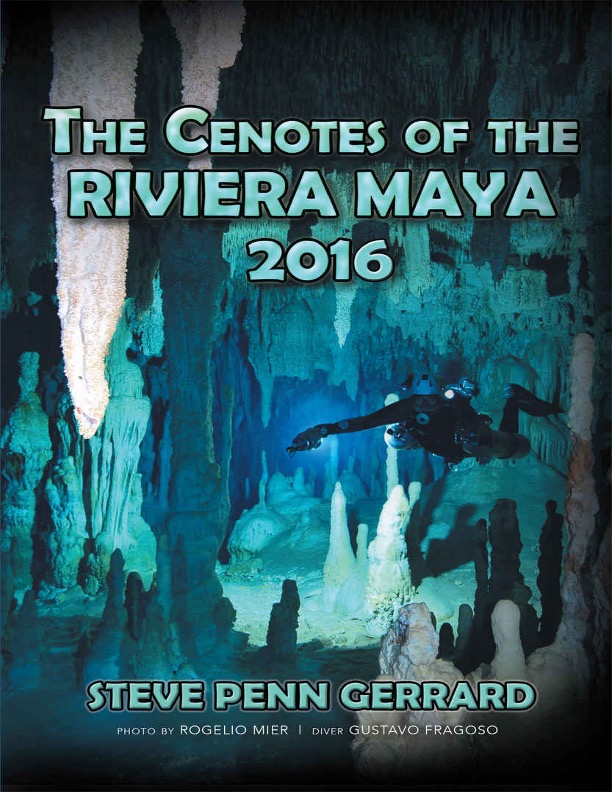
This is the account of the incident published in Steven Gerrard’s book “The Cenotes of the Riviera Maya”:
A cavern tour dive guide from a local dive store took two customers into the upstream cavern zone of Cenote Chac Mool. This is after completing two dives at Cenote Dos Ojos earlier in the day. At approximately 4:00 p.m., they swam beyond the cavern line area to the upstream gold line cave diving line to tour the first pretty room that exists 100 ft/30m plus beyond the safe cavern zone.
Three cave divers from Playa del Carmen were summoned to the cenote and searched the cavern areas with no success. Then they began looking into the large room beyond the safe cavern zone of the upstream. The group leader spotted a light on and then found the body of the male Brazilian open water diver floating in midwater above the guide line, facing toward the exit. He had 200 psi/14 bar remaining in his single 80 ft3/11 Litre tank. The dive was called, and it was an eight-minute swim back to the surface. They returned to the same area and found the male guide (who was from Spain) and the Brazilian female 200 ft/60m further upstream, facing into the cave. The Spanish guide had his long hose deployed and no mask on his face with injuries on his face. Both victims had 0 psi in their tanks, which were floating in midwater near the guide line. This was the third dive of the day for the guide, using the same set of double 80 ft3tanks as the group had made two dives at Cenote Dos Ojos earlier in the day. There was no reel used between the cavern zone and the permanent cave diving line of upstream Chac Mool.
This is very typical of traditional accident analysis in cave diving, in that it describes the basic facts, but does not go beyond that. In this example, we are told that all three divers drowned, and where they were found, but there is no wider context of why the event occurred. This is where a Human Factors approach is useful. It is easy to assign a single cause to this event, blaming the guide for taking divers without overhead training into a cave and not laying a line. However unless we try and understand how this action made sense at the time it is hard to change behaviours and gain a better understanding of how to avoid similar incidents in future.
PETTEOT
The new Learning From Emergent Outcomes (LFEO) programme from the Human Diver uses a more structured approach to look at the wider interactions, and the acronym PETTEOT describes the framework used:
Person(s): skills, experience, expectations, stress, fatigue, and communication
Environments: water conditions, depth, visibility, temperature, noise, and access
Tasks: sequencing, complexity, and competing goals
Tools and Technology: equipment design, reliability, configuration, automation, and feedback
External influences: regulations, weather, logistics, commercial or social pressures
Organisations: training systems, standards, culture, incentives, and norms
Time: time aspect considers Work as Imagined (WAI), Work as Normal (WAN) and 'Work as Done on the Day' (WADD), along with available time compared to the time needed to evaluate the situation, select an option, and then perform it.
Using this model to examine the Chac Mool event more closely allows us to gain some genuine insight into the interactions that led to the tragic outcome.
Person(s): skills, experience, expectations, stress, fatigue, and communication
In order to take recreational divers in the limited overhead environment where guided cenote dives take place, guides have to be qualified as an open water instructor or divemaster, and be trained as a full cave diver. Guides have to be equipped in full cave diving equipment including double backmount or sidemount cylinders, at least three lights, markers and spools.
Inexperienced divers often do not have a frame of reference – they “don’t know what they don’t know”. A good example of this is the common perception that “my instructor is the best ever” based on a single data point. This is especially true in this example where the guide is using seemingly complex equipment and will have explained the level of training involved in becoming a cavern guide. This would have established an authority gradient and made it harder for their decisions to be questioned. It is also hard for divers to speak up if they don’t know what is safe and what is not. Were the divers aware that swimming away from the line was against the rules?
The most effective way to flatten an authority gradient is to establish a psychologically safe environment within the dive team. This means all divers are comfortable to ask questions or challenge the plan without risking ridicule. It can be very hard to establish this type of environment if there is a significant difference in training and experience, or where the guide has created an environment where there is no choice but to trust their expertise. A great example of establishing psychological safety, where there is a big difference in level of qualifications, is inThe Checklist Manifesto by Atul Gawande, where he describes the number of lives saved by the most junior members of surgical teams when they have been encouraged to speak up and followed through on this.
Back to the event at Chac Mool. This was the third dive of the day, so it is likely that fatigue would have had an impact. When combined with complacency, specifically that the guide was diving a site that they were very familiar with so risk perception would be low, fatigue can reduce capacity, impact decision making and cause subtle cues to be missed.
Diving in an unfamiliar environment can be a stressful experience, even if everything goes well. The clients would have been experiencing a degree of stress, especially as the area they were diving was significantly darker and further from daylight than on previous dives. Once it was clear that the team was low on gas and did not have an obvious route back to the surface, stress would have increased. Once it reaches a certain level, the stress response can be debilitating and reduces situation awareness, ability to carry out basic tasks (such as maintain buoyancy, trim and position) and follow instructions. Breathing rate would have been significantly increased so remaining gas was depleted quicker.
Environments: water conditions, depth, visibility, temperature, noise, and access
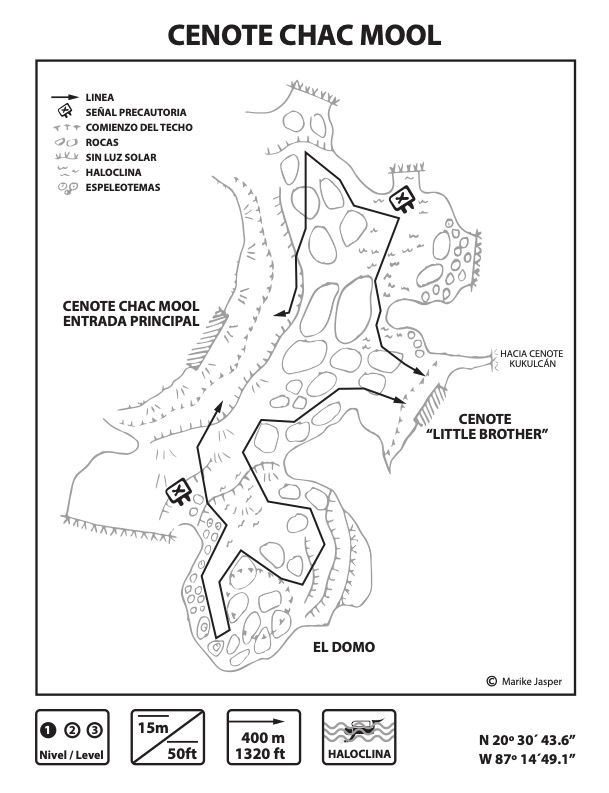
The cave where the event happened has permanent guidelines. The cavern line that is used for guided cenote dives starts and ends in open water, and there is a deliberate gap of approximately 20m to prevent divers on cenote tours accidentally following the wrong line. Cave divers are trained to install a line to “jump” from one line to another, to maintain a continuous guideline. Cavern divers, and especially recreational divers on a cenote tour, are not trained or permitted to use jump lines.
The limits for cavern diving with most agencies are that divers should not be more than 60m/200ft from open water, and must remain in the daylight zone. Once these limits of light and distance are exceeded, the dive is a cave dive requiring specialised training. The lines that have been installed for guided cenote dives generally adhere to these rules, and daylight is visible from the fixed cavern line at Chac Mool.
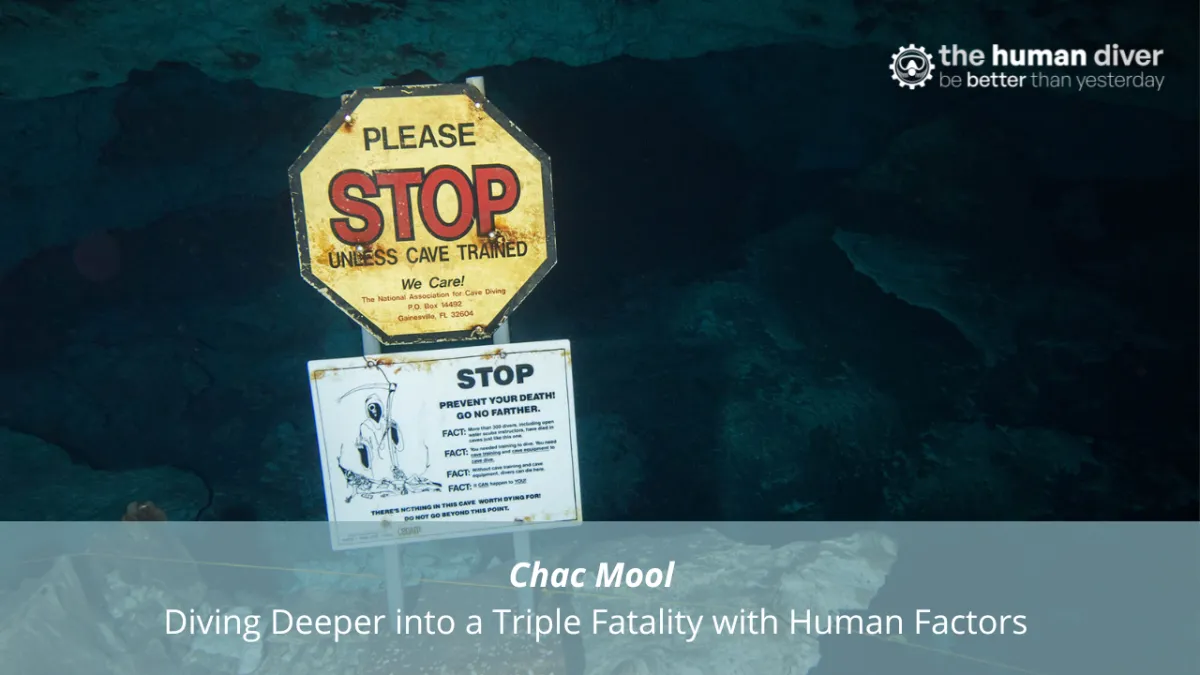
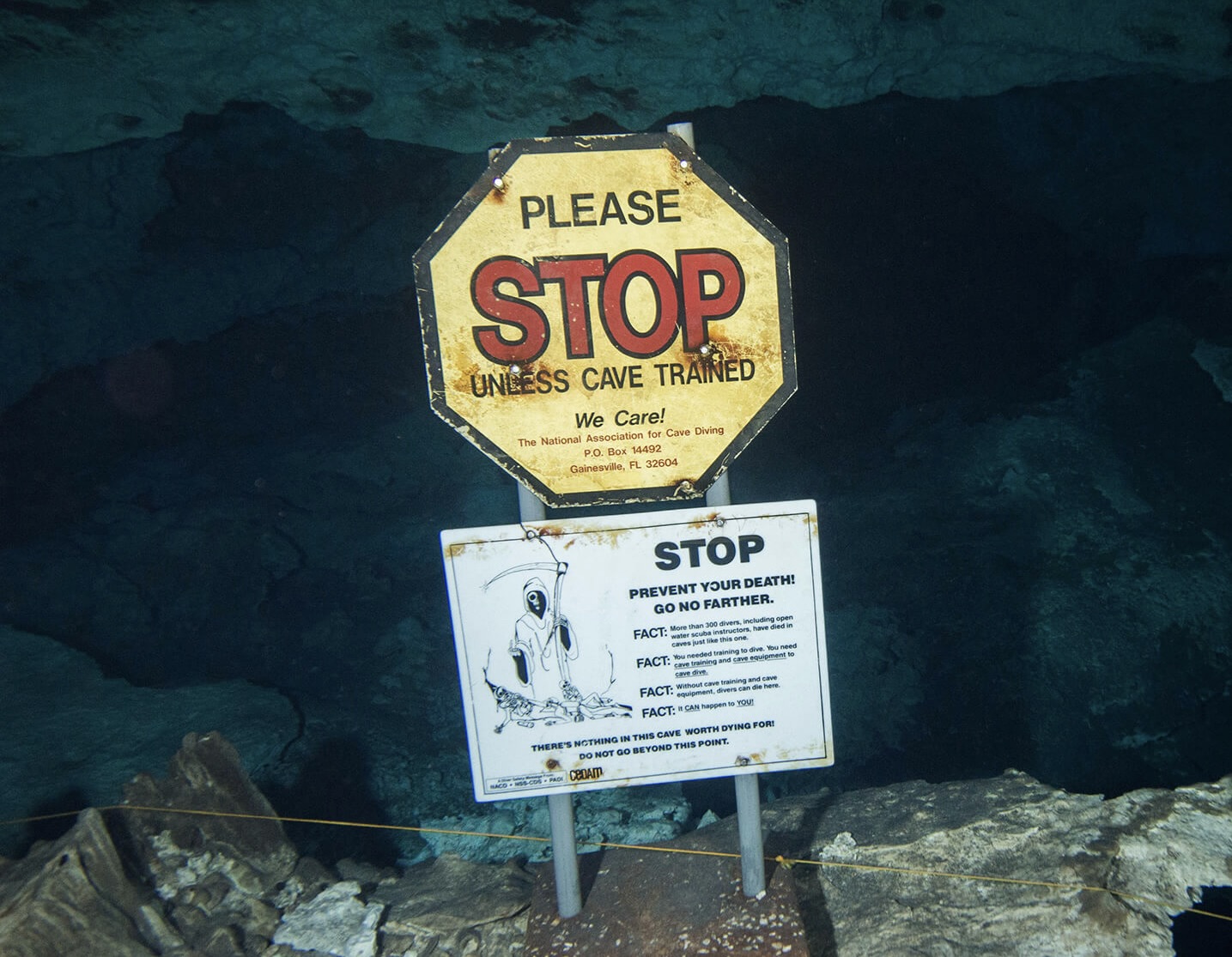
Caves that have permanent lines for guided cenote tours have stop signs that show where the cavern zone ends and the cave sign begins. These are very obvious, and different designs feature the grim reaper or “STOP” in red/yellow “danger” colours. In this case the guide and the divers ignored the warning sign. Potential reasons for this include acceptance of risk (been past the sign before and nothing went wrong), ego (the rules do not apply to me because I am awesome) or priorities (seeing cool cave is more important than obeying a sign).
Tasks: sequencing, complexity, and competing goals
Dive guides in any environment are likely to have competing goals, especially the tension between keeping divers safe and a desire to show clients the “really cool” stuff, especially if they have established a rapport. In this case the goal of showing the clients the highly decorated room that was well beyond the cavern zone competed with the important goal of keeping non-overhead trained divers safer in an unfamiliar environment.
For a cenote guide, there is a certain amount of task loading involved in maintaining situational awareness of the clients’ safety – their position, gas pressures and general comfort, as well as ensuring the team is heading in the right direction. Finding the correct route is usually made much easier by the highly visible gold kernmantle line that marks the correct route. In this case there was no line to follow for part of the dive because the guide had elected to go further into the cave without a continuous guideline..
Trying to carry out a complex task with stressed divers who had not been trained to dive in the overhead environment, whilst maintaining the team’s position on the line and awareness of the exit direction requires a huge amount of cognitive capacity and increases the chance that something is missed, In this case, it is likely that the thing that was missed was an awareness of the exit direction.
Tools and Technology: equipment design, reliability, configuration, automation, and feedback
There were no specific equipment failures, however all divers in the team ran out of gas. The guide was using the same set of cylinders for the third dive of the day so had reduced capacity or time to deal with unexpected events. He had already reduced his margin for every subsequent decision.
A spool or reel was not used to establish a continuous guideline from the cavern line to the cave line. There is a good reason that “always have a continuous guideline” is often referred to as the first rule of cave diving. Having a line gives an instant reference of a dive team’s position in the cave, freeing up capacity for other tasks. This is important during “normal” cave diving, but becomes even more critical when something goes wrong.
Given that the team had already broken the rules by not laying a line from the cavern to the cave line, it seems unlikely that they would have marked their exit when looking at the formations in the decorated area of cave. If swimming away from the guideline, it is normal line to install a directional marker (normally an arrow) pointing to the exit and a jump line. When task loaded by dealing with another issue, it is much harder to maintain awareness of the exit direction without an obvious marker.
External influences: regulations, weather, logistics, commercial or social pressures
Reputational and social factors, or wanting to impress divers who are being guided, can generate pressure to go beyond normal limits. There is also potential commercial pressure to show clients the coolest places to increase the chances of a healthier tip.
Guided cenote diving, like most of the dive industry, is not formally regulated but relies on rules imposed by land owners, diving agencies, dive operators or industry groups. The administrative or punitive consequences for breaking rules are often not serious, which makes it more likely that people will drift away from what is safe or acceptable behaviour.
Following this event, cenote Chac Mool was closed for several weeks and local dive operators reiterated the rules for safe guided dives to the guides they employed. The administrative requirements to guide in Chac Mool remain some of the most stringent of any dive site in the area.
Organisations: training systems, standards, culture, incentives, and norms
One of the most obvious proximal causes of this event was the guide breaking the rule of always having a continuous guideline all the way back to open water. Installing a jump from the cavern line to the cave line would have achieved this, but this is a skill that is only learned on a formal full cave diving class. It would be easy for a guide to rationalise the decision not to lay a line because if a jump is installed it is a cave dive, whereas if there is no jump line divers have just strayed a (very) long way from the line on a cavern dive.
Not laying a line has a regulatory and reputational aspect, in that a guide observed installing a jump for recreational divers would be challenged by other guides and reported to their agency, something that is (counterintuitively) far less likely if they swam off the line without installing a jump. This is a failure of the system in that a largely self policing community can police the wrong things. Another good example of this is that a guide conducting an underwater gas sharing drill with their clients before a guided cenote tour was reported for conducting training at an unauthorised site.
This is a classic example of the normalisation of deviance. Guides who dive the same sites every day will get bored and will be tempted to swim a little way off the line to see something interesting or different. A distance of a couple of meters can become longer and longer over time as the violation is repeated without adverse consequences, or without being challenged. The breach has become socially accepted. There have been several fatalities or near misses involving divers being taken off the line by guides during cenote tours since the Chac Mool event.
At the time of the event in 2012, there were was no readily accessible manual that described the safe conduct of guided cenote dives in detail. The APSA (Asociasion de Prestadores de Servicios Acuaticos -Riviera MayaAssociation of Watersport Operators) had published a manual in 2003, but the system of training guides had fallen out of use. Cenote guides are generally aware of the basic rules, and pictographic signs are displayed at the sites where guided cavern tours take place. The new CREER manual is based on the original APSA guidance, but many guides and dive centres are unwilling to comply with the rules that reduce guide to diver ratios in more challenging cenotes and require divers to have visited more benign sites before diving in more decorated, complex or deeper sites.
Time: Work as Imagined (WAI), Work as Normal (WAN) and ‘Work as Done on the Day’ (WADD), alongside available time compared to the time needed to evaluate the situation, select an option, and then perform it.
In diving, especially in the overhead environment, gas reserves and time can be viewed in a similar way. In simple terms, the more gas you have, the more time you have underwater. In this case the guide’s gas reserves were depleted because this was the third dive of the day on the same cylinders. Standards vary by agency in cave diving, but a good rule is that the minimum to start an overhead dive is 130 bar in a set of the aluminium 80s that the guide was using in this event. The minimum gas to start a dive specified in the CREER manual is 105 bar, or the equivalent of a full single cylinder, which is obviously based on dive teams being within 200ft/60m of a direct ascent to the surface. All dives are also carried out using the rule of thirds – a third to swim in (or to the halfway point on a circular line), a third to swim out and a third for emergencies.
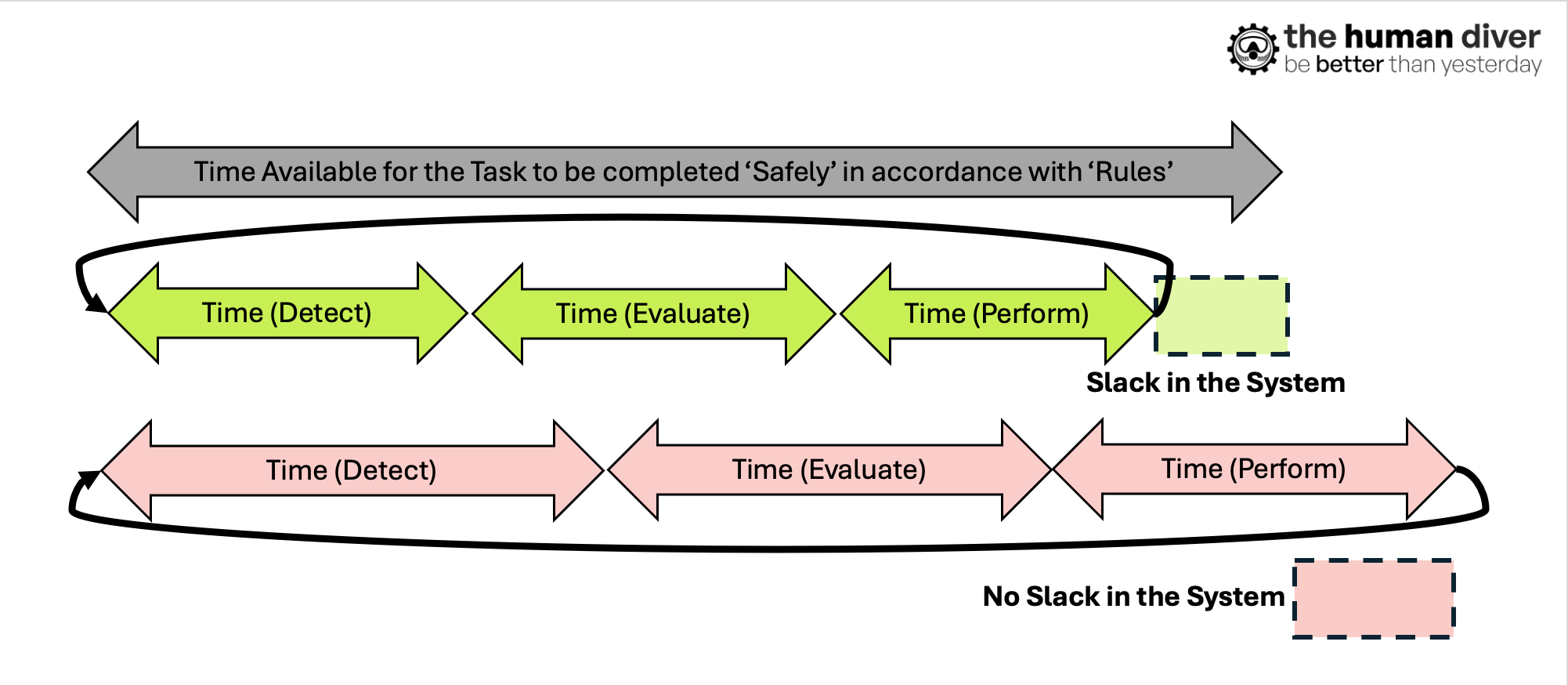
In this case, the gas (and therefore time) required to evaluate the situation, select an option and perform it were not sufficient. With greater gas reserves, the team would have had enough time/gas to go the wrong way, realise they should have been back in the daylight zone given the time they had been swimming and retrace their steps. This ability to make effective decisions i.e., detect the problem, evaluate the issue and potential solutions, and then perform, was influenced by the environment, the people, and the task at hand.
How It Made Sense at the Time
Analysis and learning from emergent outcomes is by nature retrospective, and risks hindsight bias. How many divers have you heard say something like “well they shouldn’t have used that gas, missed that jump, dived in marginal conditions”?This is where LEODSI differs from traditional incident analysis. Rather than judge decisions in hindsight and on severity, we ask: "How did this make sense to those involved?"
The Guide may have thought "I’ve taken divers to that room before and it was fine, my clients are intelligent people and solid divers, they performed well on the two earlier dives, I have good gas consumption so I can use my doubles for a third dive, I really want to share my love of cave diving and show my clients some beautiful places.”
The Divers may have thought: "Our guide would never put us in any danger, there were no issues on the two dives earlier today, he is well equipped and very skilled in the water, the shop we have booked with has a good reputation, It's hard to challenge the plan when he is much more experienced, all these other divers are going on cenote dives, I have never heard of any fatalities on a guided cenote dive so it must be safe.”
The Dive Centre may have thought: "Our guide is properly qualified, he has good feedback from other customers.”
Each perspective seemed locally rational while contributing to systemic failure.
System Interactions: How Factors Combined
No single failure caused this tragedy. Serious injuries and fatalities happen when the capacity to fail safely has been exceeded. When we increase the number of interactions where margins are small, the likelihood of failure increases. Examples of multiple factors interacting are described below:
Third dive of the day × Same cylinders reused = Reduced gas reserves and compressed decision time
Authority gradient × Inexperienced clients = No challenge to passing the warning sign
Desire to “show something special” × Weak enforcement = Rules violation
Task loading (navigation + clients + gas monitoring) x lack of exit marker = wrong navigational decision
Gas sharing event × Untrained recipients = High workload, leading to loss of situational/navigational awareness
Commercial/social pressure × Positive past experiences = Reinforcement of the erosion of margins and capacity
Multiple small margin reductions × Wrong exit direction = Not enough gas to exit
The outcome emerged from combinations, not isolated causes. These causes have varying degrees of influence on the multiple fatalities and the combination of factors leads to a condition where no margin or capacity for 'safe' diving remains.
Learning Responses: What Can Change?
The following are examples of what can be done to change systems and behaviours, some of which are already in place and have received limited support from the community.
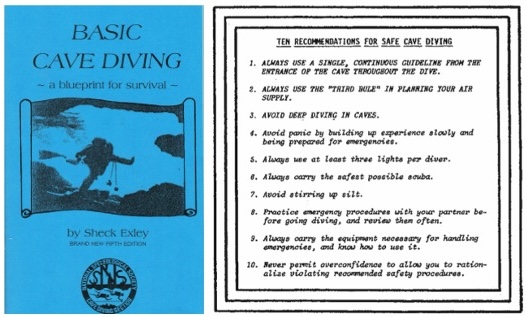
Being aware of rules and limits and following them. In the cave diving community, the best known rules come from Sheck Exley’s blueprint for survival. Sheck’s rule 10 is “never permit overconfidence to rationalise violating recommended safety procedures.
Establish psychological safety within dive teams, allowing anyone to speak up or admit being uncomfortable with the plan, regardless of perceived authority gradient.
Give clients agency during pre-dive briefs on cenote tours, emphasising the “thumb rule” that any diver, can call any dive at any time for any reason without ridicule or retribution, as described in this blog.
Do not be afraid to challenge behaviour which is perceived to be unsafe - it might be normal, or it might not be safe. When you do, do it in a polite, respectful and curious way. e.g., "Can you explain the background behind why we are doing it this way?" Not turning a blind eye and mentioning your concerns to a fellow diver, instructor or guide on Monday may save a life on Tuesday.
Be aware of your own “soft boundaries” and situations in which you are more likely to take risks - having 'lines drawn in the sand' which are non-negotiables.
Make clear standards and procedures for safe cenote diving available to all dive guides, and promote their value beyond 'we have to' instead, move to 'we want to'.
Introduce a training programme for new cenote guides that addresses the concerns raised in this blog and other issues regularly raised that erode safety margins.
Decision making, performance influencing factors, normalisation of deviance/risk and many of the other facets of this event are part of the online Essentials and the “in person” Applied Skills classes from The Human Diver. Click here to see what classes are available in your area.
The new Learning From Emergent Outcomes (LFEO) programme goes deeper into effective analysis and getting better after an adverse event. The first LFEO courses launch later this year and you can sign up to the waiting list here.