Keeping one eye in the dark: As a team, making sure you don’t miss the bigger picture
When I was eighteen years old and in basic military training, I learned a simple trick about night vision. When we heard the distinctive pop of a parachute flare being fired, we were taught to immediately close one eye. A few moments later, the flare would ignite and turn the darkness into a harsh, artificial day. The exposed eye would lose much of its dark adaptation. The closed eye would remain protected. When the flare burned out, you still had an eye capable of seeing into the darkness.
More than forty years later, I still do it. The operational environment has admittedly deteriorated somewhat. These days the flare is occasionally my refrigerator light at four o'clock in the morning. I open the door with one eye closed, find whatever seemed important enough to wake me, close the door, and reopen the protected eye. Then I can walk back to bed without tripping or stubbing my toe. It probably looks ridiculous but it works.
The physiology is well established. Dark adaptation develops gradually and can be degraded quickly by bright light. Aviation guidance still recommends closing one eye, when safe, during brief exposure to bright light so that some night vision is preserved (Federal Aviation Administration [FAA], 2021). Recently I started wondering whether there was a larger human-factors lesson hiding inside that old habit.
Sometimes our problem is not that nobody sees something important. Sometimes our problem is that something becomes so important that everybody looks at it.
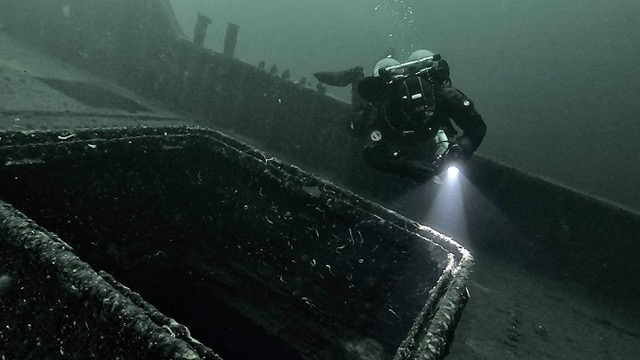
The flare in the middle of the dive
Emergencies capture attention. Equipment fails. A teammate signals a problem. A diver requires assistance. Suddenly there is a flare burning in the middle of our cognitive environment: “look here.” And we do. Importantly, often we should do just that, but the emergency is not the entire environment. Depth still exists. Gas is still being consumed. The team is still moving. Current continues. Navigation still matters. Other hazards remain, and solving the first problem may create a second one.
Human-factors researchers use the term attentional tunnelling for the way attention can become concentrated on one task or source of information while other relevant tasks are neglected. Wickens (2005) examined this in aviation, including fault-management situations in which crews could become absorbed in diagnosis. Underwater, the machinery is different, but the cognitive problem is familiar. A failure becomes urgent, interesting, and close. The rest of the world becomes background.
That narrowing can feel like excellent performance. We are focused, communicating, and applying skill. Seen from six inches away, the response may look flawless. Seen from the perspective of the whole team, we may be fixing one thing while quietly allowing another to deteriorate. Attention does not always fail because nobody is trying. Sometimes it fails because everybody is trying very hard inside the same small frame.
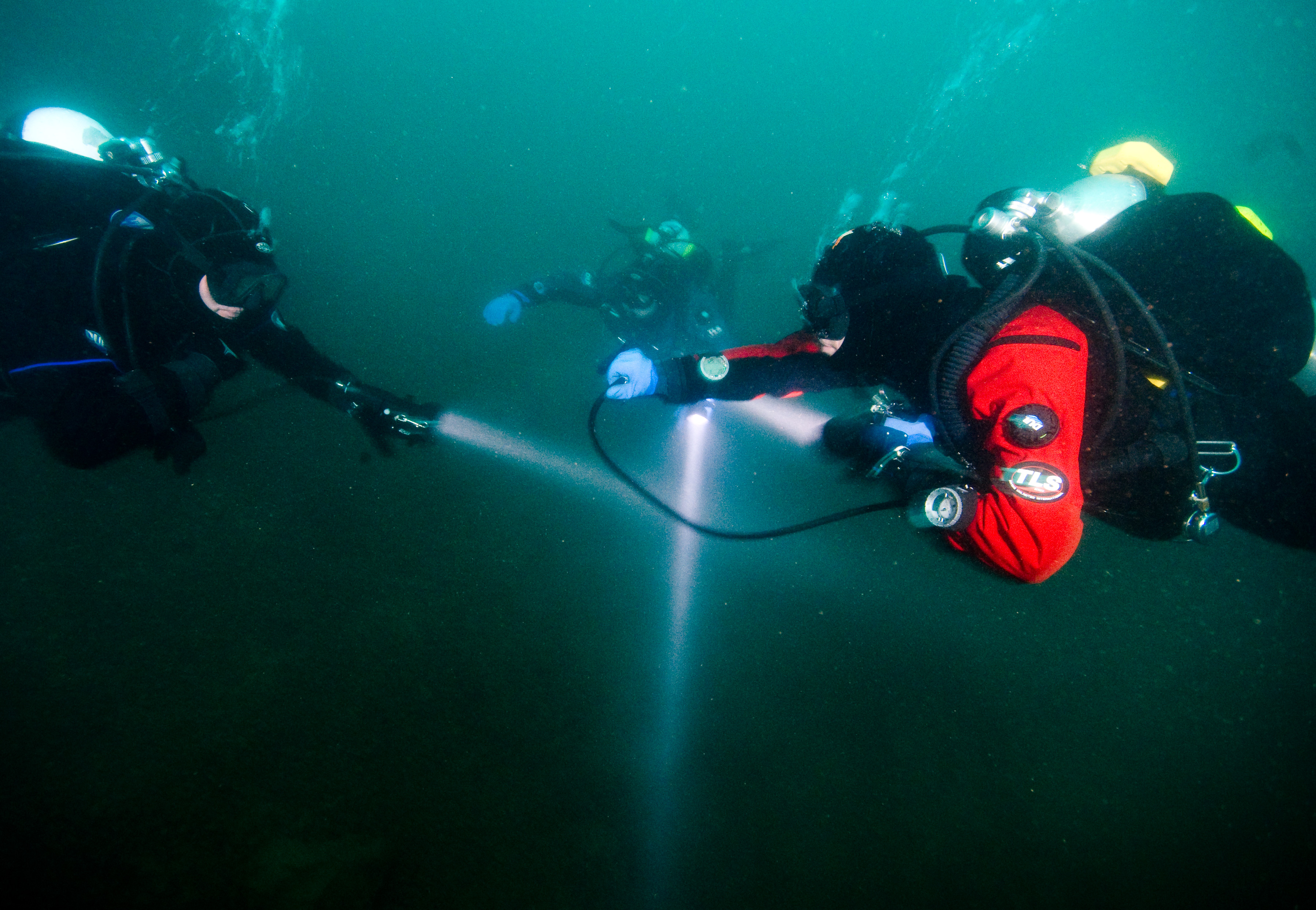
Three divers, one team
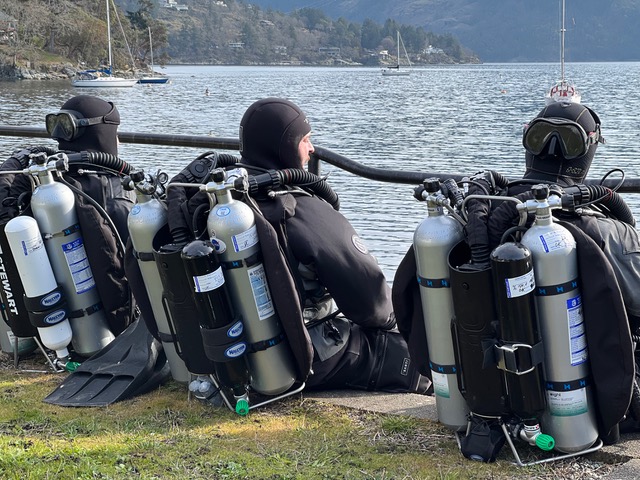
Imagine a three-person team in which one diver develops a problem and a second moves in to assist. Those two may need to go narrow and deep: diagnose, communicate, manipulate equipment, control position, and solve the immediate problem.
What should Diver Three do?
There is a powerful instinct to move closer. Helping feels useful; watching can feel passive. Diver Three may want to inspect the same equipment or put another pair of hands into the problem. Yet there is a point at which the third person contributes very little additional problem-solving capacity while removing nearly all of the team's remaining monitoring capacity.
Three people staring at one malfunction do not necessarily represent three times the capability. Sometimes they represent one problem and nobody watching the ocean.
Diver Three may be more valuable by remaining wide and forward. What is happening to depth? Where is the team moving? Is the exit still where everyone thinks it is? What are the secondary hazards? What will be needed next? Most importantly, is solving this problem creating another one?
The third diver is not a spectator. The role may require controlling position, monitoring gas and time, managing a line, communicating a developing hazard, or interrupting the other two. It may eventually require joining them. The role changes with the situation. The point is not that one diver must always stand back. The point is that the team should resist allowing one problem to consume all of its cognitive capacity.
This scenario is something I would often create during a technical diving course where problem solving was the name of the game. Repetition would usually lead to the correct way to solve the problem, but for experienced instructors, that wasn’t what we were watching. We were watching for attentional tunneling and would debrief accordingly.
Attention belongs to the team
Situation awareness is often treated as an individual possession: a diver either has it or loses it. Endsley's (1995) model is more useful than that shorthand. It describes situation awareness as perceiving relevant information, understanding what it means, and projecting what is likely to happen next. A depth change is not merely a number. It has to be noticed, interpreted, and connected to what the team may need to do.
A team complicates the picture because three divers do not, and should not, hold identical copies of the world. Each has a different position, workload, view, and responsibility. Research on distributed cognition asks us to look beyond the individual and consider how thinking is distributed across people, tools, procedures, and the environment (Hutchins, 1995). A dive team is one of these cognitive systems. Information exists not only in heads but in computers, gauges, lines, lights, hand signals, body position, and the behaviour of other divers.
Under normal conditions, the awareness of team members overlaps. Under high workload, however, attention can be deliberately distributed. Two people can concentrate on the casualty while someone else preserves the wider picture. Team awareness is not reduced because everyone is looking at something different; it may be protected because everyone is not looking at the same thing.
Shared situational awareness does not mean identical situational awareness. Team members need the information required for their roles and enough common understanding to coordinate (Salas et al., 1995). The divers solving the immediate problem may need detail about a valve, hose, or entanglement. Diver Three may need to understand depth, time, gas, current, navigation, and where the entire team is going next. Their pictures are different, but they must remain compatible.
This leads to a better instructional question. Instead of asking only whether each diver has good situational awareness, ask: how is the team's attention distributed? Teams do not merely distribute tasks. They can deliberately distribute attention.
Training the third diver
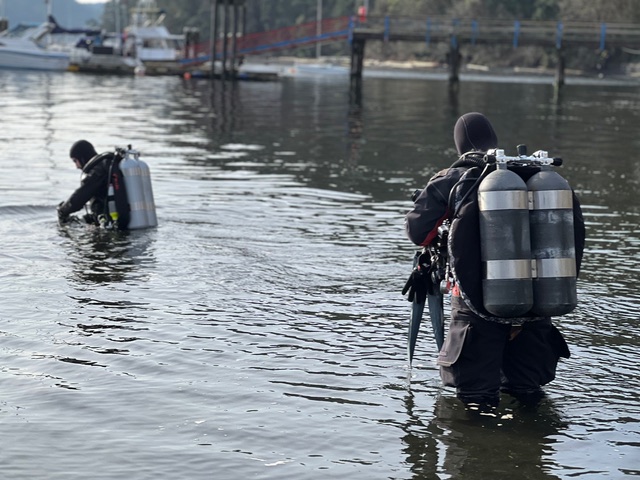
If this idea matters, it has to become more concrete than telling people to maintain situational awareness. During an emergency scenario, instructors can watch where attention goes. Do all three heads converge? Does the third diver crowd the casualty and assistant when another pair of hands is not required? Does someone retain a position from which the whole team can be seen? Who monitors depth, time, gas, current, and the route out? Who anticipates what the team will need thirty seconds from now?
Scenario design matters. If the only meaningful event is the announced casualty, students may succeed by throwing every available resource at it. We often unintentionally teach that the flare really is the whole environment. A better scenario allows the background to continue: a gradual depth change, a current, an approaching turn pressure, a navigation requirement, or another cue that matters only if somebody remains wide. This is not about ambushing students. It is about preserving the truth that the environment does not stop producing consequences while we work.
The debrief can then examine the team's allocation of finite attention. Who went narrow? Who stayed wide? Was that deliberate? What information disappeared? When did the wider observer need to interrupt? Did Diver Three join too soon, too late, or at the right time? These are observable decisions that can be discussed and practised. They are more useful than simply declaring that someone lost situational awareness.
/https://tf-cmsv2-smithsonianmag-media.s3.amazonaws.com/filer/Phenom-Gorilla-spotting-631.jpg "But Did You See the Gorilla? The Problem With Inattentional Blindness")
Simons and Chabris (1999) famously demonstrated that people counting basketball passes could miss an unexpected person in a gorilla suit walking through the scene. The gorilla was not hidden. Attention was occupied. Our students do not need another warning that human attention is limited. They need practice allocating that limitation across a team.
The person looking away
There is something deeply human about moving toward a problem. We reward the person who pitches in and may distrust the one standing at the edge with apparently empty hands. In a high-risk environment, however, visible activity is not the same as system performance.
The third diver looking away from the malfunction may be carrying the heavier cognitive burden. They must resist the pull of the group, keep attending to weaker signals, and decide when a developing issue is important enough to interrupt. They are responsible for things that have not happened yet.
Their success is also difficult to see. If they correct a depth change early, nothing dramatic occurs. If they protect the exit or prompt the team to leave before gas becomes critical, there is no heroic recovery. Good monitoring often removes the event that would have proved it was necessary. That makes it easy to undervalue and difficult to train unless instructors deliberately look for it. An experienced instructor will build scenarios that are all about managing what is difficult to see and the debriefs will reflect that.
A team with three excellent problem-solvers can still be vulnerable if all three solve the same problem. Redundancy should not always mean duplication. Resilience can come from preserving a different position, a different time horizon, and a different interpretation. Diver Three may be the only remaining source of information that does not fit the team's first explanation.

Beyond diving
The principle travels easily. Two pilots can become absorbed in troubleshooting while the aircraft continues flying. A medical team can focus on one physiological crisis while another develops. A military team can become consumed by immediate contact while losing the wider tactical picture. A leadership team can devote all of its attention to today's crisis while tomorrow's problem quietly develops elsewhere.
Different environments, same cognitive vulnerability. The brightest thing attracts everyone's attention. The wider environment usually speaks in weaker signals and offers no guarantee that any one of them will matter. Preserving attention for those signals can feel inefficient right up until one becomes the next emergency.
There are times when everybody really is needed on the immediate problem. Keeping one eye in the dark is not a rule that the third person must remain detached. It is a reminder that convergence should be a decision rather than an unconscious reflex. Before the last person turns toward the flare, the team should know what will no longer be watched.
Keeping one eye in the dark
I have not seen a parachute flare in years. But the refrigerator light still comes on. For a few moments, everything inside is brilliantly visible. Then the door closes, the bright thing disappears, and the dark world around me matters again. Especially to my toes.
Effective teams may need to operate the same way. Someone must deal with what demands immediate attention. Someone may also need to preserve enough cognitive capacity to see what remains outside it. This is not inattention to the problem. It is attention to the whole.
When the flare goes up, protect an eye. When two people go narrow, keep someone wide. And when the person watching the darkness speaks, listen.
Before everybody turns toward the brightest thing in the environment, perhaps we should ask: do we really need every set of eyes on the flare?
Sometimes the team needs to keep one eye in the dark.
References
Endsley, M. R. (1995). Toward a theory of situation awareness in dynamic systems. Human Factors, 37(1), 32-64. https://doi.org/10.1518/001872095779049543
Federal Aviation Administration. (2021). Airplane flying handbook (FAA-H-8083-3C), Chapter 11: Night operations. https://www.faa.gov/sites/faa.gov/files/regulations_policies/handbooks_manuals/aviation/airplane_handbook/12_afh_ch11.pdf
Hutchins, E. (1995). Cognition in the wild. MIT Press.
Salas, E., Prince, C., Baker, D. P., & Shrestha, L. (1995). Situation awareness in team performance: Implications for measurement and training. Human Factors, 37(1), 123-136. https://doi.org/10.1518/001872095779049525
Simons, D. J., & Chabris, C. F. (1999). Gorillas in our midst: Sustained inattentional blindness for dynamic events. Perception, 28(9), 1059-1074. https://doi.org/10.1068/p281059
Wickens, C. D. (2005). Attentional tunneling and task management. Proceedings of the 13th International Symposium on Aviation Psychology, 812-817. https://corescholar.libraries.wright.edu/isap_2005/100