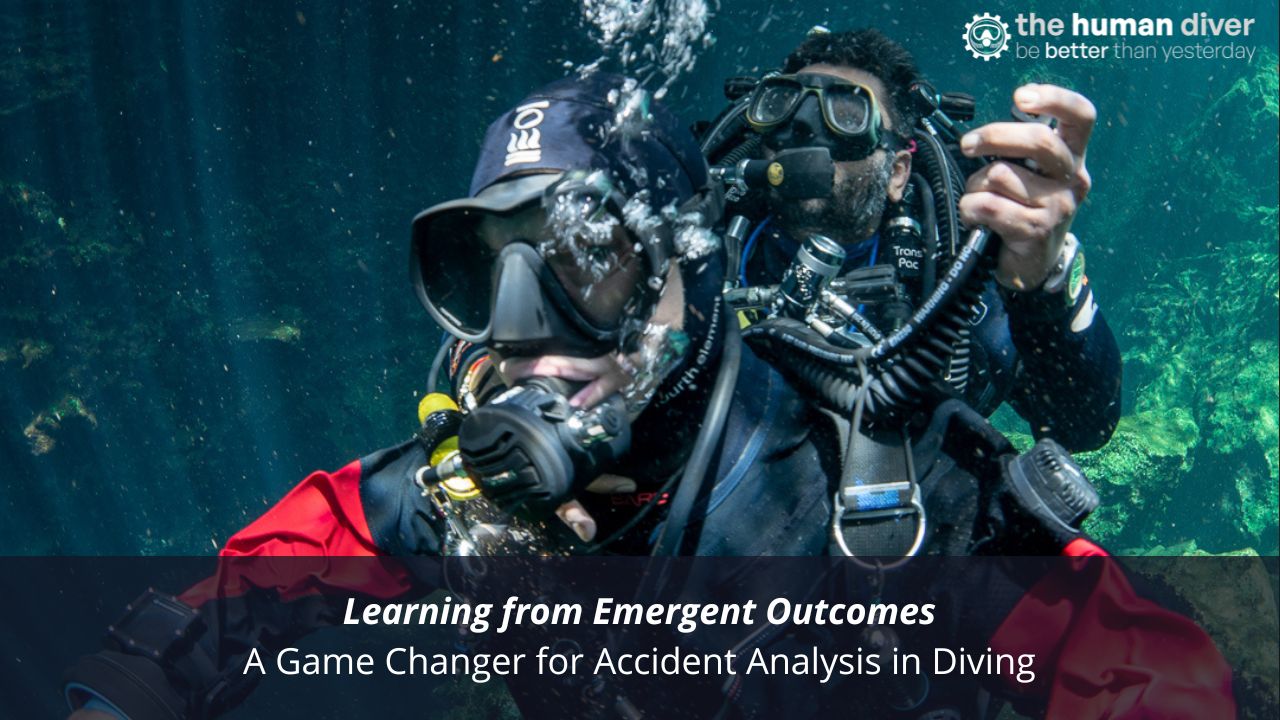
8. Learning from Emergent Outcomes – A Game Changer for Accident Analysis in Diving
Most reports on diving events, incidents or fatalities give us a description of what happened. Very few tell us why it made sense at the time, and that is why the same failures keep happening.
The new Learning From Emergent Outcomes (LFEO) course launched at the Human Factors in Diving conference earlier this year. This is a new way to look at event and accident analysis for all divers. It is especially applicable in the cave and technical community, where accident analysis often takes place but frequently does not progress beyond “what went wrong?” or “who touched it last?”. LFEO asks a more useful question: "how did this outcome emerge from the system as a whole?"
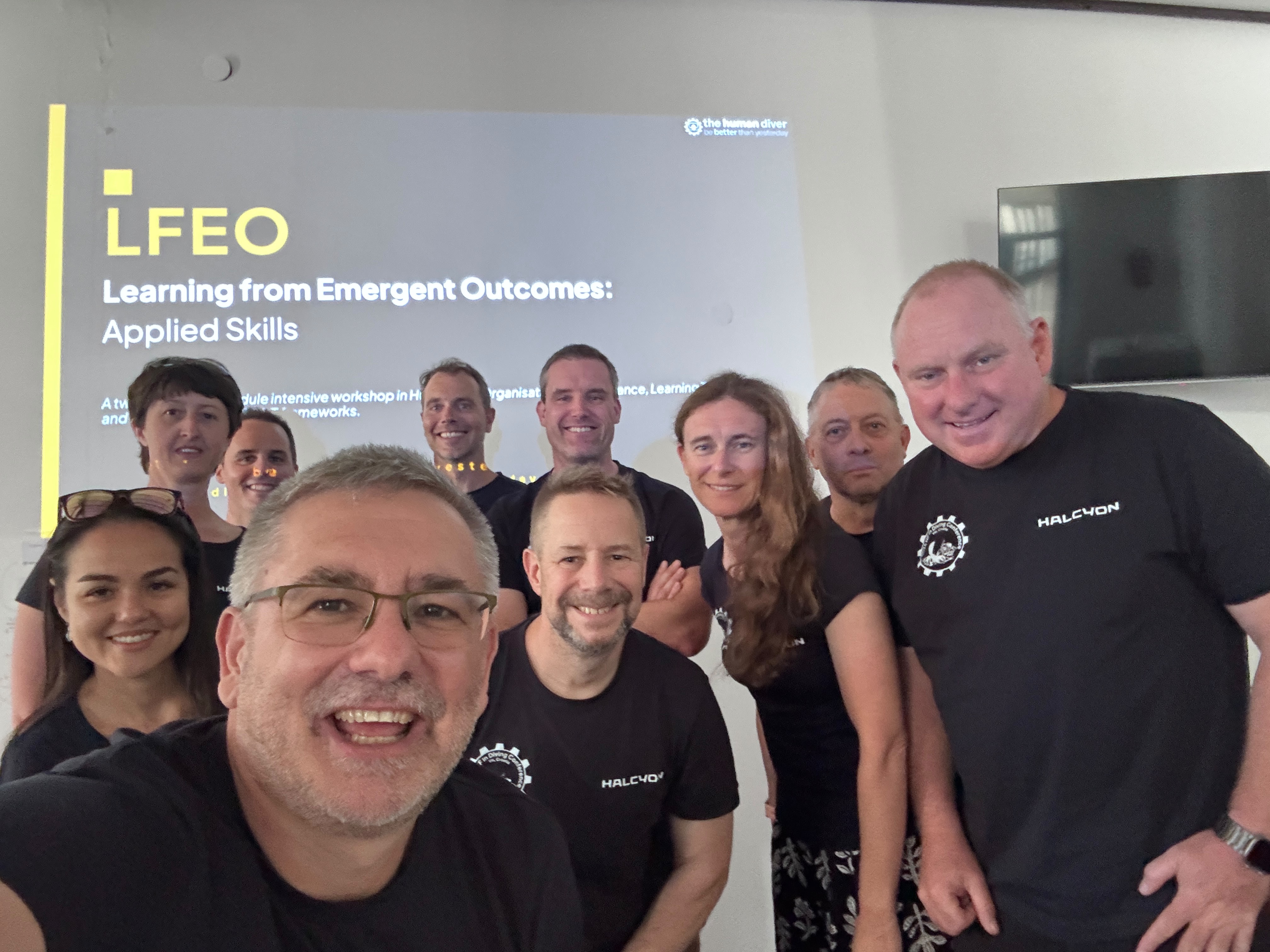
The approach is practical, but includes some foundational theory on how we look at adverse events. Some ways we can understand why the current approach is flawed and how we can improve how we look at unplanned events are studying:
The gap between what we think is happening (Work as imagined) and what actually happens (work as done).
The purpose of an investigation – understanding the detail of what happened and preventing future events.
Failures of conventional investigations, including that publishing a report is not the same as effective learning.
Common biases, such as hindsight, outcome bias and the Dunning- Kruger effect.
The importance of language, the use of non-agentive language and avoiding counterfactuals (would have, should have, could have).
The principles of Human and Organisational Performance -Error is normal, Blame adds no value to learning, Context drives behaviour, How leaders respond matters, Learning and improving are vital.
Why organisational drift happens and the normalisation of deviance.
Joint Cognitive Systems (JCS) theory. This is a really useful way to understand how decisions and actions depend on interactions between the team, equipment, procedures, and environment. Unplanned events occur when the demands of a situation exceed the available time and cognitive bandwidth.
Once the context to the examination of events has been understood and some foundations laid, the LFEO class takes a deeper look at a real word diving event using the PETTEOT framework. This has origins in the National Health Service’s SEIPS (Systems Engineering Initiative for Patient Safety) that has been used to understand how system design influences performance, safety, and outcomes.
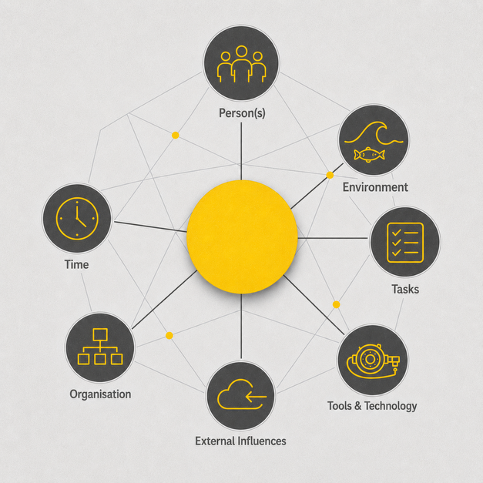
PETTEOT is at the heart of this process. An event is examined in detail under the headings of Person(s), Environment, Tasks, Tools & Technology, External Influences, Organisation, and Time. Each aspect of an event is looked at in detail to make sense of it fully, and it is classified as being under one of the PETTEOT headings.Areas with the most interactions highlight where system pressure accumulated and where the system failed to cope. Not a single root cause, but where capacity was most degraded or overwhelmed.These significant nodes areidentified by the LFEO Learning team and are classified as:
An amplification is where small factors combine to produce a larger effect. For example a complex dive and a team unfamiliar with each other combine to reduce cognitive bandwidth.
A constraint limits what actions are possible. A diving example could be a diver who could not launch a DSMB because both hands were occupied assisting a buddy.
Enabling makes things possible. For example a psychologically safe culture allows divers to call a dive without ridicule or adverse consequence.
A temporal cascade is where earlier events shape later ones. For example time spent fixing equipment results in a short briefing which means divers do not understand the plan so a key element is missed.
A protective interaction reduces the severity of an outcome. For example a hyperoxic mix in a rebreather loop reducing the chance of decompression sickness due to lack of inert gases.
The most significant interactions are then related to a narrative timeline, which will often identify where the shortfalls in capacity to cope with unexpected events takes place. Specifically, where the time available is less that the time required to evaluate, select and perform an action.
Finally the barriers and defences that were in place are examined. Specifically any that were not present (for example no requirement to analyse gas), present but not effective (a briefing that did not cover the key points), or where the event exceeded the design expectations (such as too many divers for a guide to supervise).
The great strength of this class is that it involves the team being guided through the analysis of a real event, and then applying the skills gained to something that actually happened to one of the team. PETTEOT forces the learning team to look beyond individual actions and into the system they were operating in. The outcome is not just more insightful reporting, but better decisions on future dives.
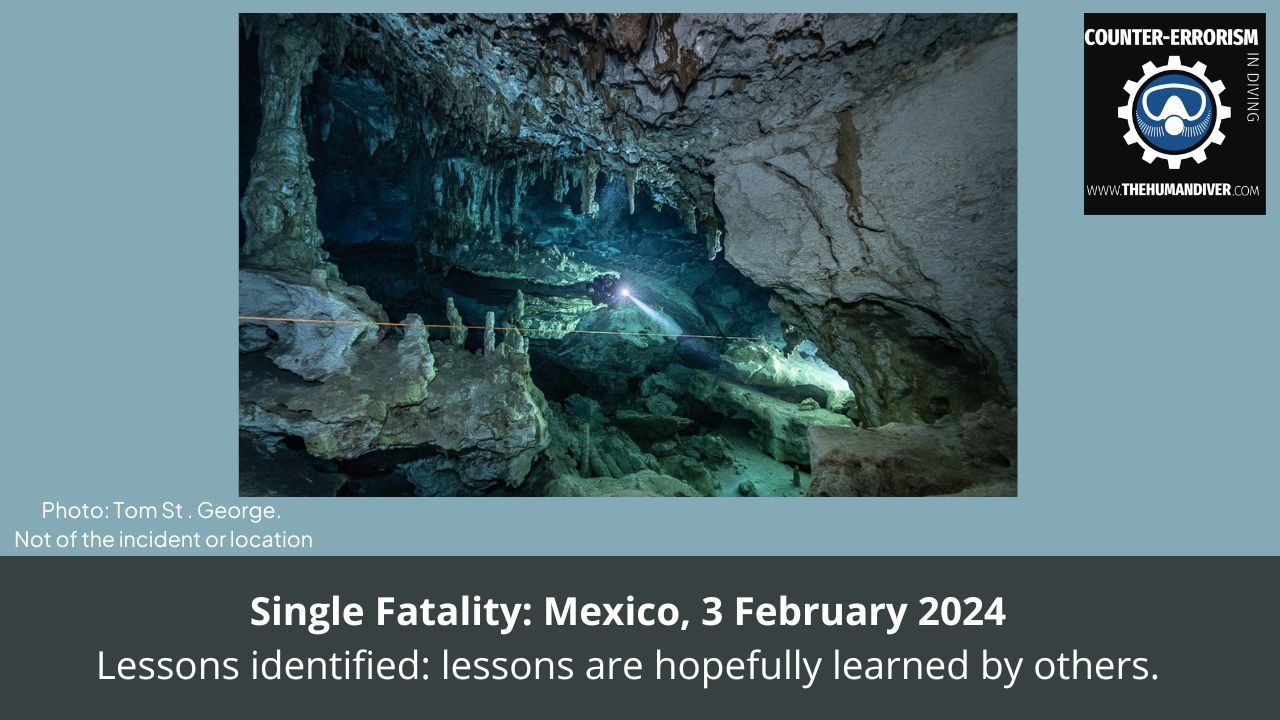
During the conference in Vis, I gave a presentation that used the PETTEOT framework to look at a recent cave rebreather fatality that was the subject of a previous Human Diver blog
The event that we examined in detail during the formal course was also the subject of a previous blog. It was very impressive that some genuine new insights were revealed to the team, despite the enormous experience of those involved in the event and the amount of reflection (including blog writing) that had already taken place.
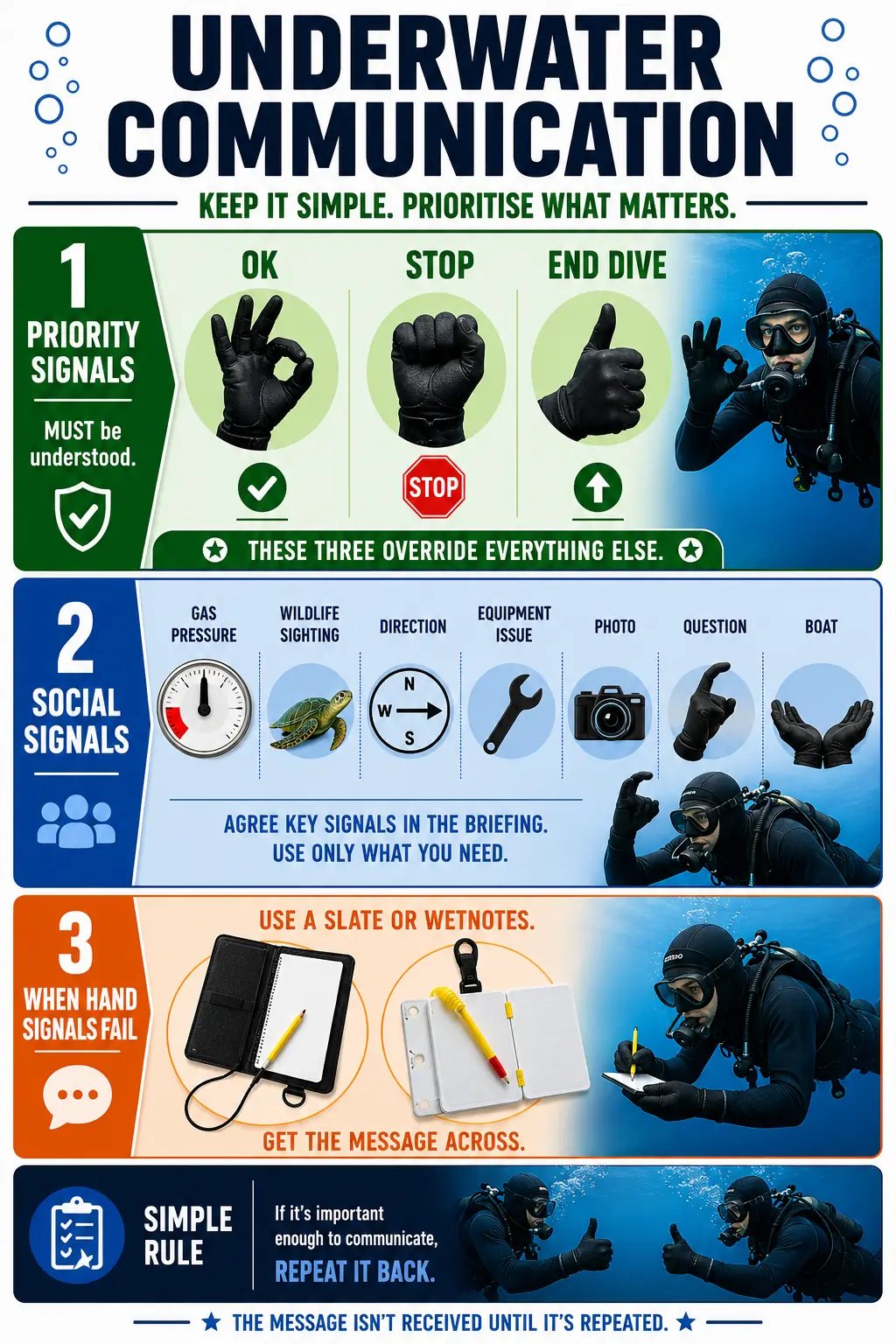
The final part of the LFEO class is to reflect on how systems and procedures can be changed. The message targeted to influence divers, instructors, agencies will be subtly different. Learning teams then design products to change behaviours, such as blogs, incident reports, visuals or briefing materials. The image below is one that was targeted at divers to address a shortfall in communication.
LFEO shifts the focus from blame to understanding, from isolated errors to system interactions, and from hindsight judgement to forward-looking improvement. It is most useful for those in leadership positions in agencies, dive centres and rescue teams, but the understanding of the decision making process is beneficial to all divers. Full details of upcoming classes are here: https://www.thehumandiver.com/lfeo
Beyond diving, the LFEO programme will hugely benefit any team, organisation or industry that experiences unexpected events with unintended consequences (spoiler alert: all of them!).