
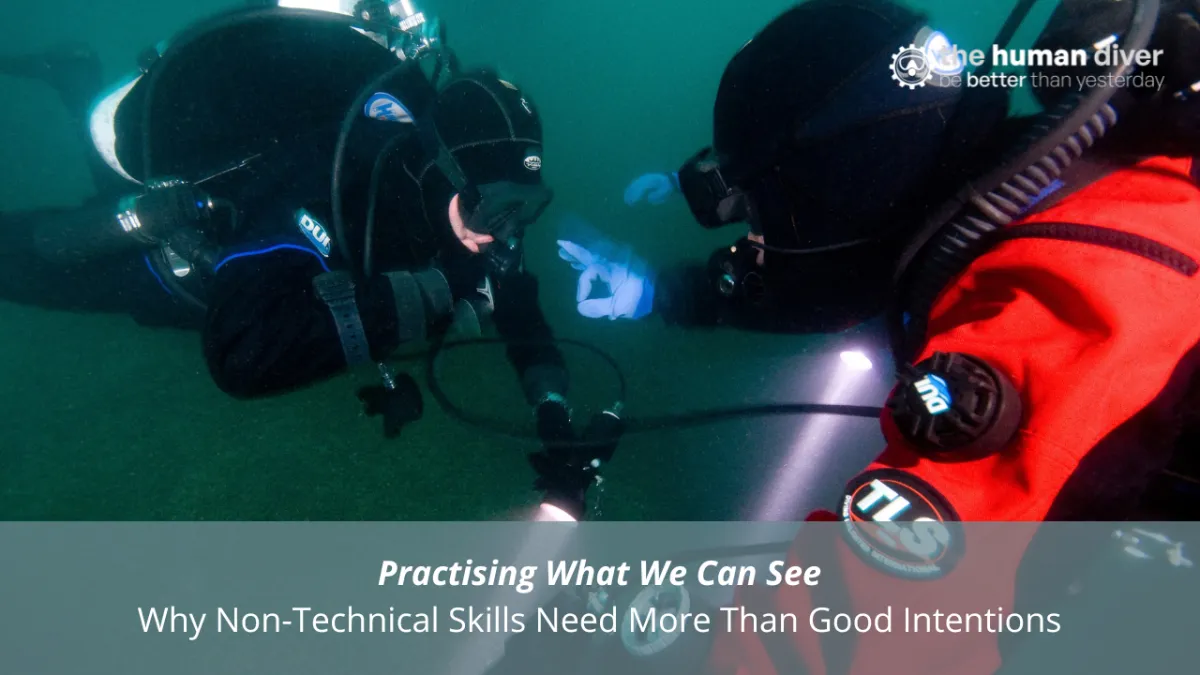
Practising What We Can See: Why Non-Technical Skills Need More Than Good Intentions
If you spend any time around technical diving, you'll hear the same advice again and again. Practice your skills: valve drills, S-drills, lost mask swims, reel work, bailout on the ascent... Divers are told to run them on every dive, or at least on a regular skills dive, and many do so with real discipline. On numerous occasions in a quarry I've seen divers run a valve drill at the start of the dives, their buddy watches, gives an OK signal, and they carry on. Not so much on a live dive in the sea!!
So what does that OK signal actually mean? Was the drill smooth, or that they just finished it? Was it faster than last month, or slower? Did the diver lose position in the water while they were manipulating the valves, or donating gas? In most cases, nothing gets discussed because nobody was asked to look and provide specific feedback. Technical skills practice in diving happens a fair amount. At the same time, critical and useful feedback happens much less often.
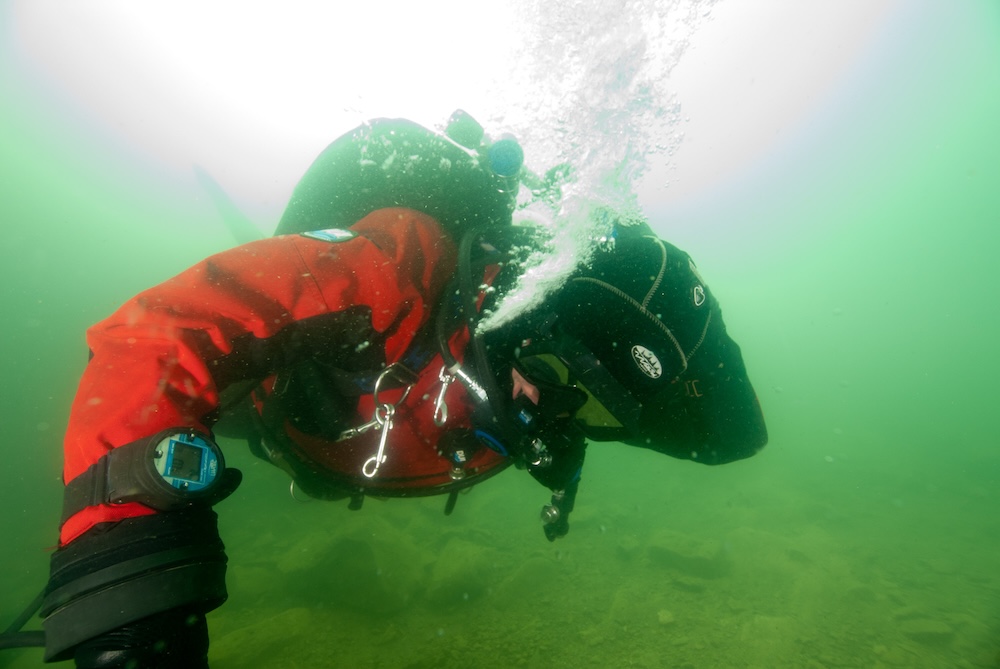
Unsurprisingly, non-technical skills/human factors gets even less. Situation awareness, decision-making, communication, and monitoring the rest of the team are covered in some courses as a single presentation or a section in the manual. On others, they barely appear at all. They're rarely practised on purpose, almost never assessed, and hardly ever mentioned after certification. Yet when we look at how dives go wrong, these are usually the skills that were missing. Plus, when a dive is 'rescued' with intention and skill, it isn't just the technical skills that helped resolve the situation, it was also non-technical skills.
Three areas of research help explain why this gap is so hard to see from the inside, and what we can do about it.
Practice without feedback has limits
Repetition on its own doesn't build skill reliably. It builds consistency, which isn't the same thing. If a diver repeats a valve drill with poor technique, they get very good at doing it poorly. Feedback turns repetition into improvement, and feedback needs a view from outside. The maxim 'practice makes perfect' should be replaced with 'perfect practice makes perfect!'
For technical skills, divers do get some of that feedback for free. The task and outcome tells you how it went. If your trim is off, you tilt. If a valve is stiff, you feel it. Research from surgery suggests people judge their technical skills reasonably well. In 2011, Arora and colleagues asked surgeons to rate their own performance in a simulated operation using the same tools the expert assessors used. For technical skills, the self-ratings matched the experts' ratings closely. Even so, reviews of this research find that novices tend to overrate themselves, stress makes their judgement worse, and video playback improves accuracy. Technical skills practice gets better when someone else is watching, or when there's a recording to review. This is why some agencies teach their instructors how to use a video camera to provide more accurate feedback without being task loaded in the process.
For non-technical skills, the picture changes completely.

In the same study, surgeons' ratings of their own situation awareness, decision-making and communication had no relationship with the experts' ratings. This was true for experienced surgeons as well as novices. Studies of trauma teams, surgical residents and student nurses have found the same pattern. In one study of residents, agreement with the faculty's ratings was moderate for technical skills and almost absent for non-technical ones.
A wider review of doctors' self-assessment by Davis and colleagues found that the least accurate self-ratings came from those who were the least skilled and the most confident.
The reason is feedback.
Non-technical skills don't tell you when they've gone wrong. When your mental picture of the dive is wrong, it often feels exactly the same as when it's right. When you stop checking on the diver behind you, nothing signals that you've stopped checking until something happens. The student nurses' study offered a useful explanation. Technical skills tend to be judged against clear and visible standards, while interpersonal skills are judged against standards that are implicit and hard to see. If you've never been shown what good team monitoring looks like, you have nothing to measure yourself against. If the agencies haven't explicitly taught this, then what do divers and instructors look for? To say HF and non-technical skills are 'obvious' leads us straight into the cognitive trap identified outlined above!
Given the above, the diving industry's approach to practice has a mismatch built into it. We get people to most focus on the skills that give the most natural feedback, and we leave the skills that give none to look after themselves! The reason is not hard to find. Technical skills are easy to see and easy to sign off, so they are what training systems are built to check.
This is a version of the streetlight effect: we look where the light is. Technical skills are visible and easy to assess, so that's where practice goes. The skills that give no feedback are left to look after themselves.
The debrief is the feedback
If non-technical skills can't be seen from the inside, then we have to get the feedback from somewhere else. That's what a debrief does. The evidence for debriefing is strong. In 2013, Tannenbaum and Cerasoli pooled 46 studies and found that debriefs improved performance by around 25 per cent on average. The effect held for individuals and teams, in simulated and real settings, inside and outside medicine. A later and larger analysis by Keiser and Arthur found an even bigger effect.
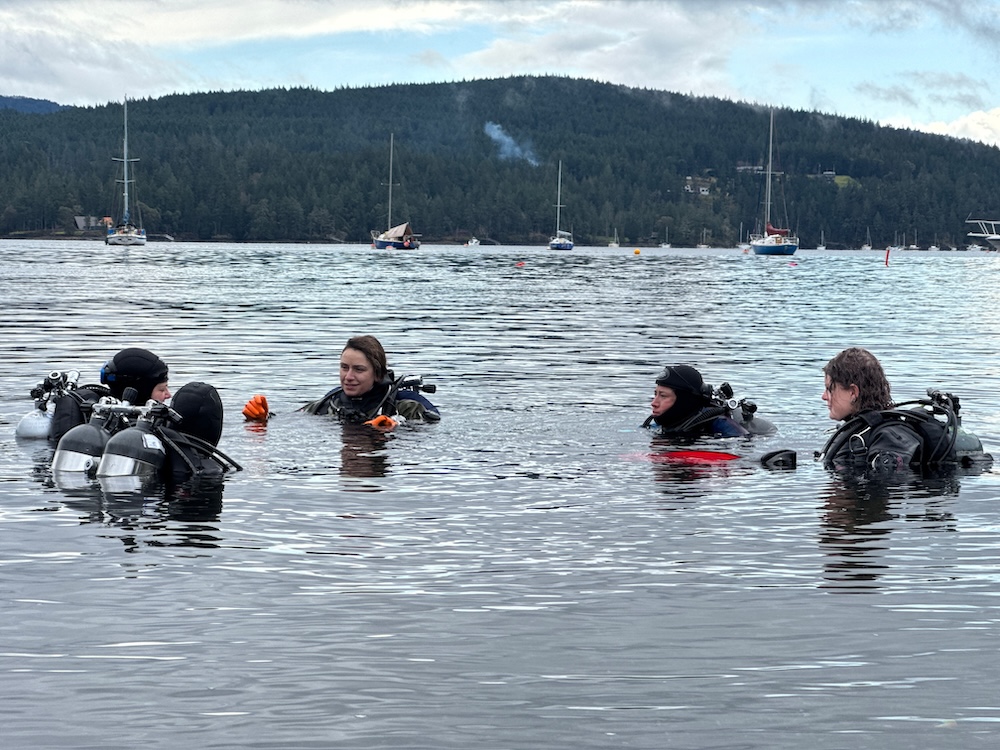
Keiser and Arthur also found that debriefs worked best on tasks that were complex, ambiguous and gave no feedback of their own. That's a close description of non-technical skills in diving (it's also what happens in the Applied Skills classes with InterLAB!) The debrief works best in exactly the area where divers' own judgement is weakest.
Many divers assume a debrief needs an instructor to lead it. The research says otherwise.
In two trials, Boet and colleagues had anaesthetists, and later whole operating theatre teams, manage a simulated crisis. Half then debriefed with an instructor. The other half reviewed their own performance using a structured framework of non-technical skills. Both groups improved, and there was no meaningful difference between them. Reviews since then have reached a similar view. Self-led debriefs are much better than none at all, and in the right conditions they match instructor-led ones. As an instructor, when was the last time you self-debriefed your own training delivery. The Human Diver instructors do this within 72 hours of their Applied Skills course delivery to help them learn, and help the other instructor get better too.
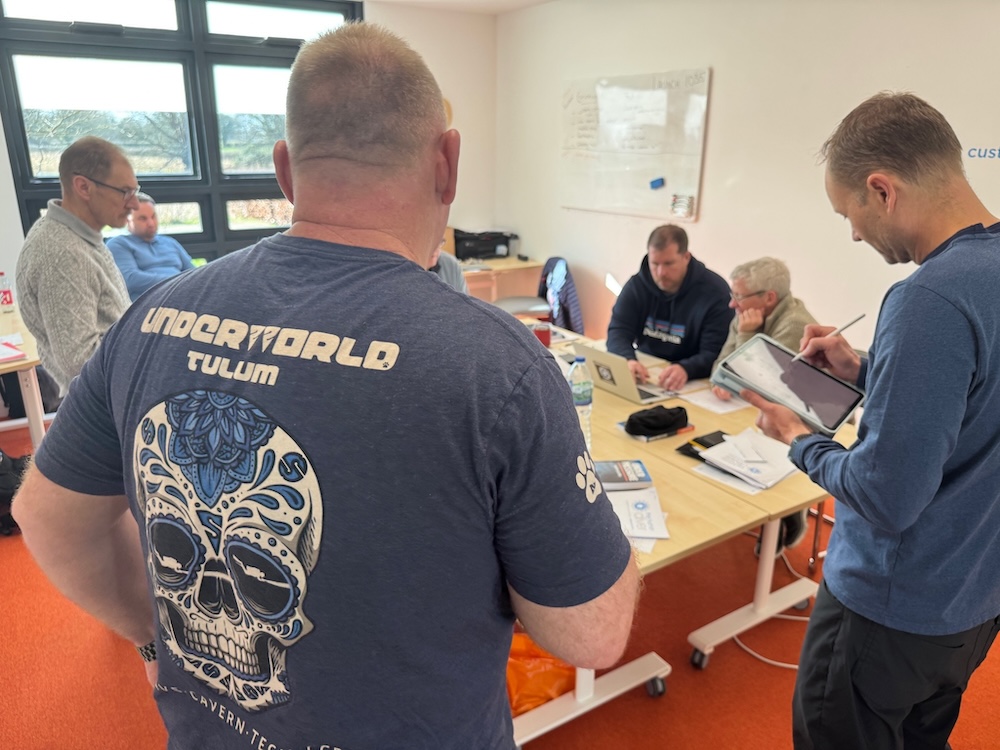
Those conditions are the important part. The self-led debriefs that worked had a structure that told people what to look for. Most also used some kind of objective record rather than memory alone. When teams debriefed without guidance, the results were weaker. Researchers have also warned that an unstructured self-debrief can reinforce errors and biases rather than challenge them. A team that shares a blind spot won't find it by chatting on the boat. The structure does the job an instructor would otherwise do. It points attention at things the team wouldn't look at by default. We use the DEBrIEF structure for the Human Diver instructors too!
What we don't practise, we lose
The third piece of the picture is skill fade. Here the evidence is less clear, as such, I'll be transparent about that.
A large review of the skill decay research by Arthur and colleagues in 1998 found that skills decline steadily when they aren't used, and the decline grows over time. They also found that physical tasks decay less than cognitive ones. Later work by Wang and colleagues found the greatest decay in tasks that were mentally demanding but physically light. Much of what we mean by non-technical skills fits that description. Tracking three divers' gas and position is mostly a thinking task with very little physical content.
Studies of non-technical skills themselves are mixed. One study of resuscitation teams found that leadership and teamwork lasted four to five months after training, while task management and overall team performance did not. Another found the benefits of a single crisis management session had mostly gone by four months. Some studies found good retention over longer periods, but those participants were working in hospitals every day, practising the skills whether they meant to or not.
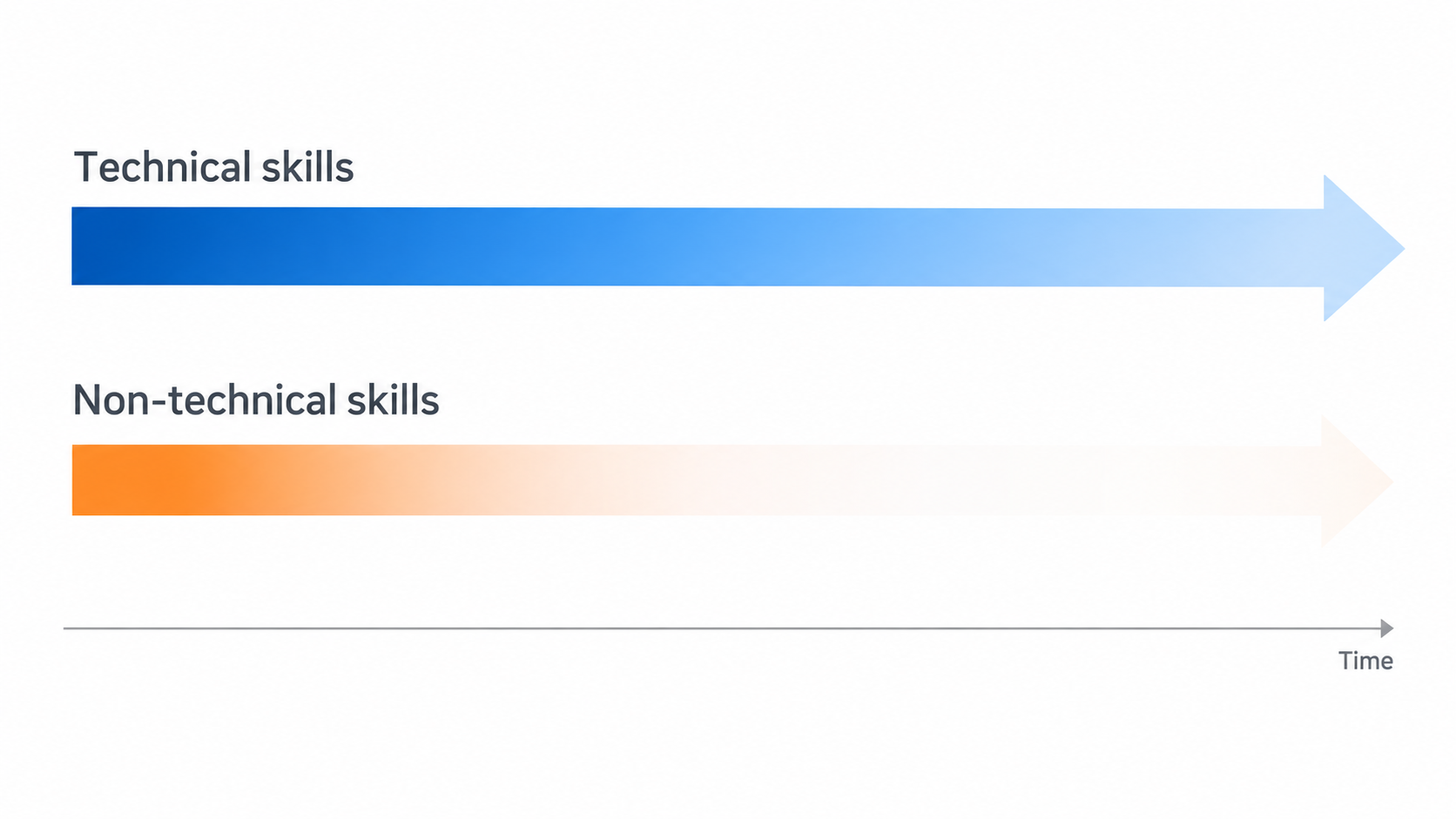
I haven't found any research that compares how quickly technical and non-technical skills fade in the same people. The declared position is that the evidence leans towards non-technical skills fading faster without practice, but that it hasn't been proven directly.
For divers, however, the practice point is the one that is important. Every dive exercises buoyancy and trim, whether you think about them or not. Many divers add deliberate drills on top. Team monitoring only gets exercised when someone does it on purpose, and it only gets feedback when someone looks. For a diver who gets wet a handful of times a year, the gaps between practice are long.
A loop that feels like competence
Put the three findings together and you get a loop.
We can't see our non-technical skills clearly from the inside.
When we don't practise them, they seem to fade.
Because we can't see them, we don't notice the fade. Confidence stays where it was while capability drops.
Meanwhile the technical drills continue on every dive, the buddy keeps giving the OK signal, and it all looks like good practice because nothing in the system tells the diver there is a gap until the day those skills are needed, and then it might be too late.
The debrief breaks the loop, but only if it actually happens. This is where most good intentions fail.
The dive ends, someone needs to get the kit off, the boat is moving, and by the time the team sits down with a coffee, the details have blurred. Hindsight has already started to make the story look better than it was (or at least different). The moment when two divers' mental model drifted apart during the dive, which is where the real learning lives, has usually been forgotten or smoothed over by then.
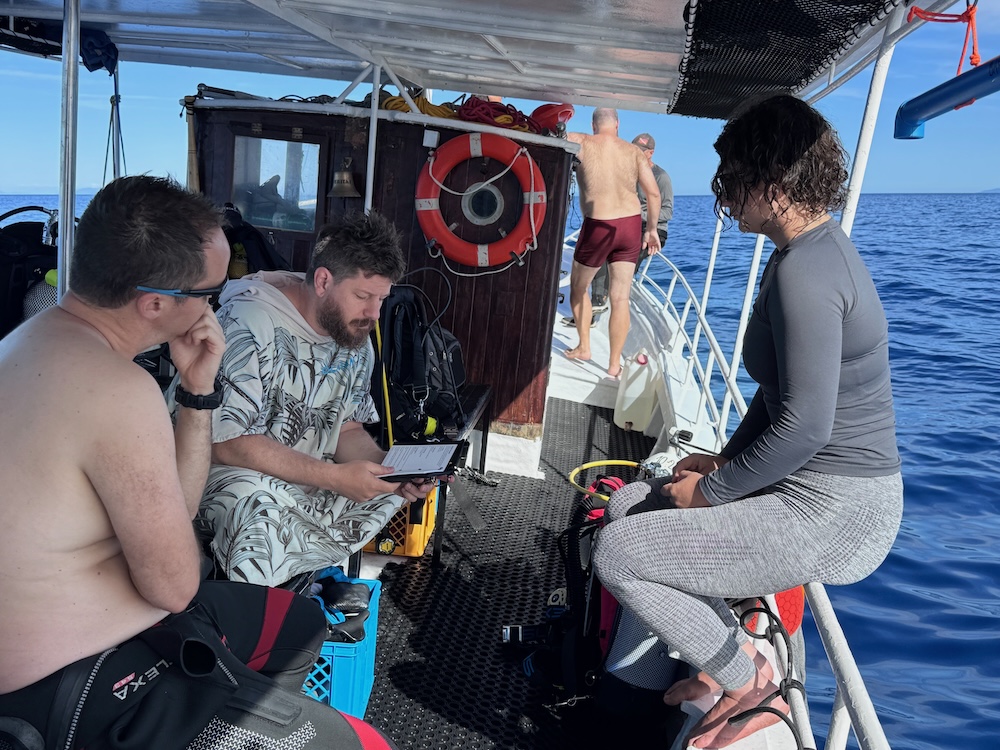
That's why we've put the DEBrIEF model into the Wetnotes (and inserts if you've already got a cover). The aim is immediacy. The structure is there on the surface, on the boat or at the tailgate, while the dive is still fresh, and nobody has to remember the questions or wait for an instructor.
What went well?
Why did it go well?
What needs to improve?
How will we improve it?
The same questions work for the individual and for the team. The prompt provides the structure the research says self-led debriefs need, and it makes that structure available at the point where the learning is freshest.
There's a simple way to bring the two kinds of practice together.
If you're running a valve drill, ask your buddy for one specific observation about it rather than an OK signal.
Then use the DEBrIEF questions to cover what the drill can't, such as who noticed what during the dive and when.
Rate yourself against specific behaviours rather than how the dive felt. "I checked each team member's position at every depth change" can be checked. "I was aware of the team" can't. Where you can, bring some objective evidence, such as camera footage, your dive computer profile, or the amount of gas you used against the plan.
Technical skills practice and development is important. In addition to this, noticing, reflecting, and narrating a story about the dive is what allows the practice of delivering feedback that is usually missing, and it gives non-technical skills somewhere to be discussed on every dive instead of a slide and discussion on a course.
A question for you
When did your team last spend as much time looking at how you worked together as a team as you spent refining your valve or gas-sharing drills?
References
Arora, S. et al. (2011). American Journal of Surgery. https://doi.org/10.1016/j.amjsurg.2011.01.024
Arthur, W. et al. (1998). Human Performance. https://doi.org/10.1207/s15327043hup1101_3
Boet, S. et al. (2011). Critical Care Medicine. https://doi.org/10.1097/ccm.0b013e31820eb8be
Boet, S. et al. (2013). Annals of Surgery. https://doi.org/10.1097/sla.0b013e31829659e4
Davis, D. et al. (2006). JAMA. https://doi.org/10.1001/jama.296.9.1094
Keiser, N. & Arthur, W. (2021). Journal of Applied Psychology. https://doi.org/10.1037/apl0000821
Keiser, N. & Arthur, W. (2022). Journal of Business and Psychology. https://doi.org/10.1007/s10869-021-09784-x
Tannenbaum, S. & Cerasoli, C. (2013). Human Factors. https://doi.org/10.1177/0018720812448394
Wang, X. et al. (2013). In Individual and Team Skill Decay. https://doi.org/10.4324/9780203576076-12


