

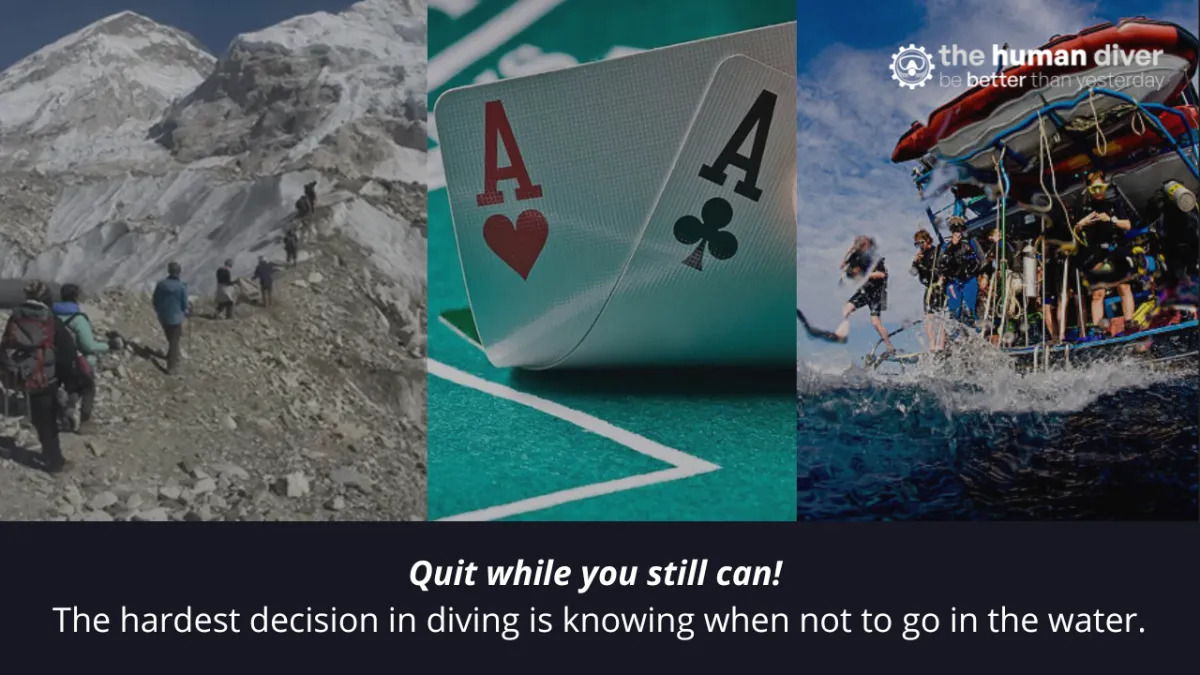
Quit while you still can
In 1996, during a commercial expedition to Everest, three participants — Stuart Hutchison, John Taske and Lou Kasischke — found themselves stuck at the end of an overcrowded queue just below the summit. They had set a ‘turn-back time’ — 13:00. No matter how close you are to the summit, you have to turn back; after that time, a safe descent before dark becomes impossible. Around midday, it became clear to them that they would not reach the summit until several hours after the set time at the earliest. At 11.30, they turned back. They descended safely. Boring. No drama. The world never heard of them.

On the same day, the leader of their expedition, Rob Hall — one of the world’s finest mountaineers, the very same man who had drummed the importance of 1.00 pm into their heads — reached the summit after 2.00 pm. He was waiting there for another member of his team, who didn’t reach the summit until 4.00 pm. Both died during the descent. Along with four other people who had reached the summit that day.
Films have been made and books written about Hall. As for the three who survived because they turned back — practically no one remembers them. One of the problems we have to face concerns decision-making in diving:we learn from experience – our own or that of others – yet our memory systematically erases those who made the right decision to call off the dive.The heroes are those who ‘made it’. Very rarely are those who say: ‘That’s enough, let’s head back’.
Hardly anyone talks about a dive they didn’t go on — because there’s nothing to talk about. And it is precisely these ‘non-existent’ dives that are most often the best decisions of one’s entire career.Wytrwałość nas pociąga. Odpuszczanie pozwala nam mądrze się wycofać.
Determination is what gets you to the top. Giving up is what tells you when to come down. – Anne Duke
Determination, perseverance, ‘never give up’ — these are the qualities we love, the ones we teach, and the ones that are truly necessary to even begin diving seriously. But they are precisely the same qualities that can be fatal when we fail to switch them off at the right moment.
More importantly, these aren’t two conflicting decisions.It’s one decision.Every time we decide whether to carry on, we’re simultaneously deciding whether to call it off — and vice versa. An exit strategy isn’t a failure of the plan. An exit strategy is what makes the plan make sense in the first place and allows it to be carried out with a clear conscience.
A good plan is not only meant to provide a path to achieving our goal; it is also meant to provide the option to withdraw safely
I often ask course participants and team members what the aim of our dive is. I hear various answers: ‘to carry out the plan’, ‘for our own satisfaction’, ‘to complete a task or exercise’.The true purpose of diving is not to reach the maximum depth, to enter that one chamber in a cave, to explore a wreck, or even to have a good time or improve our skills.The real aim is to return to the surface without suffering any physical, mental or emotional harm. Just as on Everest, the aim isn’t the summit, but getting back down to base camp. The summit is merely a halfway point.
Why calling it off ‘just in time’ always looks like calling it off too early
Quitting at the right time is almost always perceived as quitting too soon.
At the moment when we should quit, the situation doesn’t yet look catastrophic. The warning signs are faint. Fatigue or hypothermia is ‘bearable’. A minor equipment fault ‘probably doesn’t matter’. The atmosphere in the team is only ‘a bit tense’. If everything were already falling apart, the decision would be easy. The problem is that a good decision to call it off should be made when nothing has happened yet — and so it will always seem excessive, too cautious, sometimes even cowardly — ‘why should I call it off, nothing would have happened anyway’.
That is why the decision to call it off is so psychologically costly. We will never get proof that we were right. The three from Everest have no proof whatsoever that they would have died had they carried on. They only have the fact that they are alive. When we call off a dive because of fatigue, we’ll never know what would have happened had we carried on. The only reward is the absence of an incident — and the absence of an incident is the least rewarding thing in the world.
Paid for – must be used
Sunk costs are money, time and effort that we will never get back, regardless of what we do next. Rationally, they should have no bearing on the decision of ‘to go or not to go’ – because that decision concerns only the future. And yet they have a huge influence. The more we’ve already invested, the harder it is to back out — and the more often we react to bad news byincreasingour commitment rather than reducing it (this is called commitment escalation).
We’ve paid tens of thousands of zlotys for a safari in the Maldives or a cave diving expedition in the Cenotes. Time off work, a long, tiring journey, meticulously maintained, expensive kit collected over the years, dozens of dives preparing us for moments just like these… All of this is sunk cost — it’s irretrievably spent, regardless of whether we go for a dive today or stay on deck with a cup of coffee. But our brain calculates things quite differently. ‘You’ve paid for ten dives; if you back out now, you’ll be wasting part of the package.’ And suddenly, the decision to get in the water is no longer about whether this particular dive today is a good idea — it becomes about justifying or recouping the money and time already spent.
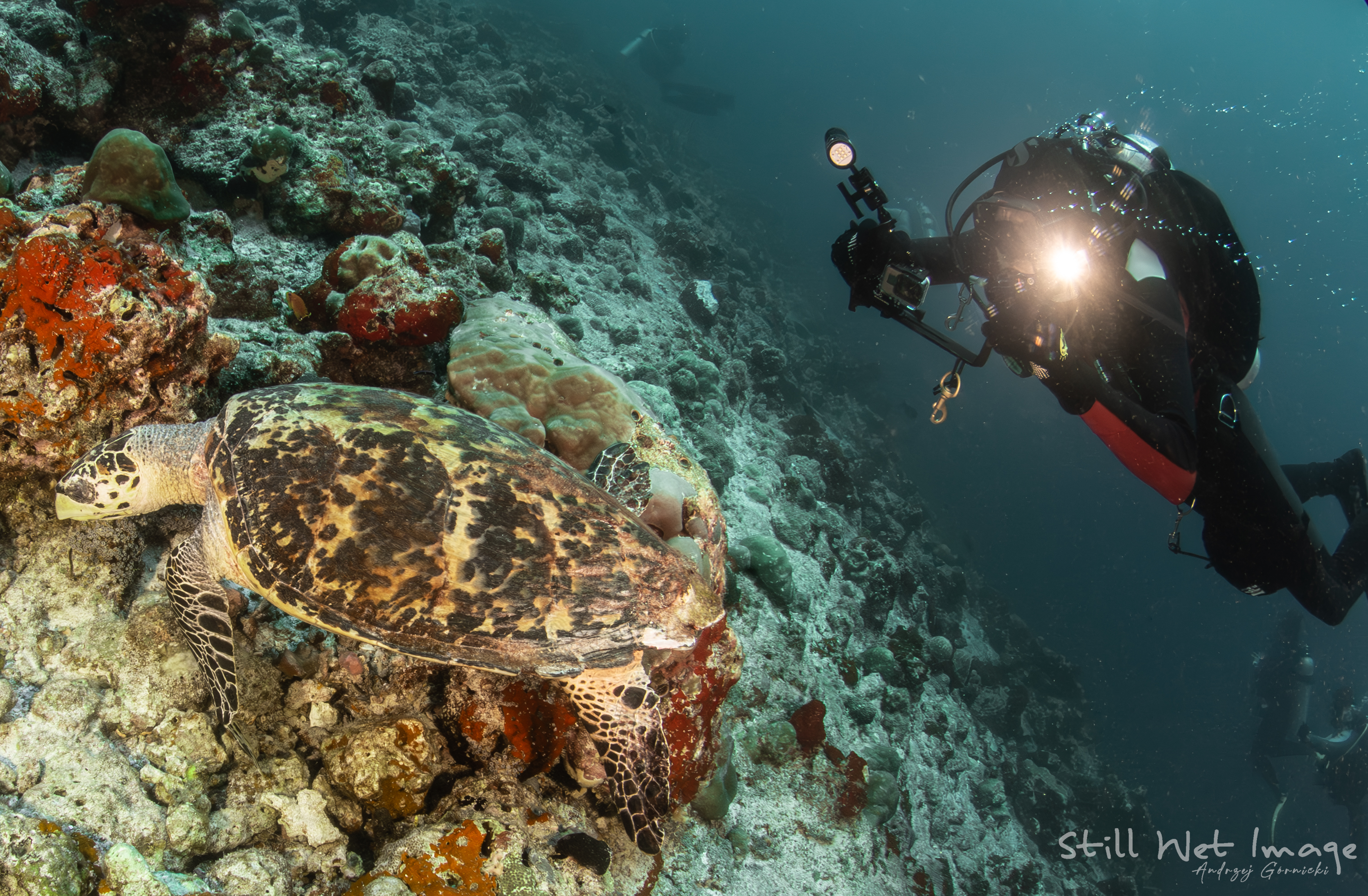
This is a trap. The package has already been paid for. The question isn’t ‘will I waste a dive?’, but ‘does the next dive have a positive return – is what I’m risking worth what I stand to gain?’. And we’re not risking the package. We’re risking ourselves.
Sometimes you have to fold good hands
Professional poker players play between 15 and 25 per cent of the hands they’re dealt. Amateurs play more than half. The difference between a professional and an amateur isn’t that the pro plays good hands better. It’s that the profolds, when necessary, even hands that would have won.
The price of playing it safe and making the right decisions is accepting that we’ll fold hands that could have been winners. ‘Any two cards can win,’ goes the poker saying. It’s true. Just not often enough to make it worth playing every hand. Divers fear that if they back out, they’ll miss out on something. Good divers know that not every dive is worth taking, and not every dive can be completed safely.
“But the conditions weren’t that bad.” “But others went in and nothing happened to them.” “But I could have managed it.” All of this is amateur thinking. Except that in diving, we don’t lose a stack of chips. And losing the stake we sometimes play for means there’s no second chance to make up for it.
In poker, the hardest decision isn’t folding a single hand, but walking away from the table. Making a decision based on the weather or tiredness is easier than asking yourself: am I ready for dives like this? Am I sufficiently prepared? Am I good enough? It’s a blow to the ego that few are ready for. For a diver, it’s a decision to skip an entire day of diving, or perhaps the highlight dive on a technical course, rather than just one of many dives. The hardest thing to say on board is: ‘I’m not diving today’.
Weak warning signs that we ignore because everything is ‘going well’
Each of us can list a number of warning signs, such as
fatigue— our own or that of our dive partner; the eighth dive on the third day running is not the same as the first;
minor equipment faults— “the wetsuit’s leaking a bit, but the water’s bearable”, “the inflator sticks sometimes”, “the hose’s just bubbling a little”;
a lack of procedures or failure to follow them— a rushed briefing, a missedbubble check, gas levels estimated “by eye”;
a poor atmosphere within the team— tension, silent resentment, someone who’s been sulking since breakfast;
poor communication with the instructor or guide— vague information, “we’ll just follow the guide”, a language barrier;
minor organisational glitches— delays, confusion, time pressure before the boat sets off.
Each of these signals on its own is minor. Each can be rationalised away. None of them, taken individually, screams ‘give up’. They quietly add up, whilst we are constantly receiving feedback thateverything is fine: we went down, we dived, we came up. Every successful dive with a minor glitch teaches us that this glitch is insignificant. This is called the normalisation of deviation — and it is fuelled by the very successes that make it difficult for us to call it a day.
The fact that we’ve managed so far is precisely what prevents us from calling it a day when we should.
Sometimes there’s no doubt that we should give up – and yet we don’t.
Jeffrey Rubin was an experienced mountaineer who set himself a goal: to climb the hundred highest peaks in New England. This is regarded as a significant achievement in the mountaineering community. He climbed ninety-nine of them. Whilst climbing the final, hundredth peak – Fort Mountain in Maine – the weather took a turn for the worse and fog rolled in. His partner decided to turn back. Jeffrey disagreed and carried on, alone. His body was found a few days later.
One person gives up, another carries on. We’re familiar with this.
Except that Jeffrey Rubin is the very same Jeffrey Rubin who, together with Joel Brockner, conducted groundbreaking research into escalation of commitment. The man who, scientifically, understood better than anyone else in the world the mechanism of falling into the trap of carrying on despite clear signals that one should give up. And he fell into it himself — ninety-nine peaks behind him, fog, a sudden change in the weather, his partner turns back, and he carries on.
For us, instructors and ‘experienced’ divers, this is a warning sign we must heed: knowledge is not the same as action.
The fact that I’ve written this article, that I teach about cognitive biases, that I’ve done thousands of dives — none of that protects me. Rubin was unable to call it off, even though he’d dedicated his career to it. If he couldn’t do it, then the assumption that ‘my awareness is enough’ is simply untrue.
If awareness isn’t enough?
If we can’t make a sound decision to exit ‘in the heat of the moment’ – because that’s precisely when all these mechanisms are at work on us at once – then we must make that decision in advance, with a clear head, before we enter the water.
This is called exit criteria(kill criteria): a pre-determined list of signals, the occurrence of which signifies the end, with no room for negotiation. The decision is made in advance, so at the critical moment, you don’t have to make it — you just have to carry it out.
States and dates(states and dates). If a specific state occurs — or a specific moment arrives — I surface. In diving, we already have some of this built into the gas and time rules (the rule of thirds, MOD, NDL). But the truth is that the most dangerous exit criteria are the ‘soft’ ones that nobody writes down:
“If I’m feeling exhausted after two days — I’ll skip the first dive on the third day, regardless of the dive package or location.”
“If my kit’s playing up on the surface — I won’t go in until it’s fixed; not even ‘just for one dive’.”
“If the briefing was chaotic and I don’t know what we’re doing underwater — I’ll ask, or I won’t go in.”
“If my buddy or guide and I can’t see eye to eye on the surface — it’ll be worse underwater, not better.”
“If the atmosphere in the group is such that I’m afraid to say ‘I’m not going in’ — that in itself is a reason not to go in.”
The key is to establish these criteria before setting off, ideally by writing them down and ideally by stating them aloud to your dive partner. Because then, pulling out ceases to be an admission of weakness in the heat of the moment, and simply becomes the execution of a pre-arranged, rational plan. “We agreed that at this signal we’d call it a day” sounds completely different from “I think I’ll give it a miss” said on the deck when everyone else is already getting ready.
Someone who loves you but doesn’t care about sparing you distress
Rubin had a partner on that mountain. His partner turned back. Rubin didn’t listen. Loved ones usually fail in this role, and not out of malice. Your partner, instructor-colleague, or best mate from the club — they see your disappointment, the effort you’ve put into this trip, and instinctively may shield you from the consequences of the phrase ‘maybe you shouldn’t go up today’. This is empathy working in the wrong direction: it protects your comfort now, at the expense of your safety in a moment’s time. Often, these people wouldn’t want to hear such a remark themselves either.
Your dive partner is personally invested in your dives; if you pull out, they lose a partner. The dive guide wants everyone to complete as many successful dives as possible, rather than getting bored on deck whilst others are underwater. The instructor wants you to complete the training programme.
In diving, this is precisely the role of the designated safety officer (DSO), whose job is to ensure safety, not to keep the mood on the boat light-hearted. Not someone who persuades you to call it a day right now — but someone with whom you agreed,beforethe trip, on which signals you would both respond to. In better-organised dive teams, on liveaboard boats or in projects where diving is a means to an end, this role is fulfilled by the DSO or dive marshals.
As people, we want to be consistent, and we want to be seen as such. Society rewards consistency, and it is often associated with credibility. We value a consistent pursuit of a goal. This desire to be consistent, both in our own eyes and in the eyes of others, will prevent us from calling off a dive. But we can use that very same consistency as a tool to help us call off the dive at the right moment – provided it is part of our plan. Calling it off based on agreed signals ceases to be a capitulation and becomes the consistent implementation of the plan’s agreed objectives. We cease to be ‘those who gave up’, and become those who were able to carry out the plan.
Psychological safety: who on board can say ‘I’m not going in’?
If opting out means loud sighs, mocking looks, comments, quiet mutterings of ‘why did he even come?’, and pressure from the group that’s already packing up — then no exit criteria will work, because they’ll be too costly to trigger. The decision to opt out is an individual one, but how much it costs is a feature of the system. A good briefing, a good expedition leader and a good team culture create an environment in which ‘I’ll sit this dive out’ is a respected decision that demonstrates experience and responsibility — not a capitulation.
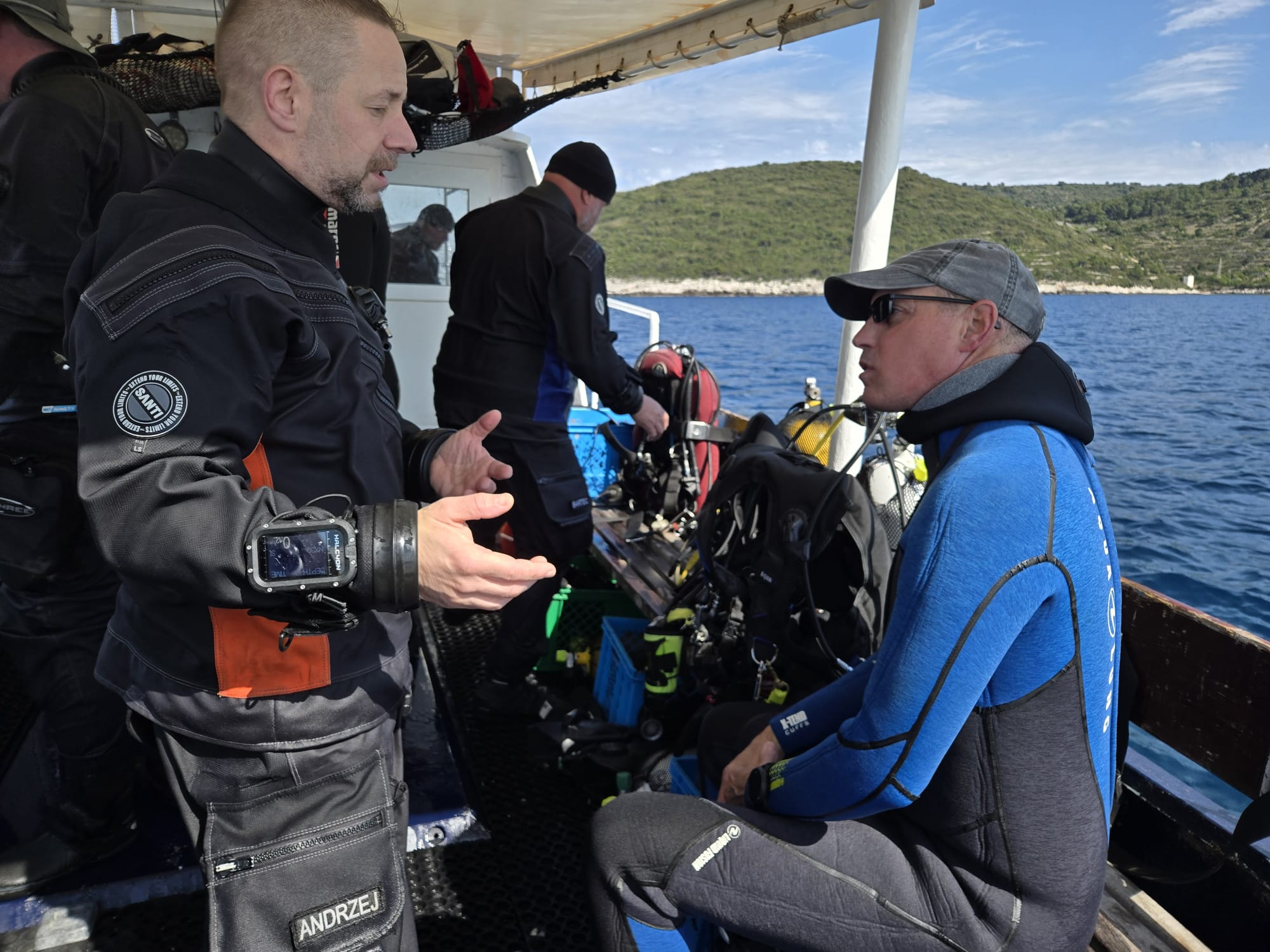
In the presentationon silence on the surface: silence within a team becomes a hidden risk multiplier long before anything goes wrong. A withdrawal that isn’t carried out is one of the quietest forms of this silence.
The three whom nobody remembers
I’d like the diving equivalent of this story about the would-be Everest conquerors to become something we pass on. So that ‘I didn’t go in today because I was tired and my wetsuit was leaking, and it turned out to be the best decision of the whole trip’ becomes a story we share — rather than a dull non-event that nobody mentions.
Determination will get you into the water. But it is the ability to call it a day that will determine whether you come out of it. And like any skill — you have to practise it, name it, decide on it in advance and let it cost as little as possible.
We must remember that the decision to give up or carry on cannot be judged by whether anything happened. From the point of view of evaluating the decision, the outcome of the dive is irrelevant. A good decision to proceed and a good decision to abort are judged by whether the process was rational at the time the decision was made – whether you stuck to the criteria, whether you heeded the warning signs, whether someone from the outside had a chance to tell you the truth – and not by whether it just so happened to work out this time. A diver who went ahead with the dive despite the warning signs and emerged unscathed did not make a good decision. They were lucky. These are two different things, which is why it is so important to discuss them. Did the outcome of our decision result from a well-thought-out and executed plan, or were we simply lucky?
The line between ‘I can still turn back’ and ‘I can’t turn back now’ is a fine one. It shifts imperceptibly; sometimes the only warning signs are very faint ones that seem insignificant — especially when everything appears to be going well.
This text was inspired by Annie Duke’s bookQuit: The Power of Knowing When to Walk Away(2022). The examples of the 1996 Everest expedition, poker decisions, the escalation of commitment in the case of Jeffrey Rubin, and the concepts of exit criteria and ‘states and deadlines’ are taken from this book; their interpretation in the context of diving is my own.


