

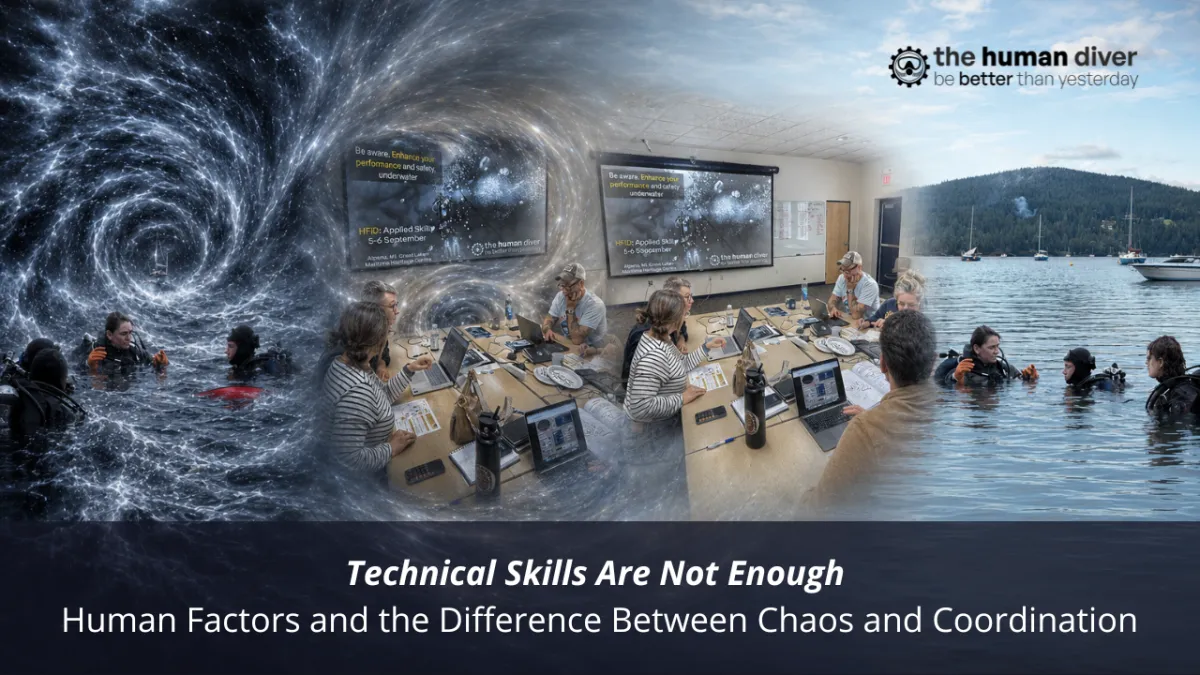
Technical Skills Are Not Enough: Human Factors in Diving and the Difference Between Chaos and Coordination
This blog compares two diving emergencies at the same dive centre. On the surface they looked very different, but together they point to the same lesson: while technical skills are necessary, and on their own they are not enough. In both stories the instructors were qualified and experienced, and they responded with urgency when things went wrong. What separated the two responses was the depth of their preparation in Human Factors in Diving, and how far that preparation had reached into the people and the culture of the centre.
The Human Diver describes human factors as the design and refinement of systems that make it easier to do the right thing and harder to do the wrong thing. In diving, that means training beyond the technical skills: communication, leadership and followership, situation awareness, decision-making, workload management, and shared mental models. The contrast between these stories is uncomfortable, because the first diver survived while the system struggled, and the second died while the system performed professionally. Outcomes matter, but they do not tell us whether a team was prepared to manage complexity.
Same Dive Centre, Different Depth of Preparation
Both of these events are real, but the location has been changed. Both events belonged to the same dive centre, several months apart, with different instructors and different students each time. What links them is the centre itself, and what changed inside it between the two emergencies when the dive centre Course Director recognised what was missing. It was the Course Director that submitted this narrative.
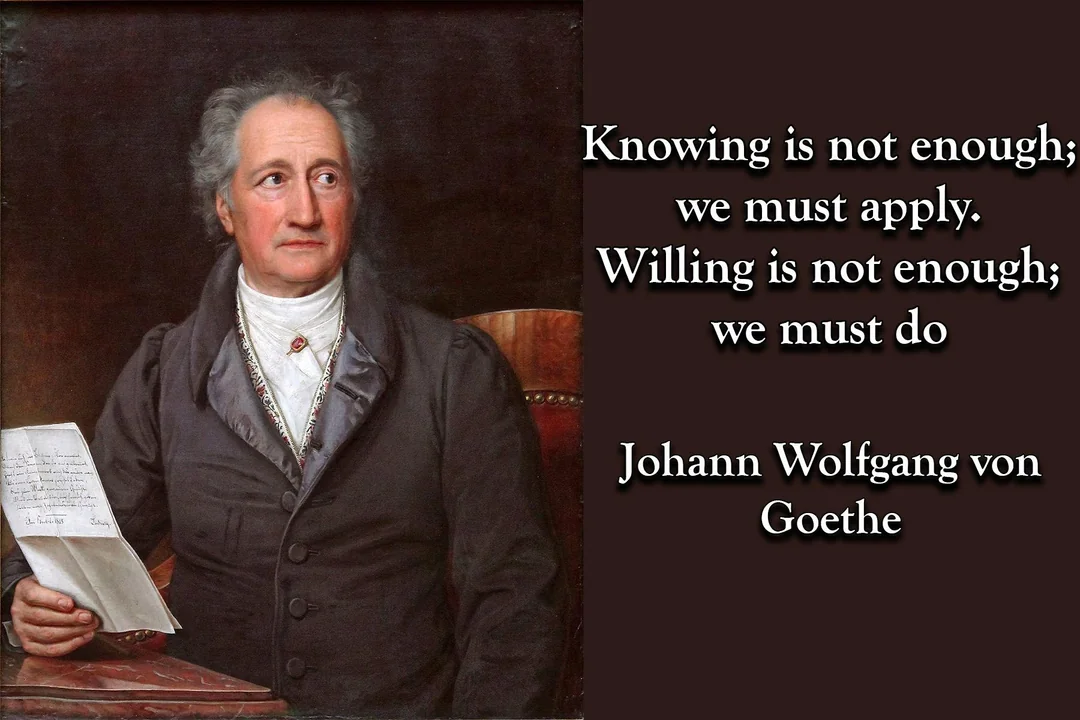
That change is the heart of this piece, so it is worth pointing out upfront. Before the first event, the centre had been given a brief overview of human factors in diving. The ideas had been introduced, and the language had been heard, but the knowledge stayed shallow, closer to a slideshow than to anything the team could actually use under pressure. Before the second event, two things had happened that the first never had. The instructors had completed HFiD: Applied Skills, and the dive centre’s Course Director had bought into the discipline and built it into how the centre operated. The overview had become practised capability, and what had once been one person’s interest was now the way the whole centre worked.
Both events involved qualified professionals who were PADI Master Scuba Diver Trainers. They cared about their students and moved quickly when a diver was in trouble. Coordination, though, takes more than care and speed. Under real stress and time pressure, a team falls back on whatever framework it has actually practised, and in the first story there was very little. The instructors had technical ability and every intention of doing right, but the skills associated with human factors in diving were only a half-remembered overview, never a working habit. However, by the second event, those involved in this event had trained in the discipline until it was theirs, inside a centre whose manager role-modelled the behaviours and expected them to use it.
Story One: Technical Competence Without Deep Human Factors Training
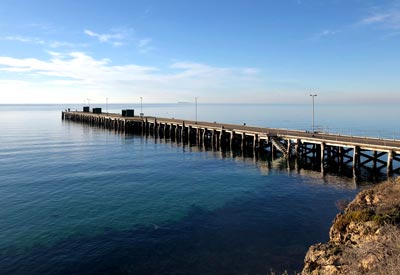
The first event took place at Edithburgh Jetty on the Yorke Peninsula, a shallow shore dive known for its long jetty and dense marine life around the pylons. It was the second training dive of the day, scheduled for 3:00 PM, and the group carried the subtle fatigue that follows an earlier dive, a surface interval, gear changes, and another round of briefings. Four PADI MSDT instructors, were working with five students in a PADI Advanced Open Water class. As they surfaced, Tim, one of the students, said the words that changed everything.
"My chest feels tight, and I am really short of breath.”
In that moment, the plan disappeared, pushed aside by one diver’s breathing and the need to decide what mattered most next. This is exactly where Human Factors in Diving training becomes critical: without a shared framework, a medical concern quickly becomes a coordination problem.
All four instructors moved toward Tim, because that is what caring professionals do. Their actions were understandable, and they were also uncoordinated, because there was no common framework holding them together. One moved to assess him while another tried to get him out of the water, and a third was still working out whether this was anxiety, exertion, or something worse. Each action made sense by itself. Together, the response spread thin and tangled, and the more urgent Tim’s distress became, the smaller the team’s field of view grew. No clear leader emerged, and no one owned the whole event. The other four students, the exit, the call to surface support, the handoff to EMS: all of it was happening in the gaps between people who each assumed someone else had it.
The students could feel the shift. They looked from one instructor to another, then grew quiet when they realised no one had a complete answer. Tim’s breathing had become the centre of the dive, but the rest of the group was still in the water and still needing leadership.
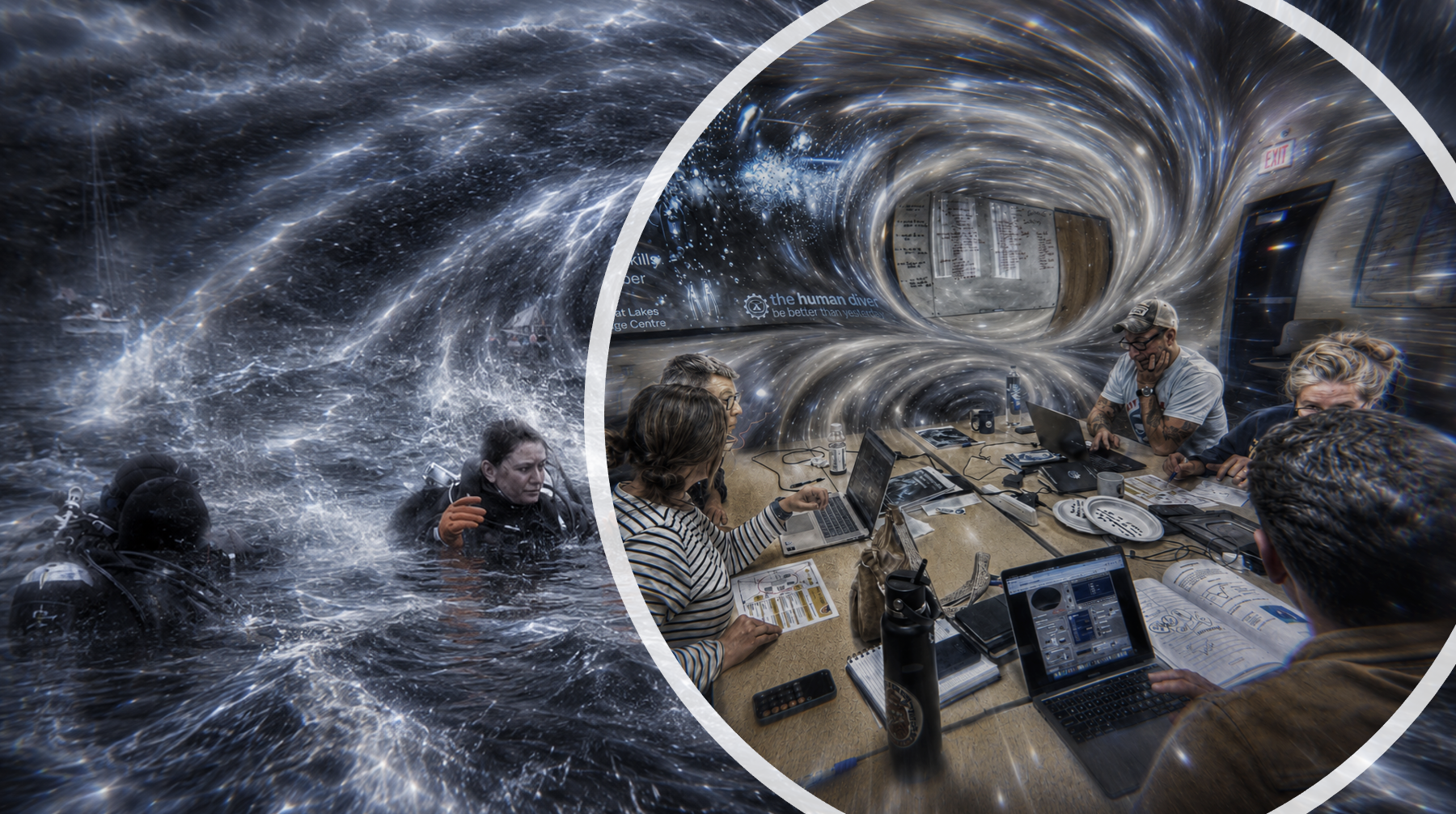
This is the failure pattern that Human Factors in Diving training seeks to address. These were capable people doing reasonable things with no shared frame to connect them, and that is how chaos arrives. The emergency expanded into every gap where role clarity, communication, workload management, and leadership should have been.
Tim was transported to hospital by EMS, and he survived. That fact makes a difference in one sense because it was a positive outcome. However, the debrief showed how fragile the system underneath that survival had been: fragmented communication, unclear roles, narrowed awareness, and no shared understanding of what had happened. The debrief pointed at the system, not at the four people in it, because this is what happens when a team is handed the idea of human factors in diving and never trained to use it under pressure.
"Under stress, people perform at the level of the patterns they have practised, whatever their intentions."
At Edithburgh, there were very few patterns to fall back on. The team had prepared for the dive they wanted and then had to manage the dive they suddenly had.
Explicit Human Factors Lessons from Story One
Technical competence did not create coordination: the instructors had skill and intent, but no shared Human Factors in Diving framework to organize the response.
Leadership was unclear: no single person appeared to own the whole event, which left students, exit planning, EMS communication, and scene control unmanaged.
Attention narrowed under stress: Tim’s distress became the entire focus, causing the team to lose awareness of the wider system around the emergency.
Roles were not assigned explicitly: without clear role allocation, several people worked the same problem while other important tasks were left uncertain.
Communication was fragmented: the team lacked closed-loop communication and a shared language for confirming who was doing what.
The debrief revealed system weaknesses: the issue was not lack of care, but lack of trained non-technical skills to connect individual effort into team performance.
Story Two: Deep Human Factors in Diving Training Applied
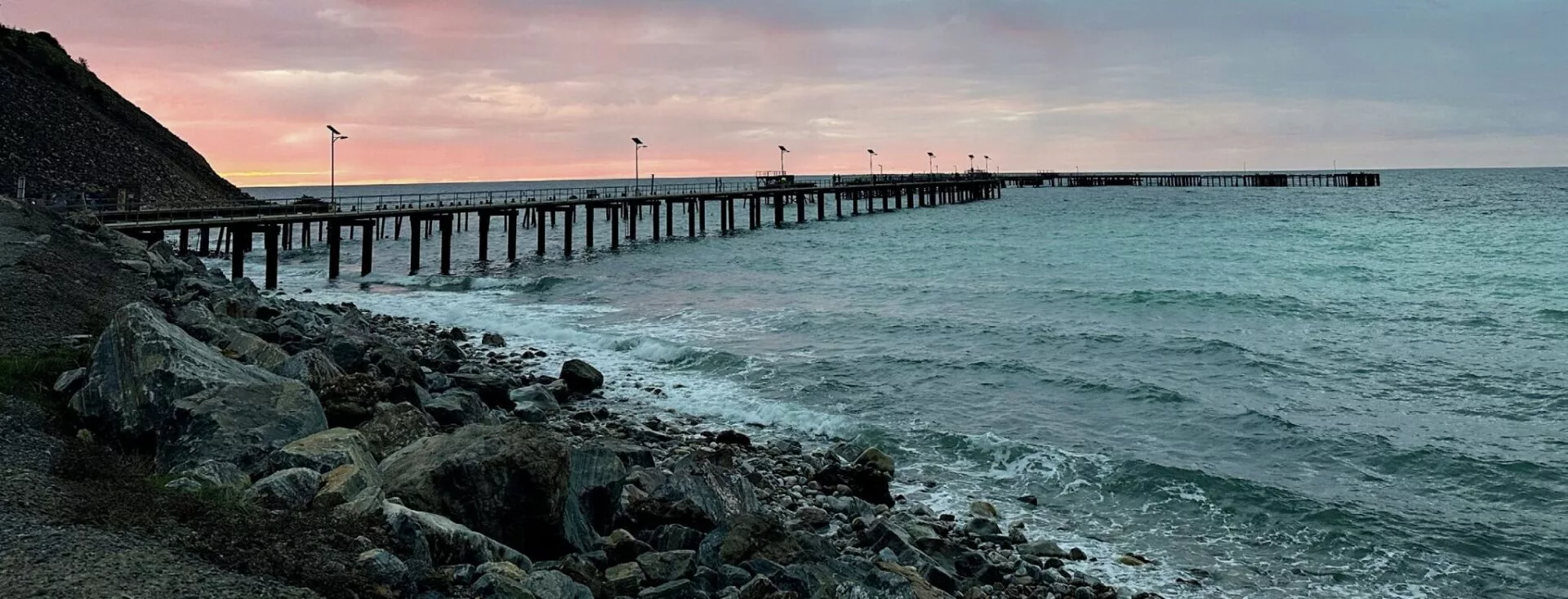
The second event is harder to reflect upon because the ending is not the one anyone wants. It took place several months later at Rapid Bay Jetty on the Fleurieu Peninsula, a shore-diving site known for easy access and the marine life around the old pylons. Two PADI MSDT instructors from the same dive centre, George and Bill, were working with six students in a PADI Open Water class: Mark, his wife Lisa, their teenage son Ross, and three other students named Rachel, Tom, and Maya.
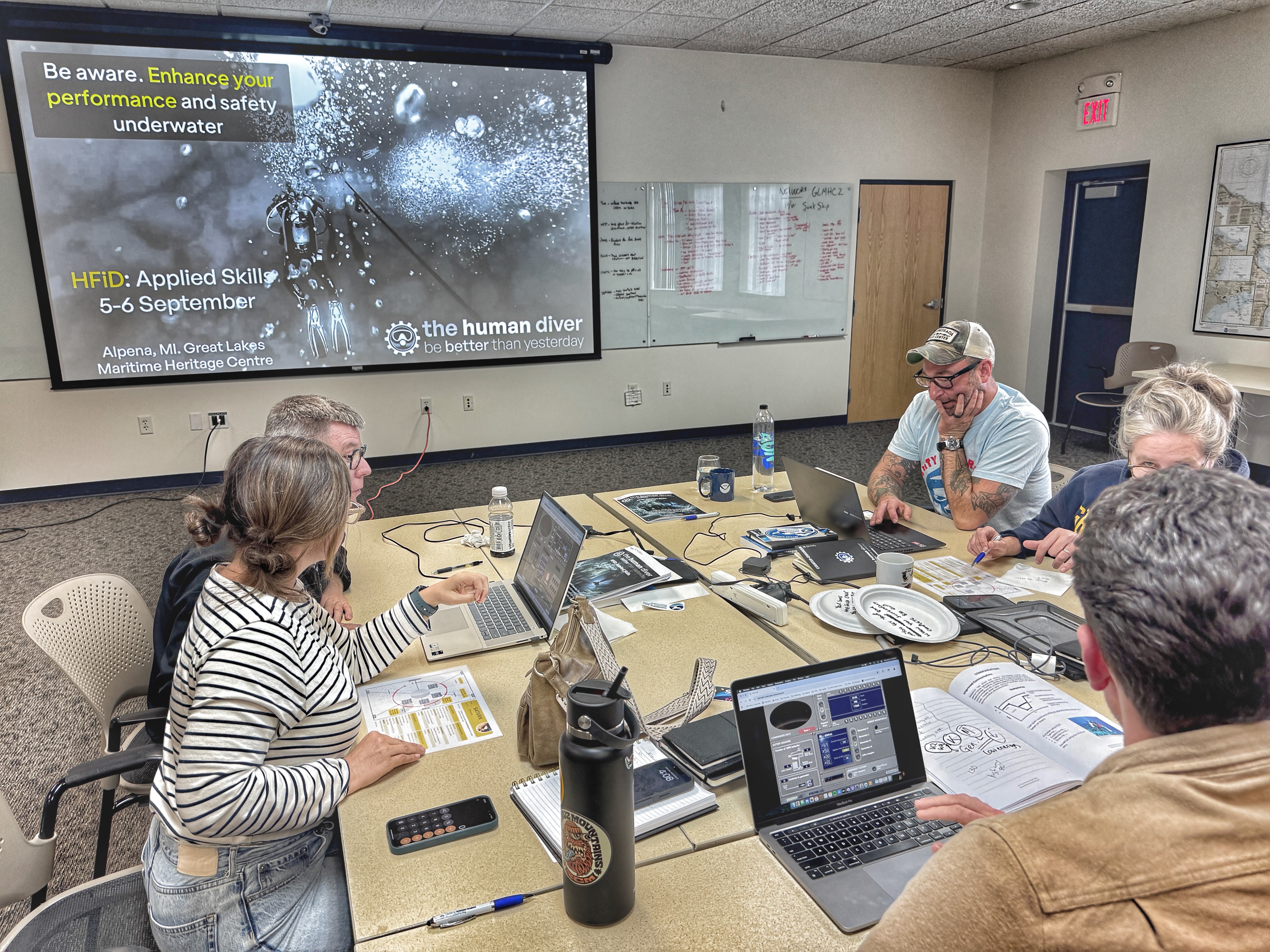
By this point, the centre was a different place than it had been when the Edithburgh event happened. After the first event, the centre’s Course Director began treating human factors in diving as core business rather than an interesting talk. George, Bill, and the rest of the teaching staff had completed HFiD: Applied Skills, where the discipline turns from a set of ideas into a set of rehearsed behaviours. The manager backed it, resourced it and expected to see it in every briefing and debrief. That is the difference a brief overview can never deliver on its own.
By 9:00 AM, Rapid Bay looked almost impossibly calm, the kind of morning that looks safe because it is beautiful. But the water was calm only on the surface, and the same details that made the site feel cinematic, the jetty, the family in the class, the pylons below, would soon become the edges of an emergency George and Bill had to hold together.
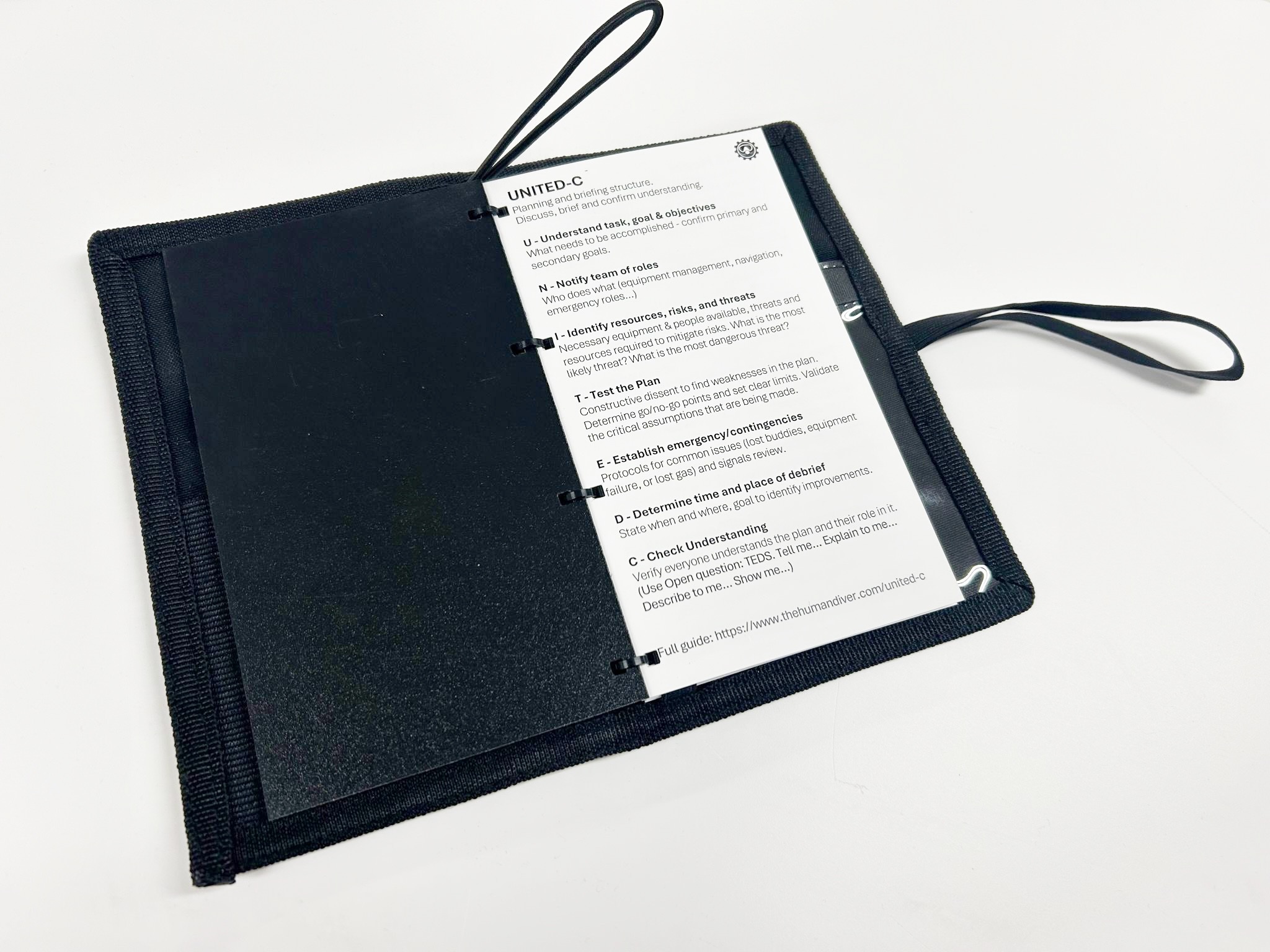
Before the dive, they did something that would later become the difference between order and collapse. Because they had undertaken the HFiD: Applied Skills class, and had a deeper knowledge of applied skills, they briefed more than a clean, successful version of the dive. Using the UNITED-C approach, they built a shared understanding before anyone entered the water: objectives, roles, risks, emergency procedures, contingencies, where the group would gather if something went wrong, and used open questions to check deeper understanding. This was deliberate preparation for uncertainty, of exactly the kind the centre now expected. That conversation quietly built a shared mental model, so everyone knew what was supposed to happen, what might change, and where the group would go if the dive became something different.
Then the frame changed. One moment the class was inside the planned dive; the next, underwater and without warning, Mark suffered a heart attack.
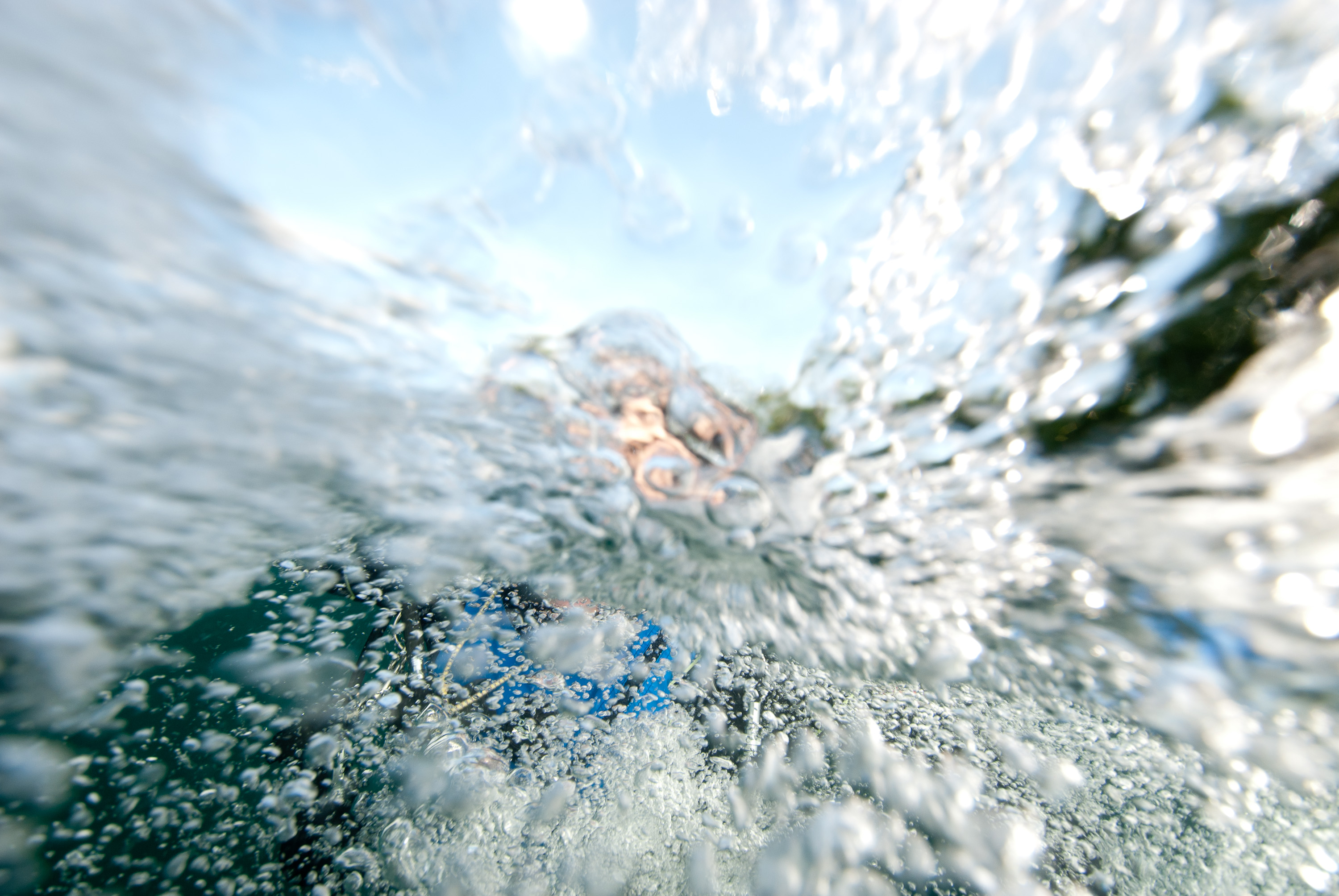
The emergency outran everyone’s emotions, but George and Bill did not have to build a response from nothing. George ascended with Mark and began resuscitation, working through CPR, the AED, and oxygen. His technical rescue skills mattered, and they worked inside a system that had already divided attention and responsibility.
At the same time, Bill managed the part of the emergency that could easily have been missed: the remaining students. Five people were watching the world change in front of them, and every instinct wanted to pull them toward Mark and toward the noise at the centre of the scene. Bill did not let that happen. His training told him that protecting the class was itself part of the rescue. He kept the students together and moved them, in a controlled ascent, toward the muster area that had already been named before the dive began.
On the surface, Bill kept his voice low and steady, close enough for the students to hold onto. “Everyone stay with me,” he told them. “Eyes on me. Slow breaths. We move together.” Lisa turned toward the activity around Mark, her body pulling before her feet could follow. Bill stepped into her line of sight without blocking her concern. “Lisa, I know you want to go to him. Right now, the safest thing you can do is stay with me and keep Ross with you.” Ross looked past him toward the commotion, his voice small against the noise. “Is my dad okay?” Bill did not look away, and he did not give a promise he could not keep. “George is with him, and help is coming. Your job right now is to stay close to your mum and follow me.”
Those few sentences gave the students’ fear a shape they could work with. Bill turned the scene from a blur of motion into a sequence they could follow: breathe, stay together, move to the muster area, do not separate. While George fought for Mark at the centre of the emergency, Bill kept the circle around it from collapsing inward. This is Human Factors in Diving in practice: leadership, followership, communication, workload management, and protection of the wider system. It mattered all the more because two of those divers were Mark’s wife and son.
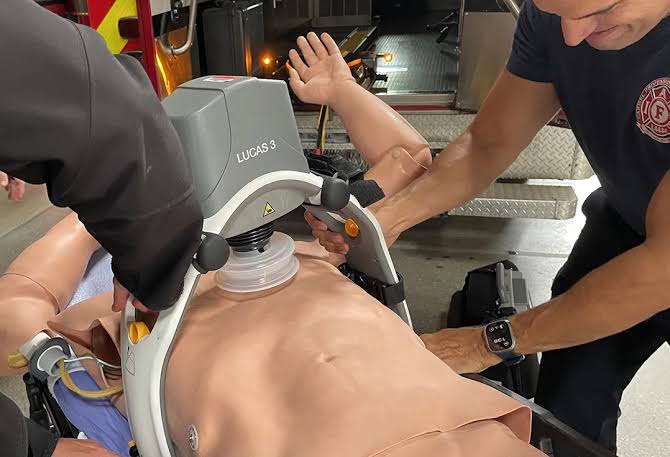
When EMS arrived, the scene became clinical: the LUCAS device working where hands had been, oxygen flowing, assessments made, voices low and efficient. The effort continued, but the morning did not give back what it had taken. After every available attempt had been made, Mark was pronounced dead at the scene.
The outcome was devastating.
Mark, a husband and father, did not return home from what had begun as a clear, sunny training morning. And yet, when the response was reviewed, there were very few errors to point to. George and Bill had divided roles, kept control of the class, communicated within an understood plan, and protected the family and the other students. No emergency response is perfect, and theirs was a disciplined, professional application of the human factors the centre now lived by.
Human Factors in Diving training shaped the quality of the response, even though it could not change the medical outcome.
Why the Second Response Was Different
The temptation is to conclude that George and Bill were simply better instructors than the first team of instructors, when what had really changed was the centre around them and how it prepared its people.
The first event ran on a brief overview. Human Factors in Diving had been explained to the team, but hearing an explanation is a long way from being able to act on it. A person can watch a presentation on leadership and followership and still have no practised way to divide roles when a diver stops breathing. Knowledge that has only been described tends to evaporate at the moment it is needed, because there is nothing underneath it.
The second event ran on something sturdier, and it took two things to build. The first was HFiD: Applied Skills, which is where the discipline moves out of the classroom and into the body. Team exercises, scenario debriefs, and repeated practice turn concepts into reflexes, so that at Rapid Bay the team did not have to remember what to do; they had already done it, many times, before it counted. The second was the dive centre manager.
A trained instructor inside an untrained centre stays fragile; the same instructor inside a centre whose Course Director expects and reinforces human factors behaviours becomes part of a system.
The Course Director’s buy-in turned individual training into shared practice: UNITED-C briefings, DEBrIEFs after every course and not only after disasters, and a standing expectation that this was simply how the centre worked. That combination, practised skill inside a committed centre, is what a brief overview can never produce on its own.
Explicit Human Factors Lessons from Story Two
Preparation created options under pressure: George and Bill did not have to invent coordination during the emergency because they had already briefed roles, contingencies, and the muster plan.
The UNITED-C approach built a shared mental model: the team understood what could change and how they would respond if the dive stopped matching the plan.
Leadership and followership were visible: George led the rescue response while Bill led student containment; each role supported the other.
Workload was distributed deliberately: George focused on Mark’s medical emergency while Bill protected Lisa, Ross, Rachel, Tom, and Maya from becoming part of a second emergency.
Communication reduced uncertainty: Bill’s calm, simple instructions gave the students a sequence to follow when they were frightened and overloaded.
Professional performance is not the same as a positive outcome: Human Factors training did not save Mark’s life, but it helped preserve order, protect the class, and support a disciplined response.

The Emergency Does Not End When EMS Leaves
There is a part of these stories that is easy to skip, because it happens after the dramatic moment is over. When the ambulance pulls away and the casualty or the deceased diver is gone, the people left on the shore are not finished. They are at the start of a second event: the investigations. A diving fatality is examined by more than one authority. PADI reviews what happened, and the police, and in many places a coroner, investigate as well. These processes can take weeks or months, and for the instructors and the centre they can be almost as consuming as the emergency itself.
Here the two events diverge again, for the same reason. After the first event, the team could not give a clean account, because there had not been a clean response. Roles had blurred and communication had fragmented, and no one had held the whole picture, so the reconstruction afterwards was scattered and uncertain. PADI’s review dragged on, because the gaps in the response showed up as gaps in the story, and every unanswered question left the instructors more exposed. After the second event, the picture was entirely different. Because George and Bill had briefed their roles and worked to a shared plan that everyone understood, they could describe exactly what had happened and why. The police investigation found that the centre’s systems and its management of the scene were of the highest professional standard. PADI’s review was short, and the instructors were cleared within a few weeks, because the answers were already visible in how the team had worked.
A clear structure protects everyone the event touches. PADI can turn its review into learning instead of a (perceived) hunt for someone to blame, and the police and coroner can establish the facts without going looking for fault. For the individuals who were there it matters most of all, because an honest, coherent account is a real protection, both legally and personally.
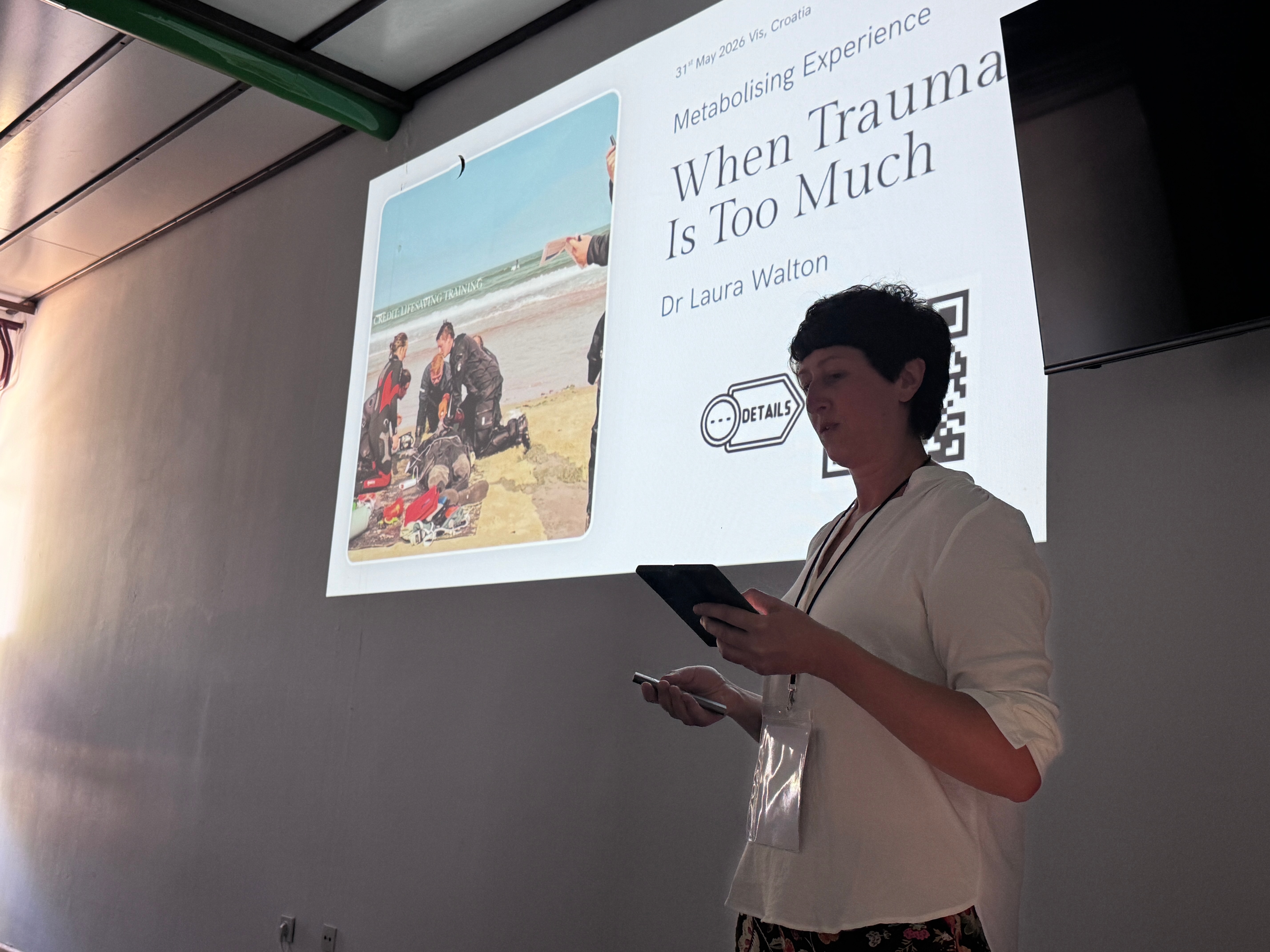
This last point is more important than it first appears. Long-term trauma after a diving fatality feeds on more than the loss itself. Much of it grows in the ambiguity afterwards, in the questions that never get answered and the private fear that a different choice might have changed everything. When a team can build a coherent account of what happened and understand why their decisions were reasonable at the time, they are far less likely to be haunted by the parts they cannot explain. Making sense of the event helps the investigation, and it also helps the people involved carry it afterwards. This is the critical work that Dr Laura Walton does with Fit to Dive. George and Bill lost a student, and nothing will make that acceptable. But they could look at their own response and know it was sound, and that knowledge is part of what will let them carry on, in the water and out of it.
An Uncomfortable Contrast: 'success' and 'failure'
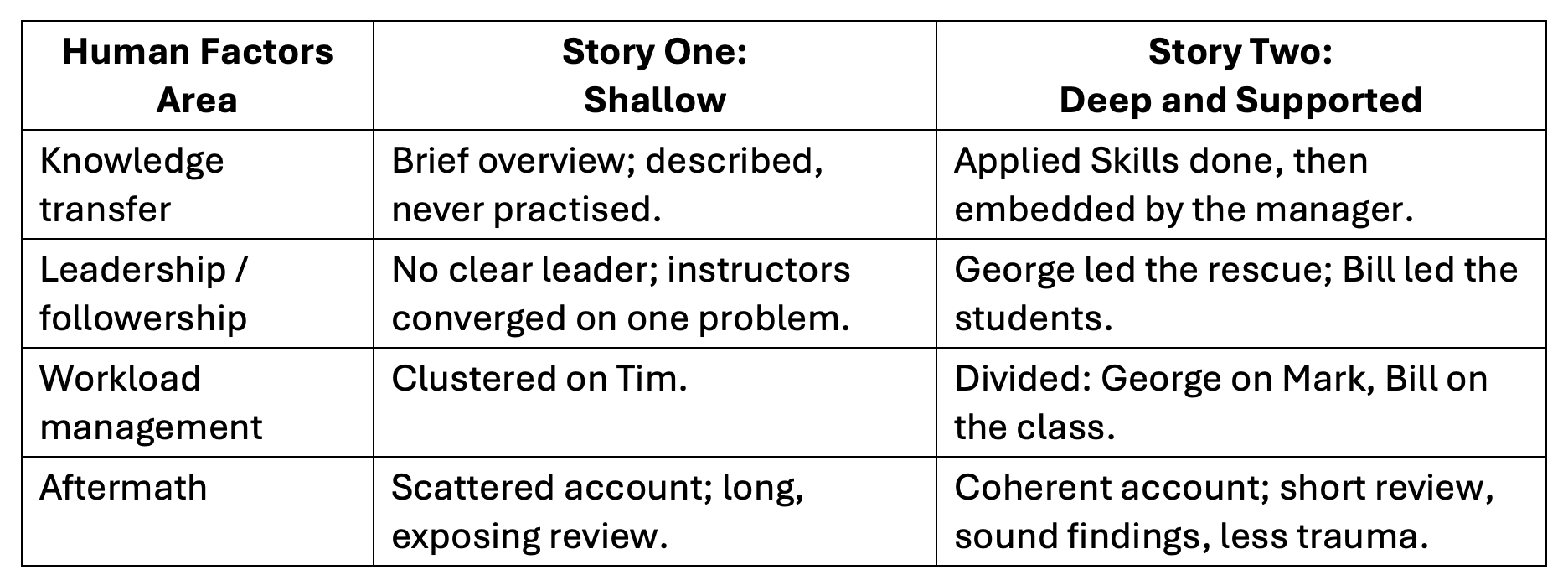
These two events, at one dive centre, create the central contrast of this piece. In the first, a diver survived, but the response was full of warning signs of a team with only a shallow grasp of human factors in diving, and the aftermath was long and exposing. In the second, a diver died, but the response was a professional application of Human Factors in Diving, from the pre-dive briefing to everything after EMS arrived.
By outcome alone, the first looks like a success and the second a failure; measured by communication, leadership, workload, and what came afterwards, the picture turns over completely.
The team with the weaker grasp of human factors happened to survive, and the team with the stronger grasp lost a diver anyway.
The training does not guarantee survival, but it shapes whether a team fragments or holds together, and whether the aftermath breaks the people involved or lets them heal.
Conclusion: Human Factors in Diving Must Be Trained, and Backed, Before They Are Needed
Dive professionals are very good at planning successful dives. But emergencies rarely unfold neatly inside the success plan. No team can predict every failure. What matters is whether it has a structure for adapting when reality changes, and whether the centre around it has made that structure normal. In the second story, Bill’s work with the students was itself part of the rescue system. Sometimes the most valuable thing a person can do in an emergency is stay away from its dramatic centre and protect the rest of the system, so that the rescue can happen at all.
These two stories show why Human Factors in Diving cannot be treated as an optional extra. Technical skill remains essential, but on its own it does not create leadership, communication, role clarity, or shared awareness when pressure rises. Those capabilities have to be taught and practised before the emergency begins, and they have to be held across the whole organisation (or team, club, or expedition) rather than left to a single motivated individual. Good intentions and strong credentials can still leave a team vulnerable, while deep training inside a committed centre, shapes how a team manages the worst moment and everything that follows.
For dive professionals, the call is clear. Train the non-technical skills with the same seriousness as rescue skills, and practise them until the briefings, the role allocation, the shared mental model, and the failure plan are routine rather than exceptional. And do not stop at one trained instructor, because a centre that backs the work is what turns a capable individual into a resilient team. When the dive changes, there is no time left to become coordinated; a team can only draw on the coordination it has already built.


