

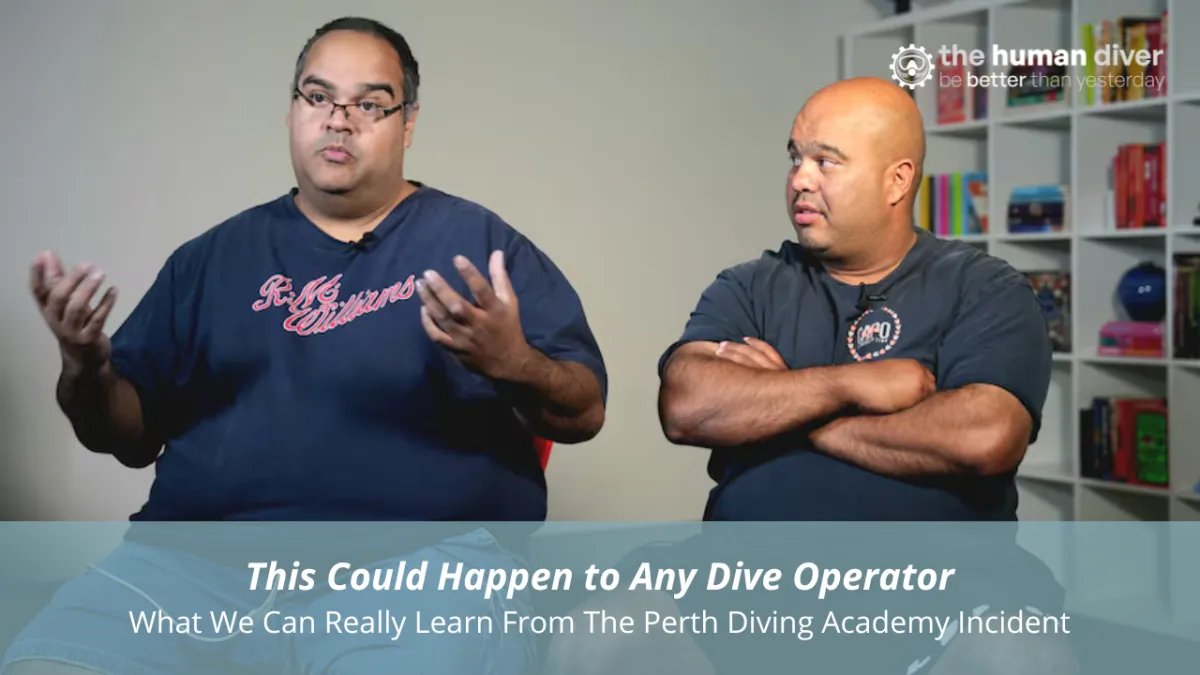
This Could Happen to Any Dive Operator: What We Can Really Learn From The Perth Diving Academy Incident
If you haven't heard, early last year, two divers who were out with Perth Diving Academy (PDA) were left behind by the dive boat after their dive off the coast of nearby Rottnest Island. This incident is serious. Very serious. Any event that results in divers drifting alone in open water deserves careful, respectful, and thoughtful attention.
The main thing I want you to take away from this blog: this incident does not make Perth Diving Academy an outlier.
If anything, it highlights how fragile many diving safety systems are, and how easily a single, simple error (in this case a headcount error) can expose deeper vulnerabilities that may (and almost certainly do) exist across much of the dive charter industry.
A Simple Error, Serious Consequences
From what is publicly known, the final event in the chain appears to have been a failure in accounting for all divers before departure. This is one of the most basic safety controls in dive operations. And yet, when it fails, the consequences can be extreme.
This serves as a powerful reminder that Serious incidents rarely require complicated failures. They often emerge from the simplest breakdowns.
What this should mean for many operators, is asking this question: Could this sort of thing happen to us? If we are honest, the answer is probably yes.
If we look closely at day-to-day operations across the industry, we see many systems that appear robust but are actually fragile and rely heavily on habit, informal checks, experience, and assumptions rather than structured, resilient processes that are constantly evaluated and modified as necessary.
Regulation, Fines, and the Limits of Punishment
The Australian Maritime Safety Authority (AMSA) has issued five fines for breaches of the Maritime Safety Act following this incident. From a regulatory perspective, this is understandable. When things go wrong, enforcement action is one of the primary tools available.
The flipside is that fines alone rarely improve safety across the industry in any meaningful, lasting way. Why?
Because they don’t explain:
What specifically failed
Why those failures existed
How other operators can learn from them
There has been no public breakdown of:
Which safety systems were missing
Which procedures failed (or more importantly why they failed)
Where decision-making or supervision fell short
What concrete steps are now being taken to prevent recurrence
Without this transparency, the entire industry loses a critical learning opportunity.
The result is predictable:
One operator is publicly punished
Others quietly reassure themselves, “We’re not like them”
And systemic vulnerabilities remain untouched
The Problem With “They’re the Bad Ones” Thinking
Social media reactions to this event were, and continue to be, swift and brutal. Anger, outrage, condemnation, ridicule. All aimed squarely at Perth Diving Academy.
While the emotional response is understandable, it risks reinforcing a dangerous myth:
That unsafe operators are fundamentally different from everyone else.
This “bad apple” thinking is comforting. It lets the rest of the industry feel safe by comparison. However it’s also deeply misleading.
In reality:
Most unsafe practices don’t look unsafe from the inside.
Most weak systems operate for years without incident.
Most serious events occur when normal work suddenly meets abnormal conditions.
Had this headcount error not resulted in two divers drifting at sea, it might never have come to light. The underlying system weaknesses could easily have remained hidden.
Which raises an important point: The absence of accidents does not equal the presence of safety.
This blog focuses on how do we measure safety in diving.
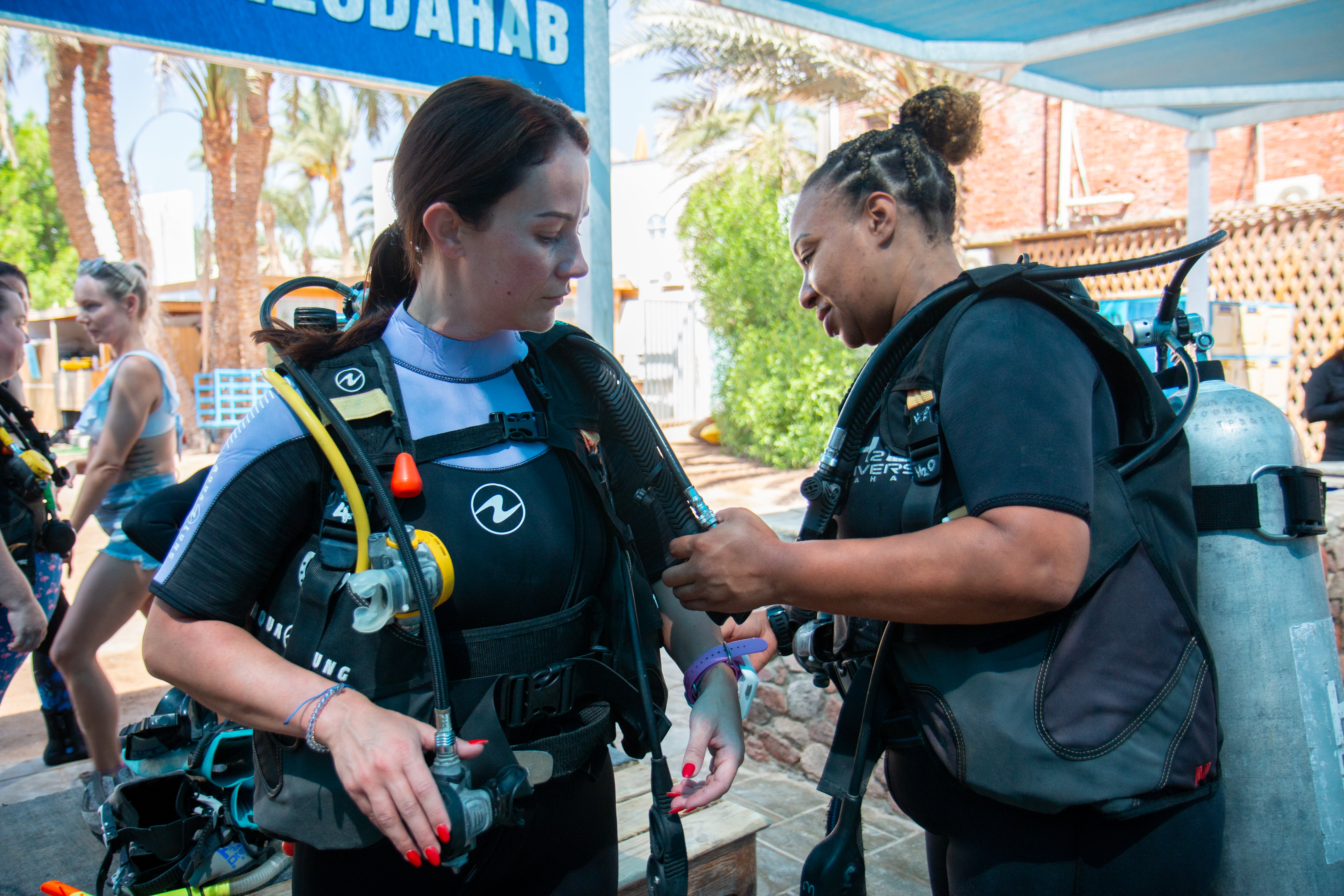
Why These Issues Often Exist Long Before Anything Goes Wrong
In many industries, safety systems gradually drift over time. Procedures get shortened. Workarounds become normal. Informal habits replace formal checks. This happens not because people are careless but because they are busy, experienced, and under operational pressure. In other words, drift is normal.
Dive charter operations face constant competing demands:
Tight schedules
Customer expectations
Weather windows
Financial pressure
Staff turnover
High seasonal workloads
In that environment, safety controls that feel “inefficient” or “overly bureaucratic” are often quietly eroded.
Headcounts become rushed.
Double-checks disappear.
Cross-verification stops happening.
And everything still works. Until one day, it doesn’t.
The Limits of Compliance-Based Safety
AMSA, like many regulators, produces extensive safety and risk management guidance. These documents are well-intentioned and comprehensive but often overwhelming in practice.
For example, the main risk management guideline for vessel operators is around 70 pages long.
For large commercial shipping operations, this may be entirely reasonable. But for small dive charter businesses, often run by passionate divers, not professional safety managers, this creates real challenges.
If you’re not trained in risk management:
You don’t know what “good” looks like
You don’t know what you’re missing
You don’t know which risks deserve the most attention
Complex documentation tends to produce checkbox compliance and not real understanding.
Operators may technically comply (paperwork done, boxes ticked), while real-world practise quietly diverges.
Safety Needs Multiple Layers, Not Single Points of Failure
This incident is such a powerful teaching example because a single error was able to defeat the entire safety system. That tells us something important: There were not enough independent layers of defence.
Good safety systems assume that:
Humans will make mistakes
Systems will degrade
Procedures will be (perhaps inadvertently) bypassed
Attention will fluctuate
Therefore, they build multiple independent barriers.
In context, we might consider these examples:
Written passenger manifests
Physical roll calls
Cross-checks between crew
Diver self-report confirmation
If any one layer fails, another should catch the error.
In this case, it appears that once the headcount failed, nothing else stopped the vessel from departing. The single point of failure failed.
That’s a system problem, not an individual human one. This blog talks further about systems in diving.
What Would Actually Help the Industry Learn?
What the diving industry desperately needs from incidents like this is transparency and shared learning, not just punishment.
Imagine the value if we had:
A clear breakdown of what went wrong
A timeline of how the error unfolded
Identification of system weaknesses
Explanation of corrective actions
Practical recommendations for other operators
This is how aviation, healthcare, and offshore industries improve safety:
By treating incidents as learning laboratories, not just legal cases.
Without this, every operator is left feeling confident they are doing everything right rather than asking: Could this sort of thing happen to us?
The Role of Continuous Improvement
Safety doesn’t come from regulation alone. A much bigger factor is a culture of continuous improvement.
This means:
Regularly reviewing procedures
Encouraging staff to challenge “how we’ve always done it”
Actively searching for small errors before they escalate
Treating near misses as gold, not embarrassment
Instead of waiting for incidents, we need to ask:
Where are our weak points?
What assumptions are we making?
What would worry us if this happened elsewhere?
Learning before tragedy is far cheaper than learning after it.
Customers Are an Untapped Safety Resource
So far we've focussed on the dive professionals. One often overlooked element in dive safety is the role of customers.
Divers see:
Confusing briefings
Rushed headcounts
Disorganised kit handling
Poor communication
Sloppy procedures
But rarely feel empowered to speak up. Operators who actively encourage customer feedback gain a powerful safety advantage.
Simple questions like:
“What felt unclear today?”
“What made you uncomfortable?”
“What could we do better?”
can reveal vulnerabilities long before they turn into incidents.
A Final Thought
This was a frightening incident. Two divers drifting alone at sea is every diver’s nightmare. It deserves serious reflection. But if this event becomes nothing more than a story of blame and fines, then the industry will have missed its greatest opportunity.
The real lesson isn’t about one operator. It’s about how easily a simple error can expose hidden weaknesses that may exist everywhere.
If this incident pushes dive operators to:
Explore and strengthen their safety systems
Add redundancy layers to basic procedures
Encourage feedback from staff and customers
Build cultures of continuous improvement
then something genuinely positive can come from a very negative event.
And that would be awesome.
Our mission is to give you the skills and knowledge so that you can be better than you were yesterday. If you'd like to deepen your diving experience, check out the youtube channel and consider taking the online introduction course which will change your attitude towards diving and make it better and safer. Alternatively, visit the website or start your journey into Human Factors in Diving with this introduction blog .


