

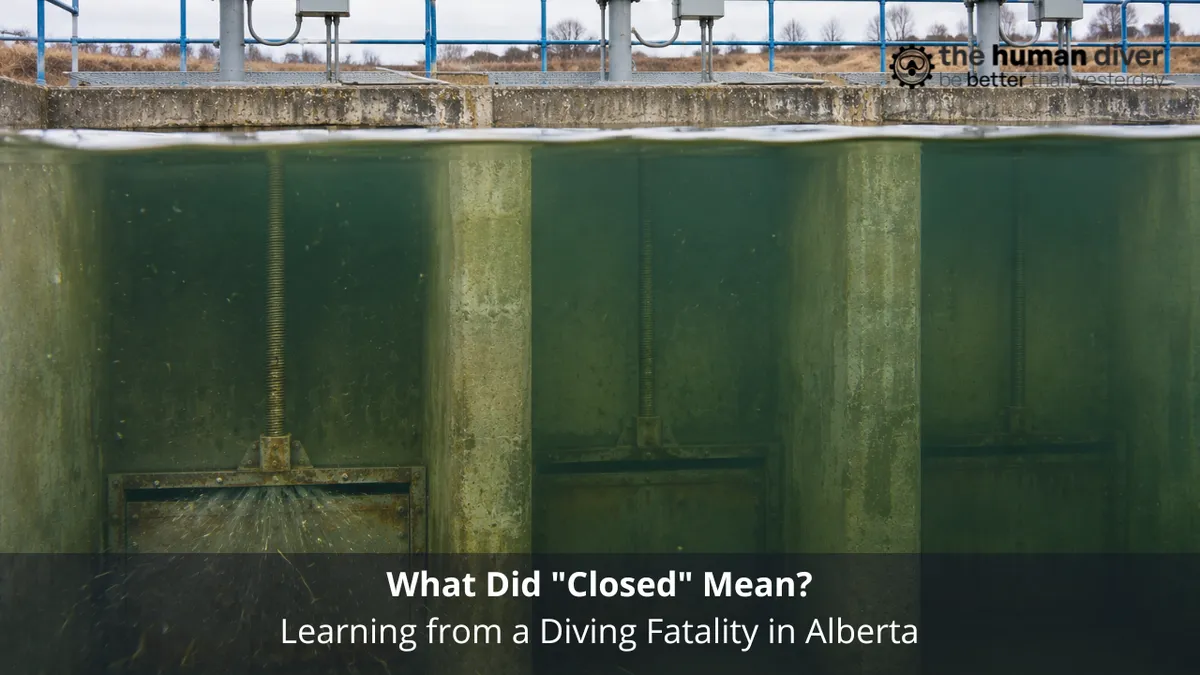
What Did "Closed" Mean? Learning from a Diving Fatality in Alberta
One of the questions I ask in every incident/accident/learning review workshop I run is, "How did it make sense for them to do what they did?" It is hard to answer when someone has died, because we go looking for the person who got it wrong. Over the last couple of years I have been asking that question about an event in Alberta, as part of a project with Dive Smart Alberta, a programme run by the Alberta Underwater Council to provide training and education for the diving community.
Note, this education isn't aimed at the commercial or occupational diving community as this topic is covered in their professional development. Although saying this, I know that the commercial diving community are going to comment and say 'They should have known about Delta P'. This is why I wrote the blog "You can't risk assess a hazard you don't know about"
On 19 October 2022, Terrance Ferner, a 54-year-old recreational diver, died while inspecting the gates of a reservoir structure near Brooks, Alberta. In February 2025, the Eastern Irrigation District (EID), which owned and ran the structure, pleaded guilty to one charge under the Occupational Health and Safety Code for failing to make sure the flow through an intake was stopped and locked out before the dive began. Nine other charges were withdrawn. The court ordered EID to pay $365,000, and none of it went to the government. Under Alberta's creative sentencing rules, $300,000 went to the Central Alberta Rescue Diving Society for equipment and training, and $65,000 went to the Alberta Underwater Council (AUC) for a safety campaign aimed at divers and employers. It was through this AUC programme that I became connected to the event, the educational programme, and the invitation to present and teach at the recent Divescapes Conference in Edmonton.

The following comes from the Agreed Statement of Facts signed by the Crown and EID.
How the dive came about
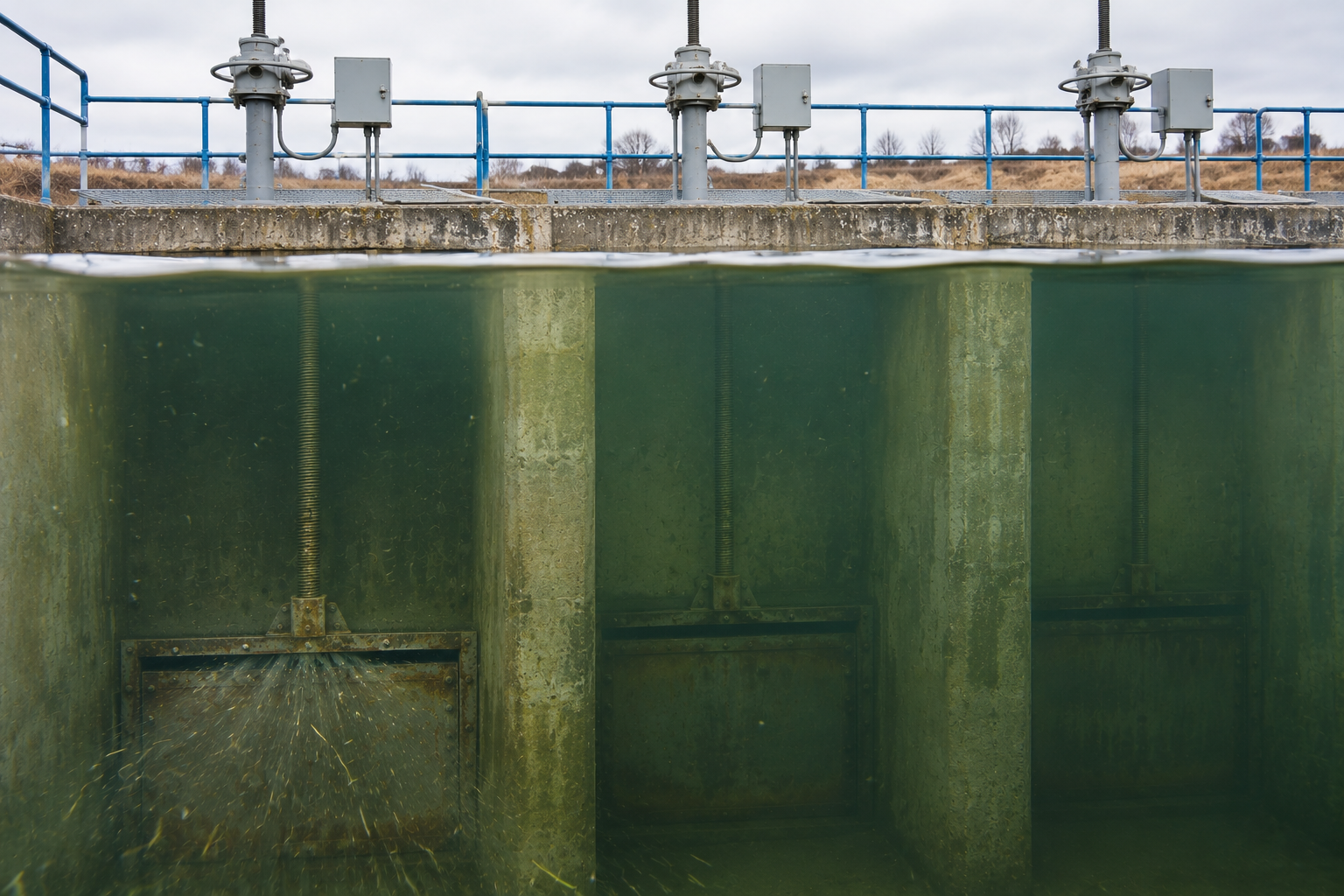
EID manages irrigation water across southern Alberta. Diving is not part of its business, and at the time it had no policies or procedures that covered it. Water had been leaking through the structure between Lake Newell and the Rolling Hills Reservoir, even though the three slide gates were closed for the off-season, and the rising water was damaging docks at the marina.
The Buildings and Grounds Superintendent, whose role covered buildings, campgrounds and grounds but not dams, knew Mr Ferner as an acquaintance and a long-time recreational diver. Mr Ferner had helped campground staff twice before, once to recover dock panels and once to find an underwater pipe near the beach, and both times he was given free camping and a boat slip in return. Both of those dives went well. Each time an arrangement like this works, it adds to the sense that it is a sensible way to get small underwater jobs done, and there is less reason to question it the next time. This is normal human behaviour.
So when the leak needed looking at, the same arrangement was used. Mr Ferner asked whether it was safe to dive at the gates, and he was told the gates would be closed and there would be no flow. This is no different to the SCUBA instructor removing the blockage on a canal lock gate described in the blog above. It makes sense when you don't know there is a hazard. In much of what we do, we don't manage risks, we manage uncertainties. And in this case, the uncertainty was likely about the gates opening/closing while the diver was on site.
The signals that were there
With hindsight it is easy to see that there were signals. A month before the dive, the superintendent and an electrician lowered a newly bought underwater camera in front of Gate #2, which they believed was the gate causing the problem. They saw what looked like a small obstruction under it. They didn't see much flow with the gate closed, so they concluded it was only leaking a little. Gates #1 and #3 were not checked.
The South Division Superintendent heard about this by text. He suggested a commercial diver might need to be hired "to avoid liability" and asked to meet the next day. The meeting didn't happen and nobody followed it up. In any case, the Buildings and Grounds Superintendent didn't report to him. He reported directly to the General Manager, who hadn't been told a diver was being used. Neither had EID's Health and Safety Coordinator, so the person whose job it was to apply the safety rules never had the chance to.
When I talk this through with people, the first reaction is often that someone should have done more. As with many events I am involved in, the longer I spend with the detail, the more it looks like normal work in an organisation that didn't think of itself as having a diving hazard. Weak signals like that get lost in busy organisations every day, and most of the time nothing bad happens, which is part of the reason they keep getting lost. Drift is normal.
While the 'dots' were there, how do we recognise them as dots relevant to the task at hand, and how do we then join them? Afterwards, it's really easy when you've got the knowledge of the outcome, knowledge that those directly involved didn't have.
What "closed" meant on the day
On the day of the dive, the electrician ran the gate actuators until they tripped out, which to him and the superintendent meant the gates were as far down as they would go. He then turned off the power so the gates couldn't move. Nothing else was done to check whether water was flowing. Mr Ferner, tethered with a rope for communication, entered the water near Gate #3 at about 2:00 pm. Somewhere between 45 and 60 minutes into the dive, the movement on the line stopped.
The investigation later found that Gate #3 had travelled too far when closing and left a gap of about 4.6 inches at the top. Lake Newell was about seven feet higher than the Rolling Hills Reservoir, and that difference in water level created a pressure difference, known as Delta P, which drove water through the gap at about 12.7 feet per second at the gate face.
I think two things from this apply well beyond Alberta. The first is how much weight we put on the indication a system gives us. The tripped actuator told the team the motor had stopped, and they took that to mean the gate was closed. There were no inspection records to link a "closed" reading at the surface to a closed gate on the bottom, so the reading was all they had, and nothing in their experience suggested it might be wrong.
The second is that removing one source of energy can easily feel like making the whole site safe. Turning off the power stopped the gates from moving, which was a sensible control for that hazard. The energy that killed Mr Ferner came from the seven-foot difference in water level, and the electrical isolation did nothing to control it.
Delta P is well known in commercial diving but gets very little attention in most recreational training, because recreational divers shouldn't be near intakes, pipes and gates in the first place. (Jody Waters has written lots on this recently on LinkedIn, look them up.) The agreed contributing factors note that Mr Ferner didn't have the commercial qualifications needed to recognise the hazard, and OHS inquiries found no record of him holding any diving certification. This is where looking at the system helps. The arrangement depended on the one person in the chain least likely to know about Delta P, working for an organisation that didn't know it needed to ask about it.
You don't know what you don't know, and you don't know you don't know. This is why the education programme was put together.
What creative sentencing might offer
A normal fine goes into general revenue. It may change how one employer behaves, but it is unlikely to reach the next diver who is asked to "pop down and have a look". Creative sentencing tries to direct the money towards the conditions that led to the harm.
The research on how well this works is limited. Reviews suggest these approaches improve learning and reporting more reliably than they reduce injuries, and there is almost no evidence from diving. Actually, when I went looking in the literature, there is very little out there outside of Alberta! Another example from Alberta. After two temporary foreign workers were killed in a tank collapse at an oil sands site in 2007, a court-directed payment funded the New Alberta Workers programme. The programme didn't try to fix the engineering failure. It focused on why workers like them were unlikely to speak up or refuse unsafe work, such as work permits tied to one employer, debt and language, and it used trusted peer educators to reach people that standard training missed.
The same research carries a warning. Creative sentences can end up as a gesture if the outputs are vague or if nobody checks whether anything changed. That applies to projects like the one I have been involved in. Writing guides and articles is the straightforward bit. Getting them to the people who will be asked to do the dive, and helping them understand enough to spot the hazard before anyone gets in the water, is much harder.

Divers and the people who ask them. Not focused on commercial divers.
The Dive Smart Alberta work is aimed at two groups. The first is divers. Many recreational divers are helpful people, and sooner or later some of them will be asked to check a dock or look at an intake. The Dive Smart Alberta resources explain why a recreational certification doesn't cover underwater work. A simple question for any diver who is asked is what they would need to know about the structure to decide whether it was safe to dive. If you don't know, there is a good chance the person asking doesn't know either. Mark Faas, one of the Dive Smart Team introduced my presentation at the recent DiveScapes Conference in Edmonton by talking through their programme and who it was aimed at, giving three different target audiences.
The second group is the people who do the asking, such as municipalities, marinas and irrigation districts. Dive Smart Alberta provides a hiring checklist and a directory of qualified divers. It also helps these organisations see that a job done as a favour, in return for free camping, sits outside every safety system they have. Their safety processes can only help if they know the work is happening.
My part in the project has been the human factors side of this story. That means helping people understand how a situation like this can make sense at the time, and how to have the conversations that bring a hidden hazard out before the dive. If you want to explore that with your own team or club, the If Only... workshop guide is a good place to start. If you're already in the commercial diving space, you can download a comprehensive guide from The Human Diver Commercial/Occupational page.
Since the event, EID has brought in a No Diving Policy and replaced the gates. The wider diving community has no single owner who can make changes like that, so much of the change has to come from education and more open conversations between divers and the people who ask them to dive. What I found really useful is the approach taken to funding something like this. Funding is always a challenge because often there is a default response of 'follow the rules' and it doesn't impact the higher level organisations, so why should they get involved?
As a recreational/technical diver, if someone asked you tomorrow to check a gate, an intake or a pipe, why would you say yes? What about something less obvious like a dock cleaning activity? Or a lost object (phone) where there is a power source nearby? That is the purpose of the guides and education that Dive Smart provides, and it was funded from a tragic outcome.


