

When 'I'm Fine' Isn't True: Speaking Up and Ending the Dive
A little while ago a diver wrote to me about a dive that nearly ended in tragedy. He and his wife were fairly new CCR divers with around thirty hours on their units, and they had joined more experienced friends at shore dive location they had never visited before. By the time they surfaced, his wife had carried out a lost-buddy drill and made an emergency ascent from 18 metres. They did not run out of gas, or suffer a bend, there was no entrapment, and no broken kit. By every measure the diving world tends to use to determine if something was ‘safe’ or ‘unsafe’, nothing happened.
And that is exactly the point.
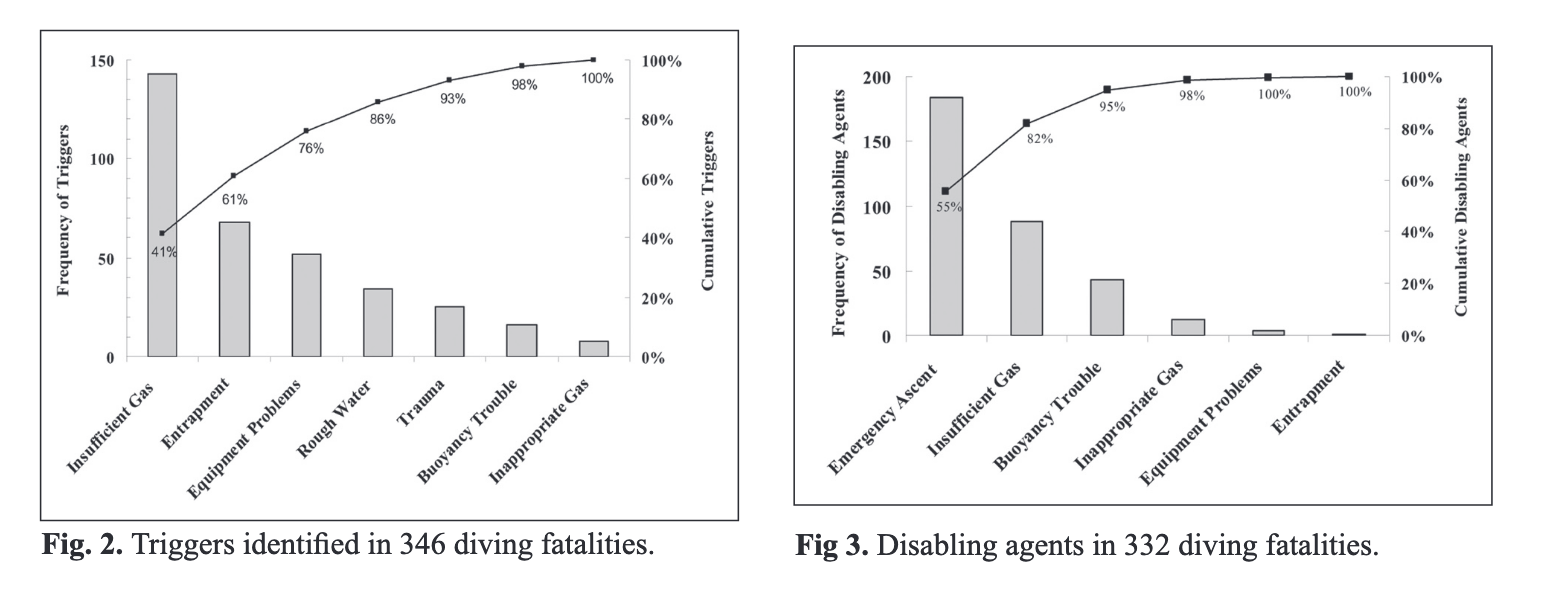
What did happen was a chain of small decisions, each one reasonable and locally rational on its own, but as the dive progressed, the factors lead to an outcome that emerged from their interactions. The holes in the Swiss Cheese Model, when viewed through the lens of backwards-facing hindsight bias, were obvious.
His wife told him in the car that she had been seeing double, and he got frustrated instead of curious.
The briefing skipped the bubble check, the deco plan, and the lost-buddy procedure.
He did not ask for more information because his hosts were more experienced and he did not want to interfere.
His wife geared up in the water without her buddy.
Their pre-dive checks were cut short because the more experienced pair were already breathing on their loops ready to go.
Underwater, her computer wasn’t behaving as expected, and the kind of issue he had always told her was a no-go.
He pressed on because he did not want to let anyone down and he wanted to see the cliff – the goal of the dive.
His wife had buoyancy issues which meant the dive progressed more slowly than planned, causing more frustrations.
She cried behind her mask because of the stress.
He stopped twice to ask if she was okay, and twice she said yes, because she did not want to let him down.
Then after the second stop, she vanished into reduced visibility caused by the silt that had been kicked up during the stop.
He found her on the surface, panicking, having made a rapid ascent. The knowledge from the Essentials course came back to him in that moment, albeit late, and he called the dive. He reflected in the email to me that if he had found his wife on the bottom, he would have likely pushed to continue the dive.
They went home alive.
This is a story about speaking truth to power. It is also a story about why the diving world has almost no idea how often this happens.
Why people stay silent
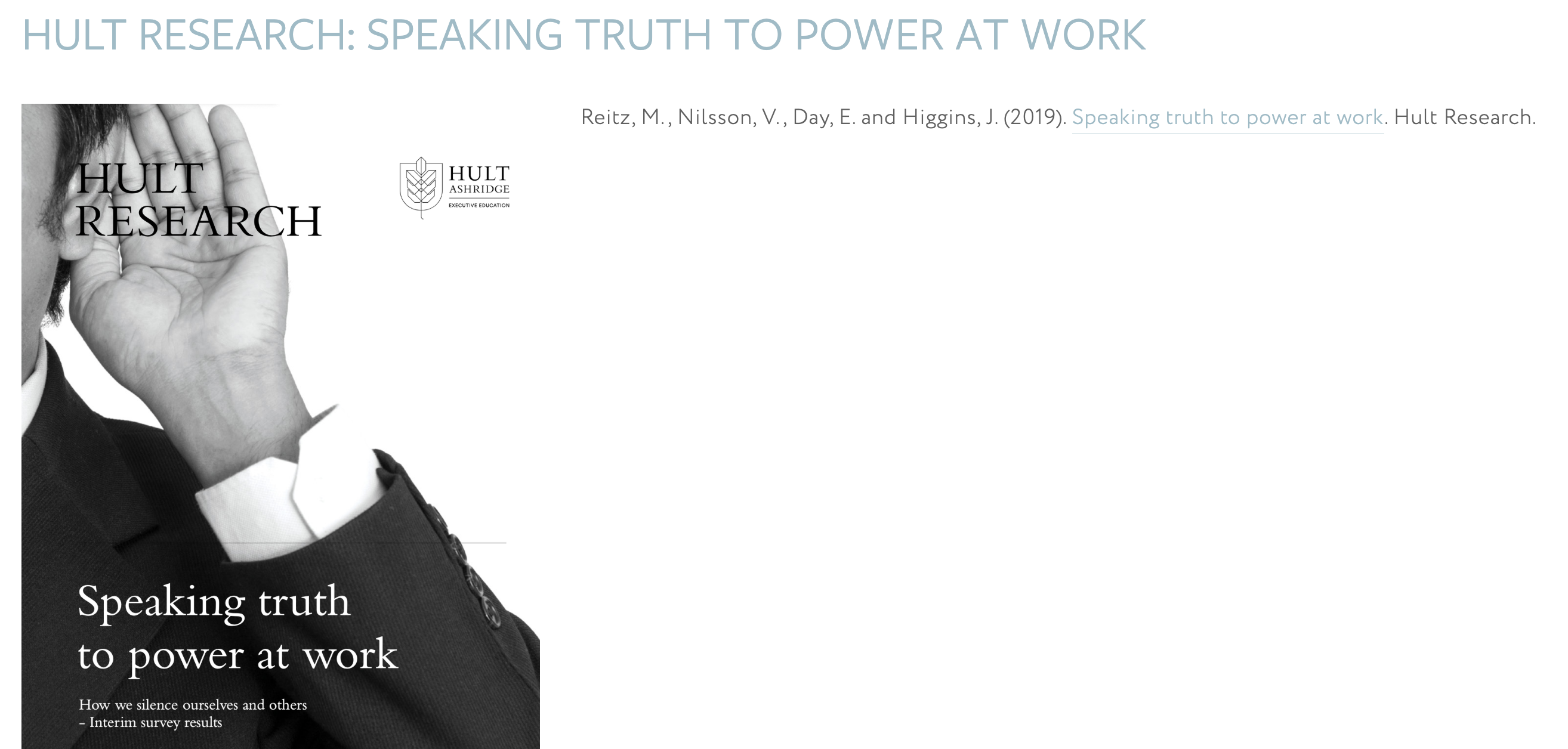
Megan Reitz and John Higgins surveyed more than 3,600 employees about whether they felt able to speak up at work, and their findings are uncomfortable. Junior staff were about half as likely as senior staff to challenge how things were done, and one in three would say nothing about something they thought was unsafe. Around 17 percent of junior staff expected to be punished for raising a concern. Between 87 and 95 percent of senior managers said they listened when challenged, but only 35 percent of junior staff agreed.
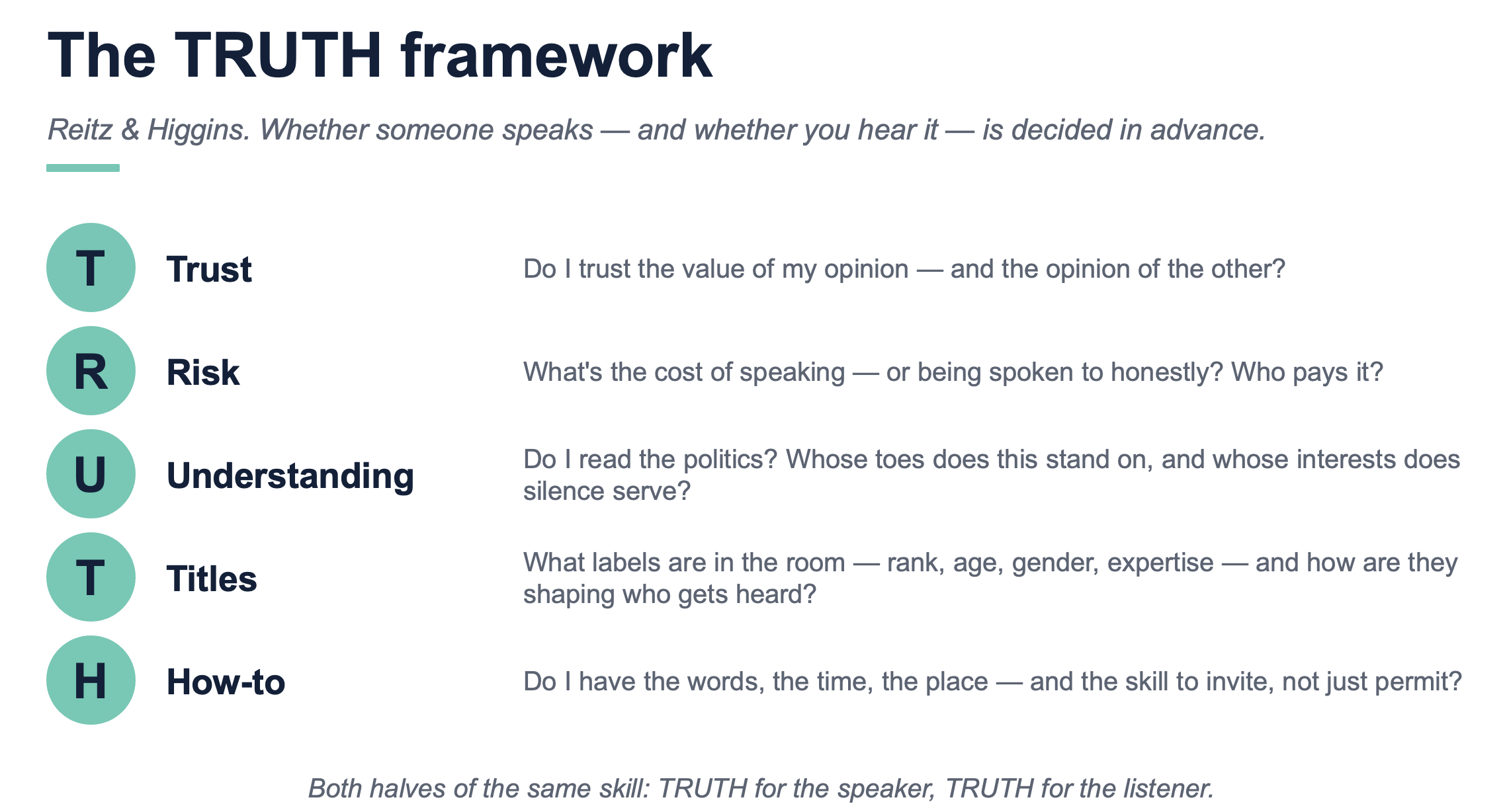
To explain what drives this, Reitz and Higgins built the TRUTH framework. The five letters stand for Trust, Risk, Understanding the politics, Titles and labels, and How to say it. The first two are the gut check: do I trust my own view enough to share it, and what is the risk of speaking? The other three are about reading the room — who holds power here, what labels are at play, and do I have the words to say this in a way that will be heard?
Diving is a deeply social activity, which makes the second T — titles and labels — matter more than we tend to admit.
The titles we wear topside and underwater
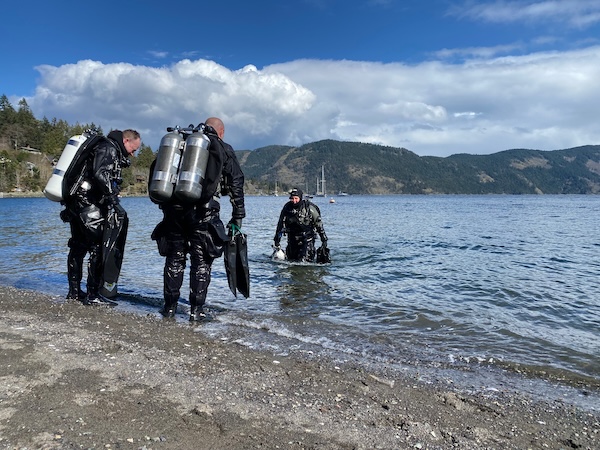
There is no formal rank at a quarry on a Sunday morning, but the titles are still there, and divers read them within seconds of meeting. Instructor. Trimix diver. Cave diver. CCR diver. Fifty dives. Five hundred dives. Two thousand dives. The friend who knows the site. The owner of the boat. The t-shirt of a dive centre. These labels carry weight, and they tell you, before anyone has spoken, who is expected to lead and who is expected to follow.
Reitz's point is that these labels shape what gets said and what gets heard. If you hold a senior label, you may not notice how much your presence silences others, and if you hold a junior label, you feel the weight of it every time you are about to speak. The newer divers in our story knew exactly where they sat, and so did their hosts, even if no one said it aloud. When the briefing was sparse and the bubble check was skipped, the message landed clearly: this is how we do it here, and questioning it carries a social cost.
The husband's words capture this with painful clarity. "I really regret not having dared to ask for more. They are much more experienced than us, and I didn't want to interfere." That sentence is the whole research literature in twenty-three words.
The labels work in both directions. The senior diver's label can stop them from asking simple questions, because they are supposed to know already. The junior diver's label can stop them from offering what they have seen, because who are they to speak? Both sides lose, and the team loses too.
The right to end the dive
Most agencies will tell you that any diver, for any reason, can end any dive at any time, no questions asked. In high-risk industries, the same idea is called Stop Work Authority — any worker, on any site, can halt any task they believe is unsafe.
The research tells us this is mostly fiction.
Three studies — Greenshields in Canada, Weber and colleagues in Australia, and Havinga and colleagues at a water utility — point to the same finding: workers do not fail to stop unsafe work because they lack courage, but because the system around them makes stopping genuinely difficult. The costs are real and rarely hypothetical: mockery, reassignment, the label of troublemaker, the quiet questioning of judgement, the pressure to make up the lost time. Workers learn these costs quickly and behave accordingly. The formal authority to stop is a piece of paper, but the real authority lives in how the people around you respond when you use it. This aligns with the fourth principle of Human and Organisation Performance (HOP) – how leaders respond matters.
The diver who got into the water without finishing his pre-dive checks was reading exactly that signal, and so was his wife, when she said yes both times when he asked if she wanted to continue. The cost of saying no felt huge and immediate; letting the more experienced pair down, ruining the last day of a holiday, being the one who could not cope. The cost of saying yes was a future risk that had not yet happened. People consistently choose the present social cost over the speculative physical one, and that is not a character flaw; it is how we are built.
The data that doesn't exist
Here is the second problem the research surfaces, and it makes a huge difference for diving. Most stop-work events happen quietly — a word in someone's ear, a tap on the shoulder, a decision to turn around before things escalate — and they almost never enter any reporting system. Greenshields found one worker who had formally stopped work three times in thirty years but had intervened informally almost every day. Multiply that across a workforce and you start to see the size of the gap.
In diving the gap is even wider. There is no national reporting system for recreational and technical incidents. DAN collects what divers volunteer, coroners record what the cause of death (not cause of cause of death) was, and a few agencies track their own training fatalities. None of this captures the dive in our opening story, where nobody died, nobody got bent, and the only physical evidence was a fast ascent from 18 metres that nothing outside the diver's own computer recorded.
This produces a dangerous illusion.

We do not see these events; therefore we have a tendency to conclude they must be rare. Because we conclude they are rare, we treat the safety system that allowed them as adequate. Because the system is treated as adequate, the conditions that produce them are never redesigned. The absence of bad outcomes becomes evidence that nothing bad is happening, when what is actually happening is the silent drift of practice toward the edge — held back from disaster by luck, by adaptive behaviour, and by the rare diver whose training surfaces in time.
We did not have a bad outcome; therefore it must be safe. That logic is everywhere in diving, and it is wrong.
What changes the calculation
The research is clear on what makes the difference, and it is not posters, policies, or a line in the briefing that says "anyone can call the dive at any time." Those are really important statements to make, but unfortunately insufficient. Actions speak louder than words.
What matters is how the most senior person in the moment responds when someone uses the right to stop — the instructor, the trip leader, the most experienced diver on the boat. If their response is curiosity, the social calculation shifts for everyone watching. If their response is irritation, withdrawal, or a subtle suggestion that the concern was not really warranted, the calculation locks in for everyone too. Teams read these signals within a handful of interactions, and after that the pattern is set.
There is also the question of whether we listen to the dives that nearly went wrong.
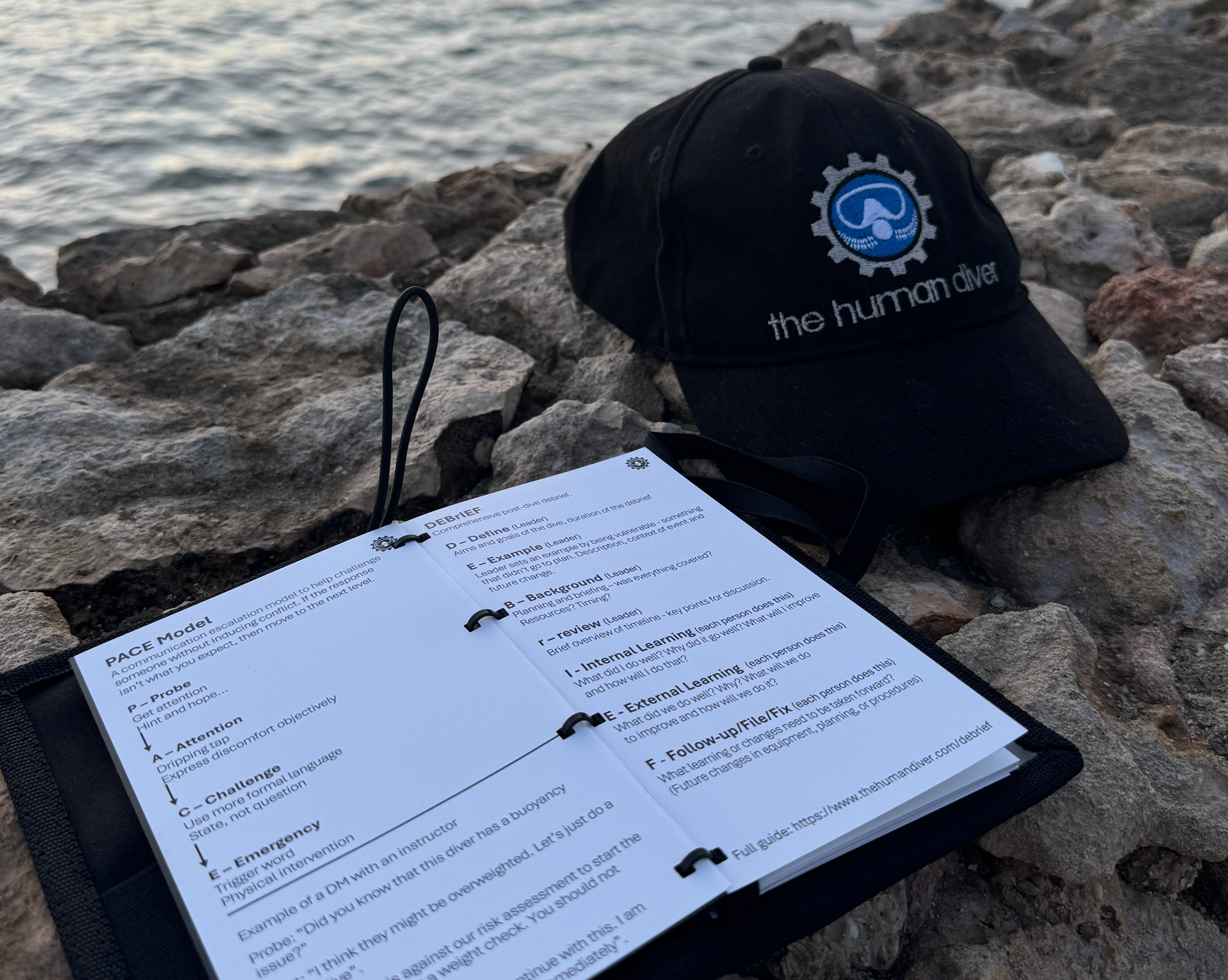
A debrief that surfaces a near-miss is one of the highest-value learning opportunities in diving, and one of the most consistently squandered. The diver who wrote to us did the rare thing: he and his wife sat down with the DEBrIEF template that evening and worked through what had happened for forty-five minutes – for a 22 minute dive. They built a shared account, and they named the goal conflict that had nearly killed them — wanting to see the cliff versus wanting to come home. "So stupid," he wrote, "not to have an objective that says: going back home safe."
That is the lesson the formal record will never capture, and we are publishing it because the only way the diving world begins to understand the real shape of these events is if those who experience them choose to make them visible.
The work to do. The work you can do. Right now.
The right to end a dive is not a policy problem; it is a design problem and a leadership problem. We need to recognise and accept that the social cost of stopping is real, that the formal record is a poor measure of actual safety, and that the moments that matter most are the ones where we are most likely to behave defensively. We need to recognise that context changes things too. In this case, the couple were used to calling dives when it was just the pair of them, but add an external dynamic/influence, then behaviours change.
This means instructors, dive leaders, and experienced buddies have a job to do. Treat every called dive as evidence of good judgement, regardless of your own assessment of whether the concern was warranted. Notice the labels you carry, and what they do to the people around you. Ask twice as much as you tell. Be curious when someone speaks up, especially when the news is bad.
All of us, senior or junior, instructor or student, need to stop using the absence of bad outcomes as evidence that the system is working. It is not. It is just quieter than failure.
The goal is not a diving community that calls more dives. The goal is a community where calling a dive is the easiest, most normal, most supported thing to do — so that the next husband driving for shore dive with a wife who says she has been seeing double does not have to override his training, his instincts, and his social discomfort to do what he already knows is right.
That is a leadership and design problem. Not a behaviour problem.
To help you dig deeper into this topic, you can download a Guide to Speaking Truth to Power from the resources page, along with a guide on building psychological safety in a team.
Be better than yesterday.


