
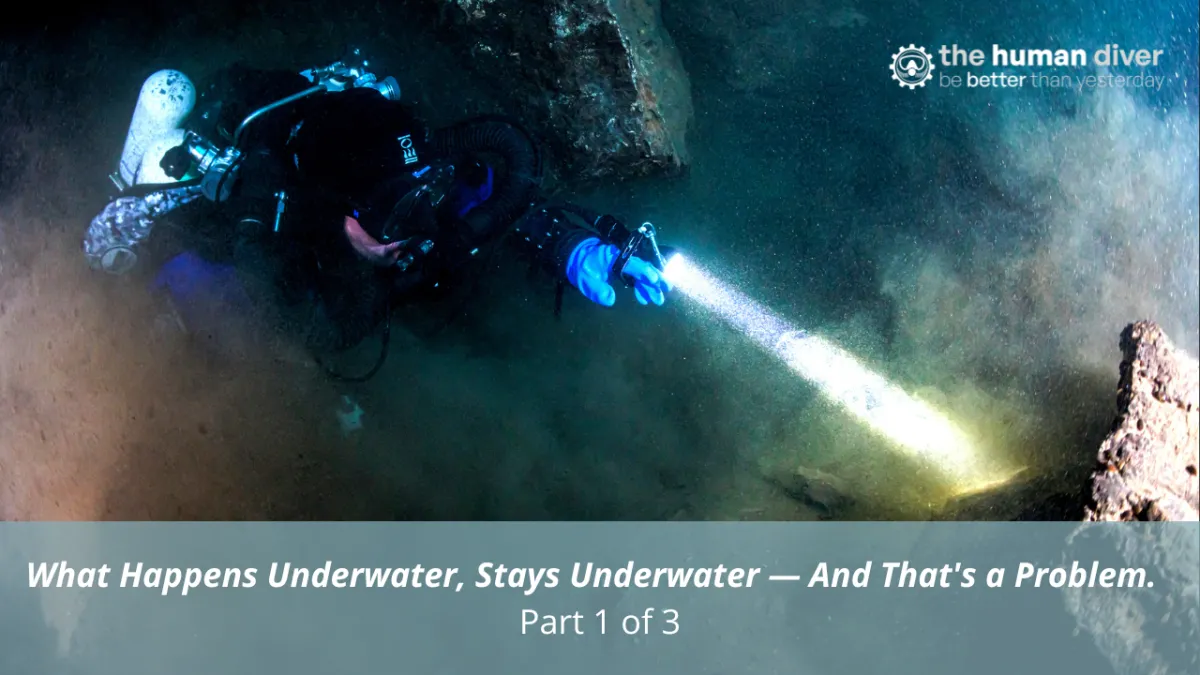
What Happens Underwater, Stays Underwater — And That's a Problem. Part 1 of 3
 by: Gareth LockPublished on: 10/04/2026
Diving incidents go unreported and unlearned from — and the industry largely accepts this as normal. This blog explores why sports diving lacks the safety culture that aviation and healthcare built over decades, what Individual Blame Logic costs the community, and why a context-rich story is worth far more than a simple account of what went wrong. The research question is straightforward: what stops divers from telling the stories that could save lives?
When the Story Hurts Too Much to Change
by: Gareth LockPublished on: 02/02/2026Child diving fatalities provoke powerful reactions and rapid judgement. This Human Diver blog explores diving safety, human factors, sense-making, identity, and cognitive dissonance, showing why learning from dive accidents requires slowing down and moving beyond blame.
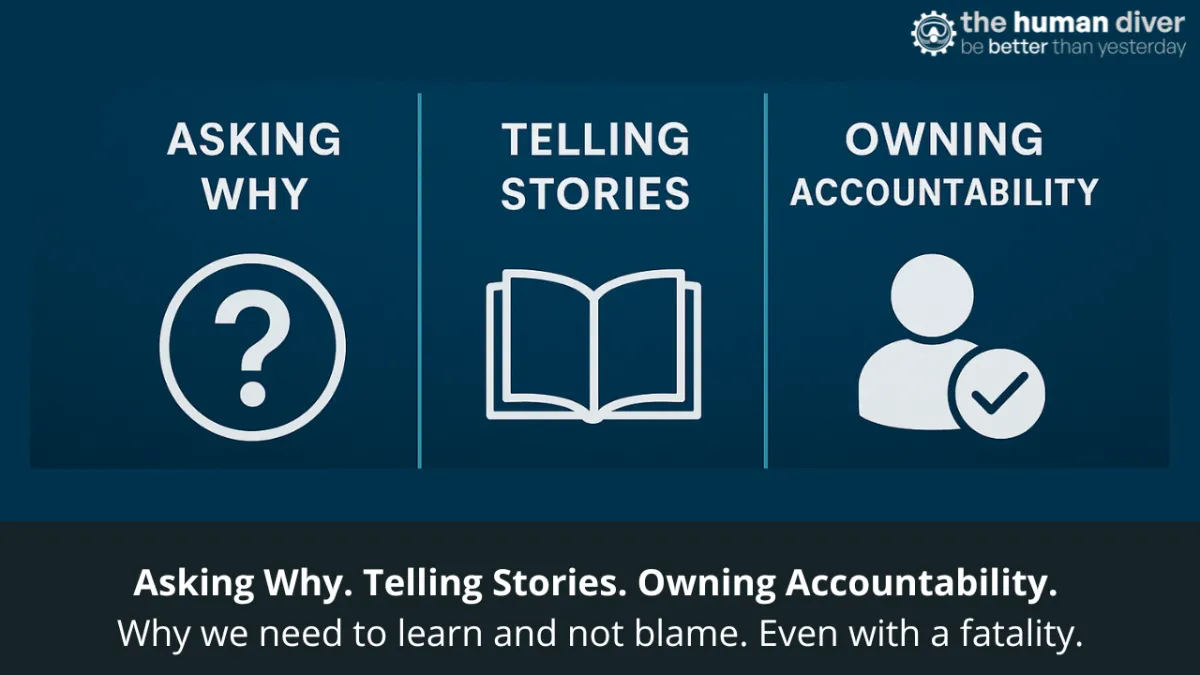
Asking Why. Telling Stories. Owning Accountability
by: Gareth LockPublished on: 17/08/2025When divers face tragedy, meaning is found through justice, learning, and accountability. By sharing stories, showing proof of change, and using forward-looking accountability, we create safer teams and a stronger community. Learn, reflect, and improve - that way we can be better than yesterday.
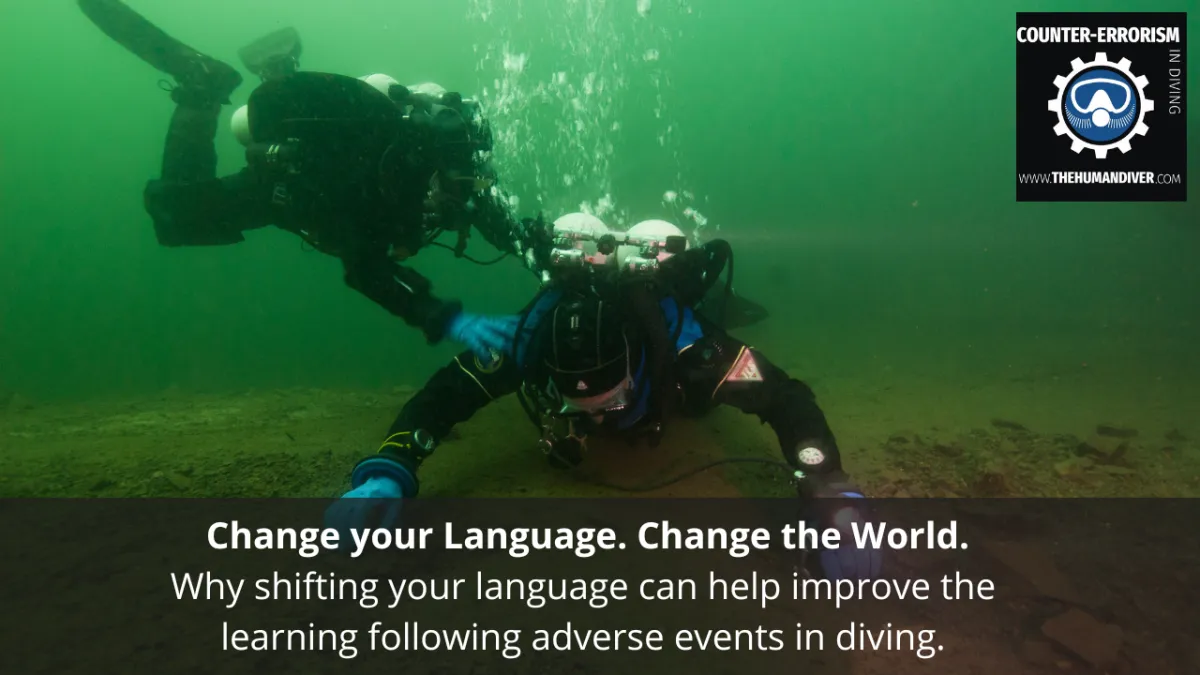
Change your Language. Change the World
The way we describe events shapes how we learn from them. "The diver ran out of gas" invites blame, while "the gas ran out" sparks deeper questions. In high-risk environments, precise, non-judgmental language fosters learning and safety. Shift your focus from fault to context—and improve outcomes!
The humaN DIVER
Be better than yesterday.
Human factors, non-technical skills and learning from emergent outcomes for the divers who refuse the bad-apple story.
programmes
The humaN DIVER
© 2026 The Human Diver. All rights reserved.
Built for the 1%
Contact Menu
© 2026 The Human Diver