When the Story Hurts Too Much to Change
This blog came about because of the convergence of recent events: the shooting of Renee Good in Minneapolis, a video on cognitive dissonance explaining the entrenched views on both sides of the political space in the US, and the two diving fatalities involving children in the US, one in Glacier National Park, and the other in Dallas, TX in recent years. Hopefully this blog will go some way to explain the way we react when children die during diving, and how that reaction doesn't always serve the need for learning. It ties in with the blog from 21 Jan 2026 which explores the moral dimension of an investigation.
===================================
There are some diving accidents that land differently in the community. They linger longer, provoke stronger reactions, and create sharper divisions in opinion than others. Fatalities involving children sit firmly in that category. They cut across experience levels, agency boundaries, and training philosophies, and they challenge deeply held assumptions about safety, competence, and control in ways that adult accidents often do not.
Almost without exception, the same pattern follows. The basic facts emerge, sometimes clearly, sometimes incompletely, and within hours the interpretations begin to harden. People read the same reports, watch the same clips, or rely on the same summaries, yet arrive at very different conclusions about what “really” happened and, more importantly, what the lesson should be.
This divergence is rarely about knowledge or intent. It is not that some people care about safety and others do not. It is about how humans respond to events that threaten their worldview, particularly when those events involve children and challenge the belief that diving systems are fundamentally protective if the rules are followed.

The need to explain the unbearable
When a child dies while diving, ambiguity becomes deeply uncomfortable. The idea that an activity framed as controlled, progressive, and safe could result in such an outcome does not sit easily with parents, instructors, organisations, or the wider community. It forces us to confront the fragility of assumptions we rely on to feel secure, assumptions about training, supervision, experience, and professionalism.
In response, we rush to explain. The explanations come quickly and confidently: poor judgement by parents, a breach of standards by an instructor, inappropriate participation by a child, or a failure to follow established rules. These explanations provide emotional relief. They restore order to a shaken worldview by locating the problem somewhere specific and containable.
Psychologists describe this as sense-making: the human drive to turn chaos into a coherent story that feels predictable and controllable. In diving, sense-making often masquerades as safety analysis, but its primary function is emotional closure rather than learning.

Why the first story matters so much (but not for deeper learning)
In many fatal diving accidents, especially those involving children, the first public narrative arrives quickly. It may come from social media, a training professional, a journalist, or someone perceived as having insider knowledge. Regardless of its source, that first story anchors the discussion that follows.
Once an initial explanation is established
- “this was negligence,”
- “this was irresponsible parenting,” or
- “this should never have been allowed”
alternative interpretations struggle to gain traction. Anyone offering a different perspective is no longer simply adding nuance; they are now challenging an emerging moral frame. Evidence becomes secondary to allegiance, and discussion quietly shifts from understanding what happened to defending who was right.
At that point, learning becomes difficult, not because the facts are unavailable, but because the social cost of questioning the narrative has increased.

When beliefs stop being ideas and become identity
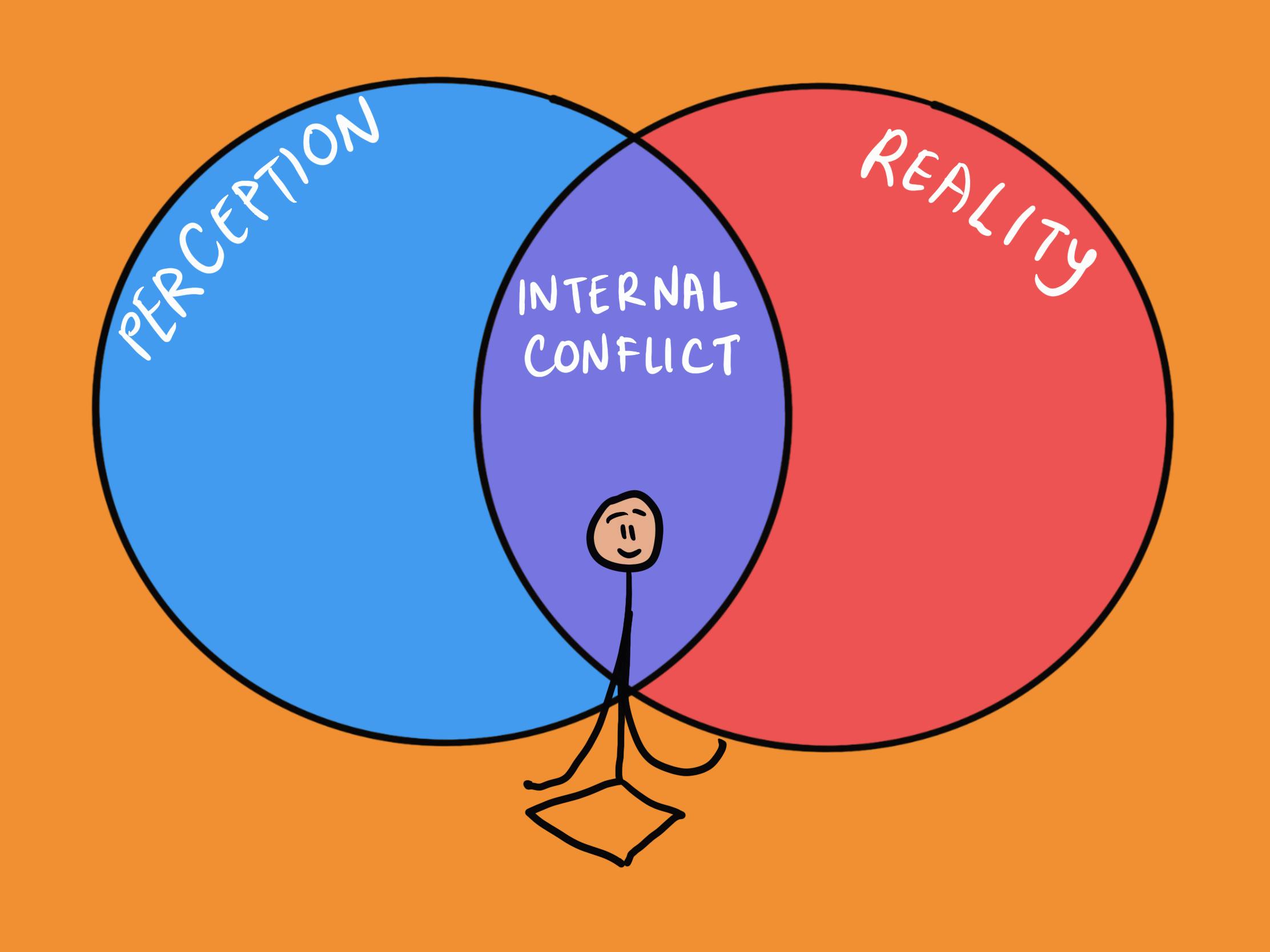
This is where cognitive dissonance enters the picture. Cognitive dissonance is the psychological discomfort we experience when new information conflicts with our beliefs, values, or self-image. In theory, conflicting evidence should lead us to update our beliefs. In practice, as Leon Festinger demonstrated decades ago, people often respond by rationalising the evidence instead.
In diving, this plays out in predictable ways. If I believe that my agency’s standards are robust, that my training pathway produces safe divers, or that my professional identity is rooted in protecting others, then a fatality involving a child trained within that system creates a problem that goes beyond procedure.
It threatens identity.
At that point, changing my view is no longer just about revising an opinion; it feels like admitting that something central to who I am, as a parent, instructor, or professional, might be flawed. Psychologically, that is painful. Rationalisation becomes the easier path.
Rationalisation and the illusion of learning
Rationalisation often sounds like careful thinking. It uses the language of safety and experience. Statements such as
- “this was a one-off,”
- “the system works when followed,” or
- “you can’t design training for every scenario”
appear reasonable on the surface, yet they function primarily to protect the belief system rather than interrogate it.
Festinger identified three conditions that make rationalisation more likely: strong personal identification with a belief, belonging to a social group that shares it, and public commitment to that belief. Modern diving culture amplifies all three. Social media allows rapid alignment with like-minded groups, public expression of views is normalised, and opinions harden quickly once stated.
Under these conditions, new information is rarely evaluated neutrally. It is filtered through the need to remain consistent with who we believe ourselves to be.

Why fatalities involving children are uniquely confronting
Child fatalities intensify this process because they challenge some of our most comforting narratives. They force us to confront the possibility that good intentions, experience, standards, and caring supervision may still coexist with unacceptable outcomes. That is a deeply unsettling idea, particularly for those whose role is to protect and guide others.
Blame, in this context, provides moral comfort. If someone clearly crossed a line, then the system itself remains intact. If the fault lies with an individual, then the rest of us can reassure ourselves that we would behave differently.
What gets lost in this framing are the system conditions that shape behaviour: instructor workload, time pressure during holidays, authority gradients between parents and professionals, children’s limited ability to articulate stress, normalised deviations that feel benign, and commercial or social pressures that influence decisions in a hidden way. These factors rarely fit neatly into a blame-focused narrative, yet they are often where prevention lives.

Learning requires psychological safety, not certainty
If the diving community is serious about reducing the risk of future fatalities, particularly those involving children, then it must become safer to question systems without threatening identities. This means separating moral judgement from learning, moving from looking ‘down and in’ to ‘up and out’, slowing down the rush to certainty, and creating space to ask how and why actions made sense at the time, given the conditions people were operating under. There are very few people who come to work with the intention of causing harm or damage, irrespective of the outcome.
“It was obvious!”, something we hear many times, and yet if it was obvious and the outcome was known with 100% certainty, then they wouldn’t have done what they did. Foreseeable isn’t always the case, especially when so many events are suppressed (actively and passively) as so we don’t hear about the near-misses.
This is not about excusing behaviour or lowering standards. It is about acknowledging that outcomes emerge from interactions between people, context, tasks, and tools, not from isolated decisions made in a vacuum.
The most important question after a fatality is not “Who failed?” but “What does this event teach us about how diving actually works, rather than how we imagine it works?”
Until we are willing to sit with that question, especially when the answers are uncomfortable, we will continue to generate fast stories, strong opinions, and limited learning. And the cost of that, as history repeatedly shows us, is not abstract.
Sometimes, it is a child.