Looking Sideways What a dog in the dark can teach us about human performance
It was about 4:30 in the morning, and I was standing outside in my housecoat waiting for my German Shepherd, Echo, to pee. There is probably a more dignified opening for an article about human factors. This is the one I have.
It was very dark and Echo had stopped somewhere in the yard, doing whatever German Shepherds do when they suddenly become intensely interested in something their humans cannot see. I knew roughly where she was, but when I looked directly toward her, she seemed to disappear.
So, I did something I had learned years ago. I looked slightly away from her and suddenly, I could see her movement.
The trick is called averted vision. The centre of our vision is excellent for detail and colour, but it is not our best equipment for very low light. Shift your gaze slightly and the image lands on a part of the retina with more of the rods that are sensitive in darkness. Astronomers use the technique to detect faint stars. Something that disappears when we stare directly at it can become visible when we stop trying so hard to look straight at it.
Standing there in the dark, waiting for my dog to complete her mission, I found myself wondering: What else might we see more clearly if we stopped looking directly at it?
That question has a great deal to do with diving.
The seduction of the obvious
When something goes wrong underwater, our attention naturally moves toward the most obvious behaviour.
A diver loses buoyancy control. A student fails to respond to a signal. Someone performs a procedure incorrectly. A team makes a poor decision. Those behaviours are visible, and because they are visible, they can easily become our explanation.
The diver lost buoyancy because they have poor buoyancy skills. The student missed the signal because they were not paying attention. The team made the wrong decision because they lacked situational awareness.
Those statements have the satisfying shape of explanations. They identify a person, attach a deficiency and close the file. They may even be true at some level. The diver did lose buoyancy. The student did miss the signal. The team did make a poor decision. But describing the final behaviour is not the same as explaining how it came to happen.
This is where the obvious becomes seductive. It gives us an answer before we have done the work of asking a better question.
Human performance is rarely a single switch. Attention, workload, expectation, equipment, communication, fatigue, experience and the behaviour of everyone nearby are all moving at once. We isolate one visible act because it is easy to name. The system that produced it is harder to see.
The behavior may be real, but it may not be the explanation.
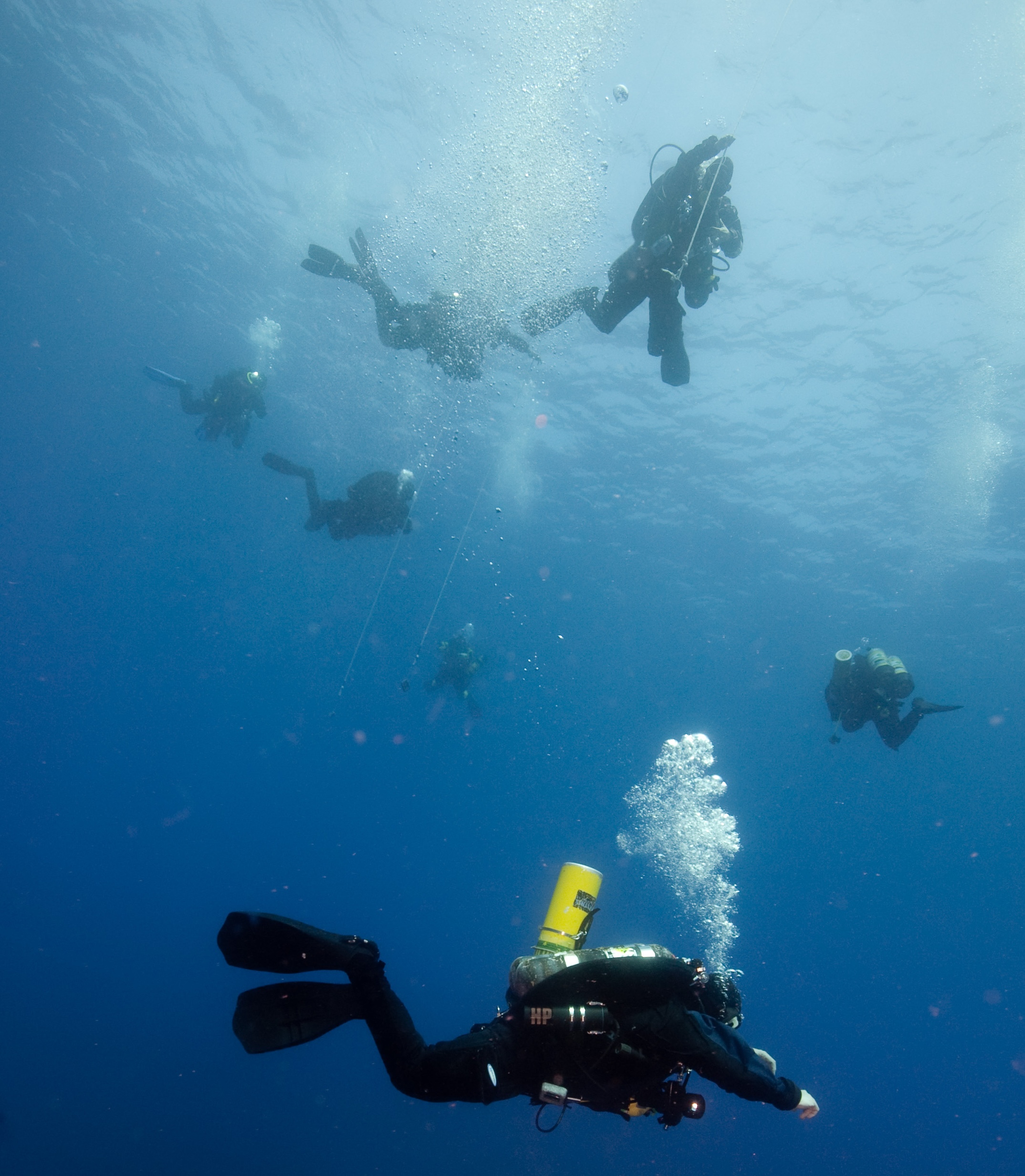
Poor buoyancy is something we can see
Consider a diver struggling to maintain buoyancy while completing a task. An instructor sees the diver rising or sinking. It is the largest movement in the frame, so it’s tempting to correct the largest movement: Get back to depth. Hold your stop. Control your buoyancy.
But shift your gaze slightly.
What happened immediately before the buoyancy change? What was the diver doing with their breathing? Where had their attention gone? What new task had just been introduced? What was their teammate doing? Had communication started—or stopped? Had the equipment configuration changed? Was stress rising with workload?
The diver may not have a buoyancy problem in the narrow sense. They may have an attention-allocation problem that appears as buoyancy. Their breathing may have changed under stress. Their body position may have shifted while they reached for equipment. A teammate may have moved outside the place they expected to find them. The diver may be successfully completing the task we assigned while quietly shedding control of everything else.
That last possibility matters. Success at the focal task can hide degradation around its edges. A student may complete the procedure and still lose the larger situation. If we score only the procedure, we may reward a performance that would be fragile in the real environment.
Human-factors researchers use the term attentional tunnelling for the way attention can become locked onto one source of information or one task while relevant information elsewhere is missed. Situation awareness involves more than having information in front of us. It requires perceiving what matters, understanding what it means and anticipating what is likely to happen next.
A diver can be looking directly at a gauge and still be losing the dive.
Poor buoyancy is the thing we see most easily. But it may be the output of a much larger system. Looking harder at the output does not necessarily help us understand the system producing it. Sometimes we have to look sideways.
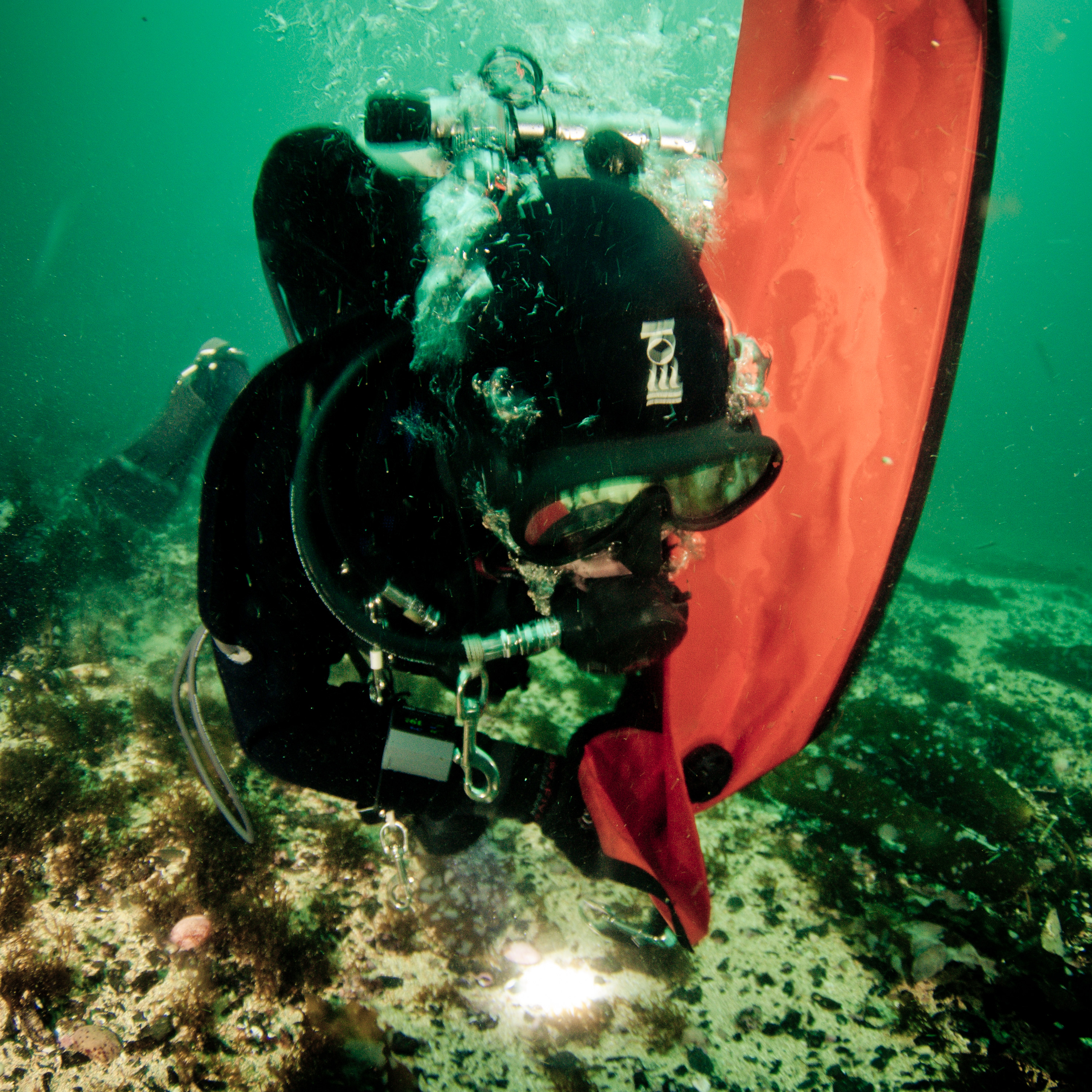
What disappears when the task becomes difficult
This changes what it means to observe a diver.
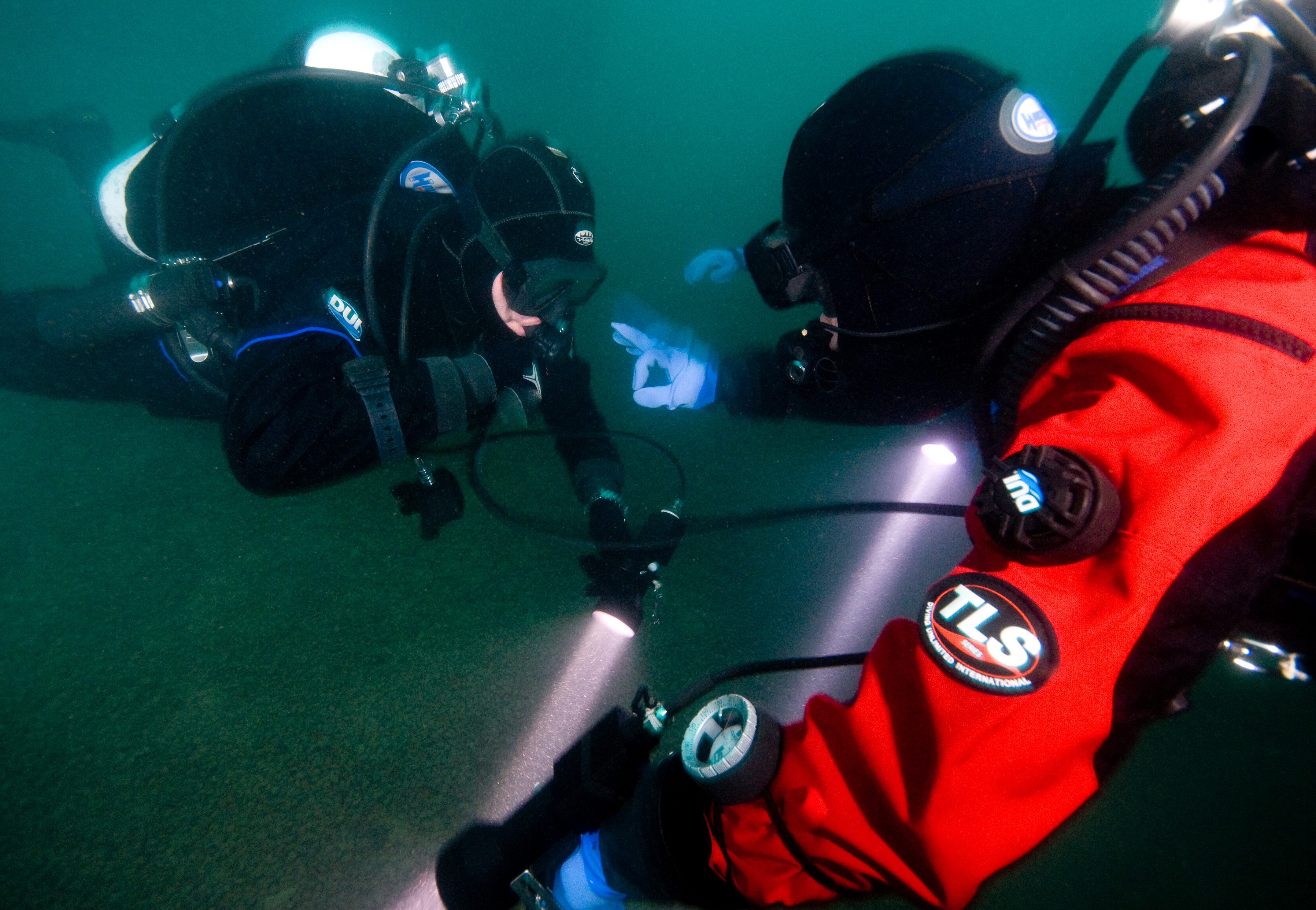
A new instructor tends to watch the task. Did the student perform the steps in order? Was the signal correct? Did the student arrive at the required depth? These are necessary questions, but they are not sufficient ones.
A good instructor watches what happens around the task.
Where are the student’s eyes? What happens to breathing and trim? What happens to the teammate? What occurs immediately before the student begins struggling? How long does recovery take after the demand is removed? Do they solve the problem, or merely survive it?
And perhaps most importantly: What disappears from the student’s awareness when the task becomes demanding?
Novices often need nearly all their available attention to perform the thing directly in front of them. That is not a character flaw. It is part of learning. The individual steps have not yet been assembled into larger patterns, so each must be found, recalled and executed. Experienced performers recognize meaningful patterns and use them to decide where attention is needed next.
This is one reason expertise can look deceptively calm. The expert is not necessarily doing less. They are spending less attention on actions that have become organized and more attention on the weak signals surrounding them.
Expertise may not simply be the ability to see more. It may be the ability to know where to look, what can safely be ignored for the moment, and when to look somewhere else.
Looking sideways after failure
The same principle matters after something goes wrong.
Once we know how an event ended, the final action becomes painfully salient. Why did they do that? Why did they not follow the procedure? Why did they not notice? From the safe side of the outcome, the correct path can look illuminated and the wrong one almost wilful.
But the people involved did not have our view. They were moving forward through an uncertain situation while we are looking backward through a completed one. We know which signal mattered because we know what happened next. They saw that signal among many others, some of which probably looked more urgent at the time.
Hindsight bias changes our sense of what was predictable beforehand. It can turn investigation into a hunt for the moment when someone should have known what we now know.
If we genuinely want to understand why an action made sense at the time, we have to look beside it. What information was available? What was missing? What had happened previously? What were they expecting? What was the workload? What were other people doing? What competing goals existed? What did the situation look like before we knew how it ended?
This is not an argument for eliminating responsibility because understanding is not absolution. People make poor choices, ignore training and violate procedures. But assigning responsibility without understanding the conditions that shaped an action leaves the system free to produce the same outcome again—with a different person available to blame.
The visible error may be the brightest object in our field of view but that does not mean it contains the information we need.
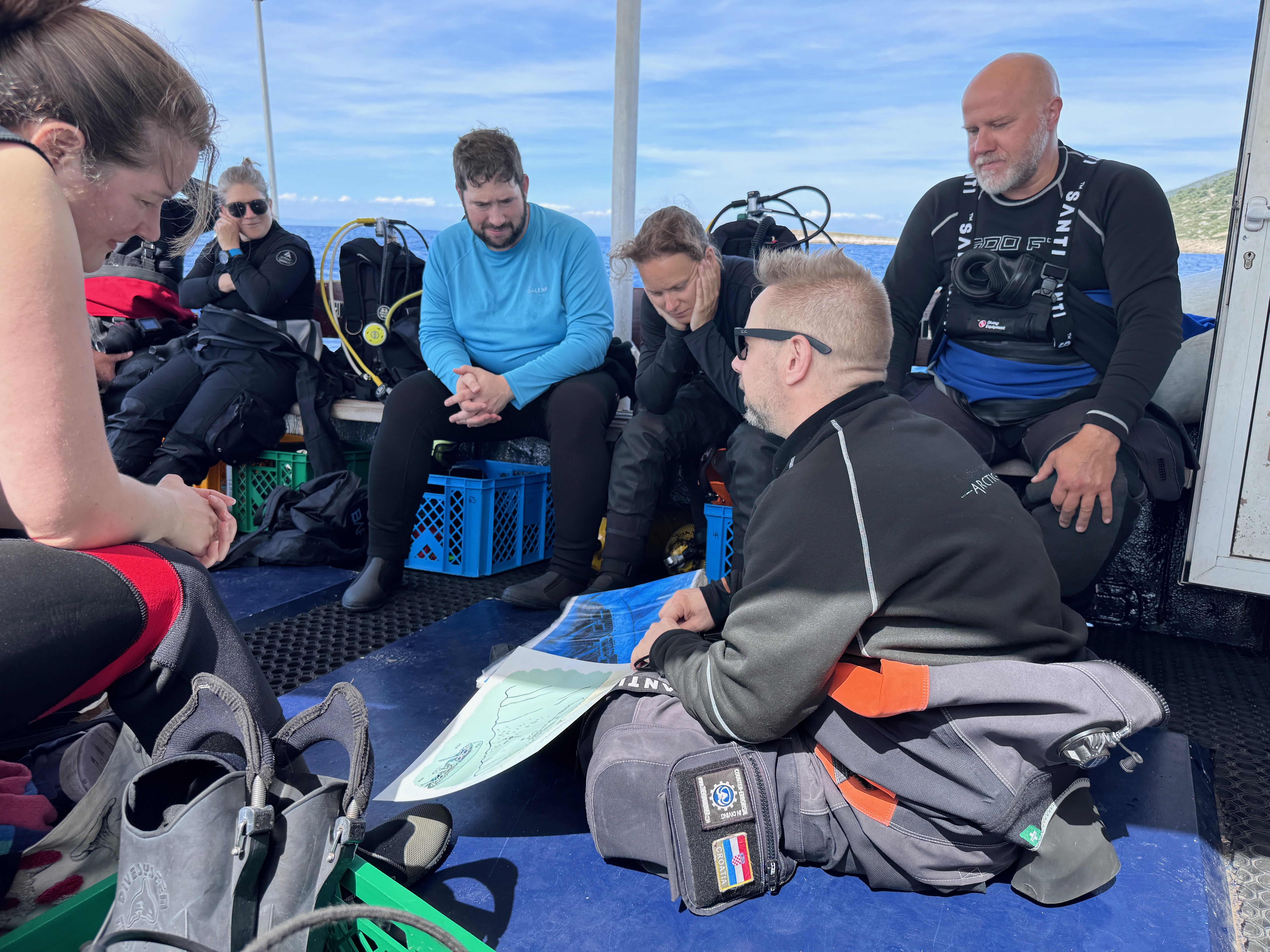
Look sideways at success too
We investigate failure because failure demands an explanation. Success usually gets a nod, a score or a line in a report. Everything worked. Good job. Move on.
But successful performance also contains weak signals: a small repositioning before a task, a glance toward a teammate, a subtle change in breathing, a brief pause before acting, or an experienced diver noticing something that a novice does not yet recognize as important.
Those behaviours are easy to miss precisely because nothing dramatic happens afterward. The problem is prevented, absorbed or corrected while it is still small. From the outside, it can look as though there was never a problem at all.
If we study only failures, we learn what performance looks like after control has been lost. If we study ordinary success, we begin to see how divers and teams keep control as conditions change.
After a clean dive or training evolution, do not ask only, Did they pass? Ask what made the performance stable. What did they notice early? How did the team create spare capacity? Which small adjustment prevented a larger correction later?
Looking sideways should not only help us understand failure. It can help us recognize what expertise looks like before we need it.
Try it on your next dive
Looking sideways is not an argument for ignoring the obvious. Sometimes the obvious problem really is the problem. If equipment is broken, fix it. If a diver has not learned a skill, teach it. The habit is simply to resist closing the explanation too early.
On your next dive, class or debrief, add a few questions:
What happened immediately before the visible problem?
What else changed at the same time?
Where did the diver’s attention go—and what disappeared from it?
What were the other team members doing?
Which conditions made the task easier or harder?
During a successful dive, what small actions kept the performance stable?
These questions are useful to instructors and dive leaders, but they are not limited to formal training. Any diver can use them to improve a brief, a debrief or the way they observe a teammate.
Eventually Echo finished whatever important reconnaissance operation had occupied her attention and came back toward the house. Nothing about her had changed. The darkness had not changed. The only thing I changed was how I looked.
And something that had been difficult to see became visible.
Human performance may work the same way. The thing directly in front of us is certainly worth observing, but it is not necessarily the whole story.
Sometimes, to understand what is really happening, we have to look sideways.
Sources
• Alexander et al. (2021), Gaze mechanisms enabling the detection of faint stars in the night sky
• Endsley (1995), Toward a theory of situation awareness in dynamic systems
• Klein, Calderwood and Clinton-Cirocco (1986), Rapid decision making on the fire ground
• Fischhoff (1975), Hindsight is not equal to foresight
• Hollnagel, Wears and Braithwaite (2015), From Safety-I to Safety-II