

Learning Review – Manta Lodge Missing Diver Incident
Learning Review – Manta Lodge Missing Diver Incident
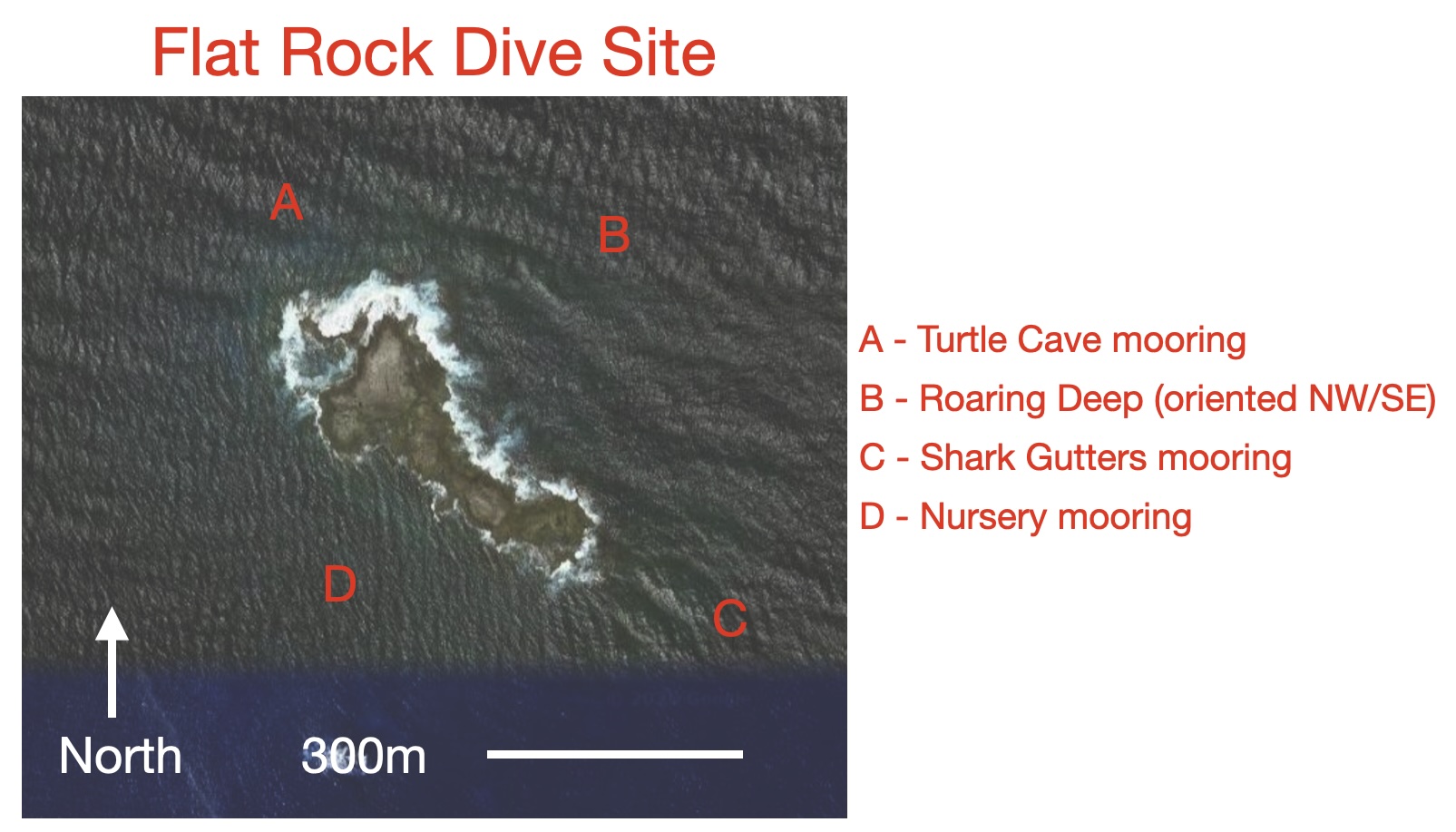
Flat Rock / Roaring Deep – North Stradbroke Island
18–19 April 2026
Executive Summary
On 18 April 2026, two experienced technical divers became separated from their surface support during a drift decompression dive at Flat Rock, North Stradbroke Island. They spent almost twenty-four hours at sea before being located by an AMSA Challenger aircraft and recovered by rescue helicopter the following morning.
Given the outcome, it would be easy to conclude that this incident resulted from poor decision making, inadequate preparation or a failure to follow established procedures. The evidence gathered for this review suggests otherwise.
The divers, skipper and support team were all experienced, competent and actively managing the conditions they faced. The dive plan had already been modified to reduce workload. The strength of the current was recognised and discussed throughout the morning, contingency plans had been considered, and the search effort that followed was initiated rapidly and conducted professionally. No single action, omission or procedural breach adequately explains why two divers ultimately spent almost a day drifting offshore.
Instead, this review demonstrates how incidents of this nature emerge from the interaction of multiple individually manageable factors. Environmental conditions, operational adaptations, differing mental models, assumptions about recovery, limitations of visual detection and the rapid expansion of the search area combined to progressively reduce the available safety margin.
Importantly, the incident also highlighted many examples of effective performance. Dan and Stu remained calm, analytical and adaptable throughout almost twenty-four hours in the water, continually reassessing their situation and making thoughtful decisions as conditions evolved. Tyler, Roger, Matt and the wider Manta Lodge team transitioned rapidly from dive support into search coordination, while emergency services mounted a sustained and highly professional search effort under challenging conditions.
This review has been written from a Human Factors perspective. Its purpose is not to determine fault, nor to identify a single "root cause". Instead, it seeks to understand how the incident made sense to those involved at the time, identify the interactions between people, equipment, procedures and environment, and provide some recommendations that may strengthen the resilience of future offshore diving operations.
Surface recovery deserves to be treated as a distinct phase of every offshore dive rather than simply the final stage of the dive profile. The assumptions held by divers and surface support regarding recovery procedures must be explicitly aligned, particularly where current, drift or decompression are involved. The effectiveness of traditional visual signalling equipment should also be reconsidered. Although DSMBs, mirrors and torches remain valuable, this incident demonstrated how difficult two well-equipped divers can be to detect in open water, even with multiple aircraft and vessels actively searching nearby.
The review also reinforces the value of understanding how search and rescue agencies conduct their operations. Appreciating how drift modelling works, how search areas expand over time and how casualty behaviour influences search planning allows divers to make more informed decisions should they ever become unexpectedly separated from their vessel.
Finally, this incident demonstrates the importance of learning from near misses. It is the norm in the diving world to judge events by the final outcome rather than the decisions that led to that outcome. So many near misses represent opportunities to identify emerging vulnerabilities before they combine into a far more serious event. The recommendations contained within this report are therefore also aimed not only at preventing a recurrence of this incident, but at strengthening the wider diving system's ability to recognise, discuss and learn from weak signals before they become accidents.
Introduction
On 18 April 2026, two technical divers, Daniel Fitzgerald ("Dan") and Stuart Fillman ("Stu"), became separated from their surface support during a drift decompression dive at Flat Rock, North Stradbroke Island. They subsequently spent almost twenty-four hours at sea before being located by an AMSA Challenger aircraft and recovered by helicopter the following morning.
This review has been developed from written accounts provided by Stu, Dan, Roger Stephen ("Roger"), Manta Lodge staff and others directly involved in both the dive operation and the subsequent search effort. Its purpose is not to identify blame or isolate a single point of failure. Rather, it seeks to understand how experienced, capable and well-intentioned people came to find themselves exposed to an event that, while ultimately survivable, had the clear potential for a catastrophic outcome. More importantly, it seeks to identify lessons that may improve the safety of future diving operations, regardless of organisation or agency.
This incident did not result from recklessness, complacency or an obvious disregard for risk. In many respects, the opposite was true. Challenging conditions were recognised from the beginning of the day, conversations about current and contingencies occurred repeatedly, and the dive plan itself was modified to simplify the operation and reduce task loading. Instead, the incident emerged through the interaction of environmental conditions, operational adaptations, small mismatches in expectations and assumptions, and a series of individually reasonable decisions which, when combined, progressively reduced the available safety margin.
The Morning of the Dive
As is normal for Manta Lodge diving, the day began early for everyone involved. Stu woke before 4:30 am to travel from the Gold Coast for what was intended to be the second-last day of his SSI XR technical diving course. Dan, acting as instructor, had already reviewed the weather forecasts and wave rider buoy data before departure and was aware that current in the area remained elevated following the strong conditions experienced the previous day. Forecasts also indicated that both swell and wind were expected to increase as the day progressed.
Although the current was recognised as strong, several participants later reflected that it was not the strongest they had previously experienced. Conditions ashore remained calm and manageable, placing the operation in an uncomfortable grey area; challenging enough to demand adaptation and caution, but not so severe that cancelling the dive appeared either obvious or necessary.
During the journey to the island and equipment preparation at Manta Lodge, discussion repeatedly centred on the current and how best to manage it. The original dive concept was progressively simplified. Dan later explained that this was a deliberate attempt to reduce task loading by removing unnecessary skills and keeping the dive straightforward. The plan became a relatively simple drift decompression dive to approximately 33 metres, with a shortened runtime and simplified objectives.
During equipment preparation, both Dan and Stu made decisions that would become significant in hindsight. Each owned a Garmin InReach satellite communicator capable of transmitting GPS position data, yet neither elected to carry one on the dive. These were not careless omissions. Stu explained that he had recently bought a new drysuit and had not yet found a satisfactory method of mounting the InReach without introducing additional complexity. He was already adapting to new equipment and procedures associated with technical diving and consciously chose not to increase his workload further.
Dan reached a similar conclusion for different reasons. Previous attempts to attach InReach units to DSMBs had resulted in water damage during testing, leading him to question the practicality of carrying one in that configuration. Given the simplified nature of the planned dive and the signalling equipment already being carried, both believed existing procedures would provide an appropriate level of safety.
These decisions illustrate an important Human Factors principle. Viewed in isolation, and with the information available at the time, both decisions were entirely understandable. Neither diver believed they were accepting unreasonable risk. On the contrary, both were actively attempting to simplify the operation and, certainly in Stu’s case, reduce opportunities for error. It is only with hindsight that these decisions appear more significant.
Additionally, Dan had a dye pack which normally lived in the bottom of his left drysuit pocket. However, the suit had recently returned from its annual service and the dye pack had not yet been replaced. This illustrates another common Human Factors vulnerability following maintenance or equipment changes: items that are normally permanently installed or routinely carried can easily be assumed to be present, particularly when their presence has become habitual and therefore no longer attracts conscious attention. Any disruption to a normal equipment configuration creates an opportunity for something to be omitted unless the configuration is deliberately re-established and checked before returning it to service.
Site Assessment and the Decision to Proceed
After arriving at Flat Rock, the team assessed several potential dive sites before deciding to proceed at Turtle Cave / Roaring Deep. Boat Rock had already been rejected due to the visible strength and unpredictability of the current. Multiple moorings around Flat Rock were inspected, with the Turtle Cave mooring appearing comparatively manageable. Dan later estimated the current on the mooring itself at less than one knot, despite much stronger current being visible elsewhere.
Once again, the dive team adapted to the conditions they observed rather than rigidly following the original plan. The dive was reframed as a carefully managed drift profile. Entry was modified to a "hot drop", with the vessel reversing against the current to allow the divers to descend rapidly while maintaining contact with the mooring line. Plans for DSMB deployment and contingencies in the event of separation from the reef were also discussed.
Roger later recalled that Tyler Rae ("Tyler"), acting as skipper of their boat Yayaa, specifically instructed divers to deploy DSMBs immediately if they became separated from the site. The intent was to maximise the opportunity for surface support to establish visual contact before the divers drifted too far from the reef.
Although these discussions appeared clear, subtle differences in understanding remained. There does not appear to have been a single, fully shared mental model regarding exactly when DSMBs would be deployed, how rapidly divers might drift after surfacing, how surface support would position itself relative to the current, or how quickly a manageable drift could become an unrecoverable separation.
These were not communication failures in the traditional sense. Rather, they demonstrate how experienced teams often rely on shorthand communication and shared assumptions that can unintentionally conceal important differences in interpretation.
Entry and Initial Dive Phase
The dive itself began uneventfully. All four divers entered the water at approximately 0820 and descended successfully. S-drills and equipment checks were completed behind the shelter of the mooring block before the two buddy pairs separated and continued with the planned dive.
Roger and Matthew Setchell ("Matt") later described the underwater current as strong but manageable. At times they used rocks and features of the reef to slow their progress and stabilise themselves before continuing.
Approximately ten minutes into the dive, Roger and Matt observed Dan and Stu ahead of them entering Roaring Deep. Both appeared calm, composed and fully in control of the dive. Roger later reflected that nothing about the encounter suggested concern or urgency. This would prove to be the last confirmed underwater sighting of the pair.
Early Ascent and DSMB Deployment
Approximately twenty minutes into the dive, Dan realised that he and Stu had progressed much further along the dive site than he would normally expect due to the strength of the current. Concerned that continuing the dive would only increase the distance they drifted before surfacing, he elected to abort the dive significantly earlier than originally planned.
Stu later reflected that, while the ascent itself was controlled and calm, he sensed a degree of urgency from Dan that differed slightly from the original plan. He interpreted this not as panic, but as a recognition that they needed to transition into the ascent and surface phase before drifting even further from the intended recovery area.
At this point, an important difference in understanding between the dive team and surface support began to emerge. During the pre-dive briefing, Tyler's expectation had been that, if divers were swept away from the reef, DSMBs would be deployed from the bottom so that surface support would receive the earliest possible indication of their position. Dan, however, made a different, dynamic assessment underwater. Based on the strength of the current, he was concerned that deploying a DSMB from depth could result in an uncontrolled ascent if it was caught by the current. He therefore elected to delay deployment until their six metre stop, where he believed the risk could be better managed.
Both decisions were entirely rational when viewed from the perspective of the individuals making them. Tyler's priority was to maximise the opportunity for surface support to identify and track the divers before they drifted too far from the site. Dan's priority was to maintain a controlled ascent and avoid introducing unnecessary risk during decompression. Neither mental model was inherently wrong; they were simply optimised for different hazards. The consequence, however, was that by the time the DSMBs reached the surface, Dan and Stu had already drifted a considerable distance from the reef, reducing the opportunity for surface support to establish and maintain visual contact before the strong surface current carried them even further away.
The DSMB deployment itself also introduced extra task loading. Stu described briefly forgetting to disconnect a bolt snap before inflating his DSMB, resulting in a momentary uncontrolled ascent before he regained buoyancy control and stabilised himself. In isolation this was a relatively minor event and was managed effectively. However, it highlights the reality that even experienced divers can become task saturated when simultaneously managing buoyancy, decompression obligations, DSMB deployment, strong current, equipment configuration and situational stressors.
Surface Separation and Drift
When Dan and Stu reached the surface, neither initially believed they were in immediate danger. The dive boat was visible, although they estimated it was already approximately 300 metres away. Their expectation was that the vessel would recover them within a matter of minutes.
The conditions on the surface, however, proved significantly different from those experienced underwater. Strong surface current, combined with swell and wave height, rapidly increased the distance between the divers and the boats. Visibility of the boat became more and more intermittent as they disappeared into the troughs between waves. Stu later reflected that, although the boat did not initially appear excessively distant, the speed at which they drifted away quickly became alarming.
Timing also proved to be an important factor. Dan and Stu surfaced approximately ten minutes earlier than surface support expected. Meanwhile, Roger and Matt remained underwater completing their longer runtime profile. This appears to have created a mismatch between where surface support expected divers to be and where Dan and Stu actually were.
As the time passed without being recovered, Dan and Stu began discussing their options. One of the earliest considerations was whether they should attempt to swim towards shore or simply remain with the current. Stu initially believed that remaining with the prevailing current would make them easier for rescuers to predict and locate, while Dan favoured swimming on an angle that still allowed the current to assist their progress. Rather than committing rigidly to one plan, they continually reassessed their options throughout the day and into the night as their situation evolved. Throughout their ordeal, their decision-making remained calm, analytical and adaptive rather than reactive.
Stu later used his Garmin watch to record part of their drift, which showed that they had travelled more than eleven kilometres in three and a half hours. Looking back after the incident, he also reflected that, based on the search aircraft he could observe during the day, the early search effort appeared to underestimate just how quickly the current was carrying them away from the dive site.
Recognition of the Missing Divers and Initial Search
Once Tyler recognised that Dan and Stu had not surfaced as expected, the response aboard both Manta Lodge vessels was immediate and well coordinated. Tyler began searching down-current while simultaneously communicating with the skipper of Rigid Too which was located nearby with a group of recreational divers. Divers on the second vessel were promptly recalled using the emergency recall procedure, allowing that boat to transition from dive support into an additional search asset within a very short period. This early coordination between the two vessels significantly increased the available search capability during the critical initial phase of the incident and was one of the strongest aspects of the operational response.
From this point onward, the operation rapidly transitioned from a dive operation into a full search and rescue effort. Yayaa and Rigid Too coordinated systematic searches while emergency services were progressively mobilised. Surf Life Saving Queensland, the Queensland Water Police, rescue helicopters and fixed-wing aircraft all joined the search during the day.
Several participants later reflected that, despite recognising the seriousness of the situation, they remained confident during the early search that Dan and Stu would be located quickly. This confidence was likely based on an implicit belief that two well-equipped divers would be relatively easy to locate. This incident challenged that assumption as, despite the search effort, Dan and Stu remained undetected.
Throughout the afternoon, they made repeated attempts to attract the attention of aircraft passing overhead. Dan attempted to use his signalling mirror as the AMSA Challenger aircraft passed nearby. He later reflected, however, that the speed of the aircraft presented an unexpected problem. By the time he heard it approaching, visually acquired it and prepared the mirror, the aircraft had already passed overhead and the opportunity to effectively signal it had been lost.
This illustrates an important limitation of signalling devices. While highly effective under the right circumstances, their success depends heavily on the speed, geometry and attention of the search platform. Equipment that appears simple to use in theory can prove much more difficult to employ successfully under operational conditions.
Following the incident, discussions with the Challenger crew suggested that, given the way observers scan the ocean surface from altitude, a DSMB laid flat across the water may actually have presented a larger and more conspicuous visual target than one standing vertically. This observation is not intended as criticism of the decisions made during the incident; very few divers have reason to consider how they appear from several thousand feet above the ocean. Rather, it highlights the value of understanding how search agencies actually conduct searches, rather than relying solely on intuition about what appears most visible from the water.
Perhaps one of the most significant lessons to emerge from the incident was the mismatch between perceived visibility and actual detectability at sea. Many divers understandably assume that a brightly coloured DSMB, torches and signalling devices make them relatively easy to locate once rescuers are nearby. This incident strongly challenges that assumption. Even in comparatively favourable weather, two experienced divers carrying multiple signalling devices proved extraordinarily difficult to detect amongst swell, whitecaps and the constantly changing sea surface.
Understanding Search and Rescue
As the hours passed, Dan and Stu periodically estimated how far they remained from shore and debated whether attempting to swim for land was realistic. Both later reflected that they consistently underestimated the true distance involved. This is unsurprising. Humans are generally poor at judging distances across open water, where the absence of familiar visual references creates powerful perceptual illusions. From sea level, distances that appear achievable can, in reality, be many kilometres further than expected. Even strong swimmers are unlikely to cover such distances while wearing exposure suits, carrying equipment and contending with current and swell.
Their discussion also raises an important consideration for future incidents. Modern Search and Rescue (SAR) agencies do not simply search progressively larger areas until casualties are located. Instead, they use a combination of the last known position, prevailing wind, tides, surface currents and elapsed time to predict where survivors are most likely to drift.
Where possible, search coordinators will deploy equipment into the water close to the last known position. This equipment is designed to drift in much the same way as a person floating on the surface. Combined with oceanographic current models and weather data, they allow search planners to continually refine where casualties are likely to be as time passes. While these predictions are never exact, they become increasingly valuable when survivors continue drifting naturally with the prevailing current.
This has an important implication for anyone unexpectedly separated from their vessel. The instinct to swim towards what appears to be the nearest land or boat is entirely understandable and may, in some circumstances, be the correct decision. However, significant or prolonged swimming also changes the problem rescuers are trying to solve. Once casualties begin moving independently of the current, particularly if they alter their direction or effort over time, predicting their future position becomes considerably more difficult.
This should not be interpreted as suggesting that divers should never swim for shore. Every incident is different and factors such as proximity to land, sea state, hazards, fatigue and weather must all be considered. Rather, it reinforces that the decision should be deliberate and based on realistic expectations of distance, physical capability and environmental conditions, together with an appreciation of how rescuers are likely to conduct the search.
Perhaps the strongest lesson from this incident is that visual signalling equipment should not be viewed as the primary means of recovery during offshore diving. DSMBs, torches, mirrors and whistles remain valuable pieces of emergency equipment, but they all rely on rescuers already being close enough, looking in the correct direction and able to distinguish a very small target amongst a constantly changing sea surface.
Electronic location devices fundamentally change this problem. Instead of predicting where divers might be, rescuers can begin working from where they actually are. The caveat with them though is that electronic devices aren’t bulletproof and shouldn't be relied upon as the single point of failure. They should instead form part of your safety gear, not be all of it.
Overnight Survival
As daylight faded, Dan and Stu transitioned from attempting to facilitate their recovery into managing a prolonged survival situation. Throughout the evening and overnight period they demonstrated numerous adaptive behaviours that almost certainly contributed significantly to their survival had their situation been more prolonged.
The pair remained physically connected throughout the night, preserving not only their proximity but also the psychological reassurance of remaining together. They carefully considered when and how to remove equipment before eventually disassembling their twinsets while retaining their wings to maximise flotation and reduce fatigue. Rather than committing to a single strategy, they continually alternated between swimming and resting in an attempt to balance warmth, energy conservation and morale.
While swimming, Stu described focusing on navigation using the stars, the silhouette of North Stradbroke Island and the ferry route displayed on his Garmin watch. These activities served a purpose beyond navigation alone. They provided continual cognitive engagement, helping maintain optimism and preventing the psychological deterioration that can accompany long periods of uncertainty.
As dehydration became increasingly significant, a rain shower passed over the pair. They attempted to collect drinking water using their dive masks, although the technique proved only partially successful. Nevertheless, it reflected the continual problem-solving that characterised their behaviour throughout the incident.
Stu also made a conscious decision to remove his dive mask whenever practical overnight so that he could breathe through his nose rather than his mouth. He recognised that prolonged mouth breathing would accelerate dehydration and attempted to minimise unnecessary fluid loss wherever possible. These were relatively small decisions in isolation, but together they demonstrate the extent to which the pair continued managing emerging problems rather than simply waiting to be rescued.
Both divers later reflected that some of the greatest cold stress occurred not while swimming, but during periods of inactivity. Swimming generated warmth, provided purpose and helped maintain morale. The challenge became balancing the physiological benefits of movement against the need to conserve energy over what was becoming an increasingly prolonged ordeal.
Rescue and Recovery
Not long after the sun rose on Sunday morning, an AMSA Challenger aircraft finally located Dan and Stu. The aircraft's co-pilot observed an unusual light pattern on the surface, almost certainly created by Dan deliberately moving his torch in an irregular manner to attract attention. Unlike a steady light, the erratic movement appears to have caught the observer's attention against the otherwise uniform background of the sea. Of note, this light was several miles away.
After the first flyover by the Challenger, the aircraft had to extend away before turning back towards Dan and Stu. The pilots described how they struggled to keep sight of the divers as they flew away from them and turned back but, after a several flypasts, a life raft was deployed right on top and shortly after, a boat and rescue helicopter were directed to the location to recover both divers before transporting them to hospital.
Following the incident, an interesting observation also emerged regarding equipment configuration. Dan's drysuit utilised a traditional latex neck seal, whereas Stu's suit was fitted with a silicone neck seal. Despite both spending almost identical periods immersed in the water, Stu's neck showed significantly less abrasion and soft tissue damage following recovery.
This observation is anecdotal and should not be interpreted as evidence that one seal material is necessarily superior to another. However, it may warrant further consideration by divers, instructors and equipment manufacturers when evaluating comfort and survivability during extended periods of surface exposure.
Summary
This incident did not result from a single poor decision, a failure to follow procedure or a reckless acceptance of risk. Every individual involved was experienced, thoughtful and actively managing the conditions they faced. Many of the decisions made throughout the day, including simplifying the dive plan, selecting an alternative site, aborting the dive early and rapidly initiating the search, were entirely reasonable responses to the information available at the time.
Instead, the outcome emerged through the interaction of several individually manageable factors. Strong surface currents, an earlier-than-expected ascent, differing mental models regarding DSMB deployment, the rapid expansion of the search area, and an overestimation of how visible divers would be from boats and aircraft all combined to progressively erode the available safety margin. None of these factors alone would necessarily have resulted in two divers spending almost twenty-four hours at sea. Together, however, they created a situation from which recovery became increasingly difficult.
The incident also reinforces several broader lessons relevant to offshore diving. Surface recovery should be regarded as a distinct phase of the dive, with hazards that may differ significantly from those encountered underwater. Recovering divers safely does not simply begin when they reach the surface; it begins with developing a shared understanding between the dive team and surface support about how the recovery will occur, how changing conditions may influence that plan, and what actions will be taken if events begin to unfold differently from expected.
The review also demonstrates that the effectiveness of traditional signalling equipment is often overestimated. DSMBs, torches, mirrors and whistles remain important pieces of emergency equipment, but they are far from guarantees of detection. The difficulty experienced by both surface vessels and multiple search aircraft in locating two well-equipped divers highlights just how challenging visual detection can be in open water, especially with wind, waves and swell.
Equally, the incident highlights the value of understanding how search and rescue organisations conduct their operations. Appreciating how drift modelling works, how search areas expand over time and how casualty behaviour influences search planning enables divers to make more informed decisions should they ever find themselves unexpectedly separated from their vessel.
Perhaps most importantly, this event demonstrated the remarkable resilience and professionalism of everyone involved. Dan and Stu sensibly chose to abort the dive early when conditions were worse than expected. They remained calm, analytical and adaptable throughout almost twenty-four hours in the water, continually reassessing their circumstances and making thoughtful decisions as conditions evolved. Tyler, Roger, Matt and the wider Manta Lodge team transitioned rapidly from dive support into search coordination, while emergency services mounted a sustained and highly professional search effort under challenging conditions.
The greatest value of this incident lies not simply in the fact that both divers survived, but in the opportunity it provides to learn before a similar sequence of events produces a different outcome. The recommendations that follow are offered in that spirit. Not to prevent adaptation, but to strengthen systems so that adaptation can continue safely when conditions inevitably change.
What does this mean for me?
If you are part of a dive shop or organisation
SMS compliance might not be enough. All Australian dive operators that use boats are required by AMSA (Australian Maritime Safety Association) to have and adhere to an SMS (Safety Management System). There were no issues with Manta Lodge’s SMS and they have a well deserved reputation with competent staff and well maintained equipment. Even so, this incident occurred. With that in mind, ask yourself, what else can you do within your operation to help prevent things going wrong? What are the gaps in your dive operation that need plugging?
You cannot fix a secret. Debriefing training dives is common. Debriefing ‘normal’ dives far less so and yet the vast majority of errors and near misses that are worthy of sharing happen during normal dives. If you don’t make debriefing routine then it is difficult to do properly when it is needed. Make structured debriefing normal. Set the example as the leader by talking about your own errors and mistakes to make it much easier for others to do the same. Learn from the small things as well as the near misses. This pro-active approach will make you safer and reduce your levels of risk.
What safety gear might you need? Do you have and/or provide all the safety gear that might be needed for your team? Devices such as the Nautilus lifeline are ideal as they can communicate with systems on board dive boats thereby facilitating a quick recovery. Consider that this sort of thing is still a piece of electronic equipment, and as such, is never going to be as reliable as a DSMB, a signalling mirror, marker dye or even a dive torch. It should just form part of your equipment list, not be a single point of failure.
Does everyone know what to expect? If you operate to a standardised set of procedures, it makes it much easier for everyone to know what everyone else is going to do when things go wrong. In context, when do you want people to deploy their DSMBs if they abort the dive early? From the bottom? From the first deco stop? If presented with a situation like the one Dan and Stu were in and you’re diving as a pair, perhaps an option would be to send up one DSMB from the bottom such that it can be let go if the current is threatening to drag you to the surface. Then you can at least ascend and send up another DSMB from mid-water. In high current situations, guides might want to have 2 DSMBs to cater for the chance of losing one.
Weather limits. This doesn’t necessarily mean setting limits for whether the dive should go ahead or not. More so it is to do with putting in extra risk controls as the weather gets worse. This might include reducing the dive group size, mandating higher levels of minimum experience, an extra person on surface cover or carrying extra equipment as already mentioned.
Use your team’s knowledge. Ask them what they think is the most likely thing to go wrong at a given dive site and what they think is the worst thing that could credibly go wrong at a dive site. None of us are as smart as all of us and someone might have thought of something no-one else has. Armed with that knowledge, discuss what to do about it.
How do you recall your divers? This recommendation is there to emphasise something that went well in this instance. As soon as Tyler recognised the situation had changed, the skipper for the other diver boat was contacted by radio, recalled their divers successfully and the team was quickly able to shift from diving to searching.
If you are a diver
How much have you adapted? Dan and Stu adapted their dive plan, the site choice, the abort point, the DSMB deployment and their plan while adrift at sea. Humans are very good at adapting, especially with experience. So if you do adapt, debrief it and learn from it. What do you need to change within your wider system to cope with the adaptations? Updates to procedures? Different equipment? Or something else?
What safety gear might you need? Most divers carry a DSMB for open water diving. A lot of divers carry a torch. What else might help make a difference? Dan and Stu had DSMBs and torches and they still spent almost 24 hours adrift. Make your DSMB big. There are plenty of 2m models out there so if you’re going to have one, it might as well be massive. High powered dive torches are brilliant in low light conditions. A strobe is even better. A signalling mirror doesn’t run out of batteries and, while it needs the sun to work, is far more powerful than any torch or strobe. The record distance for a signalling mirror being seen was 169km!! Marker dye is available cheaply and makes you a much bigger and more distinctive target from the air.
Drysuit or wetsuit? Dan and Stu were in drysuits and the experts gave them 48 hours before the search and rescue would have changed to a recovery operation as they’d almost certainly have perished from hypothermia. A drysuit is a big investment but it will make you live longer in cold water.
Ask open questions of each other before diving. If you ask, ‘Are you ok to dive?’ it is likely that, if people are a little wary, they’ll still say, ‘yes’ unless you have high levels of psychological safety. Instead, ask people, ‘What are your thoughts on the conditions today?’ This is much more likely to get a conversation going about potential issues and concerns.
Recognise the value of teamwork. Effective teams produce greater results than the sum of their parts: Better decisions are made quicker; More redundancy is available in many areas and above all, the value of the psychological support from not being alone on the surface in a situation like this cannot be overstated. Teamwork reduces the risk of something going wrong and very much reduces the impact if and when it does.
If you are a diver needing rescue
You are bad at judging distance. Like it or not, we are not very good at judging distance, especially from longer ranges and especially when we’re floating in a rough sea and want the land to be close than it is.
How to make your DSMB more visible. As aircraft fly over you, a DSMB might be more visible lying flat rather than stood upright. If you have more than 1 DSMB in the team, try a combination.
Jet aircraft will be close to you when you hear them. Keeping a lookout for the jet will be crucial to making the most of when they’re near. If you only start to wave your DSMBs or use your torch or signalling mirror when they’re overhead, it might be too late and you might only get 1 chance.
You are much harder to see than you think you are. If you have a signalling mirror, make sure you know how to use it before your life depends on it. If you have marker dye, consider when to use it, it doesn’t last forever but makes a pretty big green splat for a while. Either way, even if you think you’ve been seen, keep signalling with whatever you have until the life raft drops on top or someone is right next to you. A jet aeroplane like the challenger has to fly away from you before turning back towards and there is a high risk they’ll lose sight of you as they do this.
The ocean is unforgiving. Dehydration is a threat. Breathing through your nose where possible and staying relaxed will help combat it.
Don’t swim for the sake of it. There are no hard lines in the sand for when to swim or when not to swim. That decision will depend on a lot of variables. Just know that while it might not be the wrong idea, it will make the search pattern ‘harder’ to follow. Don’t forget lesson 1: land is further away than it looks.
Final thought
Every diver hopes they will never be the subject of a review like this one. Nevertheless, the diving community has a responsibility to learn from those who unexpectedly did. Dan and Stu survived through a combination of preparation, adaptability, teamwork, resilience and, ultimately, good fortune. The purpose of this review is to ensure that the next team is able to rely a little less on the last of those.


