

Why Rules Get Broken. Does It Matter Who Is Breaking Them?
Most conversations about rule-breaking in diving end before they’ve really started. The normal narrative goes along the lines of:
someone deviated from the plan, the standard, or the agency procedure;
the outcome was bad;
the explanation writes itself — complacent, arrogant, cutting corners;
the ‘file’ closes;
the lesson becomes "follow the rules."
Sound familiar?
Unfortunately, to create genuine learning, we have to explore the gap between the simple answer and the complex reality of making decisions in a social environment which has physical and psychological loss and reward (risk). Rules get broken constantly in diving, by careful and competent people, and in many cases, the system quietly depends on it. Understanding why this happens means separating two things that hindsight always glues together:
rule-breaking at the level of the organisation; the dive centre, the expedition, the agency, and
rule-breaking at the level of the individual diver.
On the surface they might look identical because rules are rules, but they are not and treating them as if they were, is one of the unfortunately subtle ways that the diving industry fails to learn i.e., change.

Two stories
The blank form. A busy training centre runs a popular training programme. The standard requires every student's cylinders to be analysed, and the contents independently verified and signed off by a second staff member before kit is loaded. On a full course day, with two instructors, two DMs, and fourteen students, that second signature is physically impossible to collect before the boat leaves. So, the centre does what countless organisations do: the lead instructor analyses and signs, and the second signature is added later, in a batch, from trust — sometimes the forms are pre-signed before the day begins. Nobody decided this. No manager wrote it down. It simply became how the centre gets fourteen people safely into the water when the clock is ticking and the margins are tight. Every experienced instructor there knows it happens, but none would describe it overtly on social media or in a report to the agency.
Nothing goes wrong for ages. The practice is technically useful and supports the business goals: the gas does get analysed, the students dive safely, the centre remains solvent. Then one day a fill is wrong, a diver is hurt, and the investigation finds the pre-signed forms. Overnight, a practice the whole organisation relied on becomes the act of one named individual who "falsified safety records."
I know many will read this and say we don’t do THAT. But take a look at your organisation to find real examples. They will exist.
The fun dive. A different diver, on his own kit, on a relaxed weekend dive he has done dozens of times. The rule he learned on day one of his Nitrox course is to analyse his gas and mark the cylinder before every dive. He stopped doing that a while ago — not in a dramatic moment, just gradually. The shop is trusted, the fills are "always" spot on, analysing is a faff on a busy pontoon, and nobody else seems to bother either. It works every time, which is exactly why it keeps not getting done. Then one weekend the fill is wrong. He is diving a 45m wreck with air, using 50% as his deco gas, but the cylinder actually has 100% in it because the filler was distracted and forgot to both add air and do the analysis, and cylinders got mixed at the fill station. He switches at 21m, has an oxygen toxicity event, and his buddies rescue him and get him to the surface. He survives.
Set these side by side and the standard response — "rules were broken, therefore bad" — looks not just simple but misleading. In the first, the rule-breaking belonged to the organisation and served the task. In the second, it belonged to the individual and served only his convenience. Both are deviations, but in terms of what they tell us, or in what we should do about them, are very different.
Useful illegality: why organisations quietly depend on broken rules
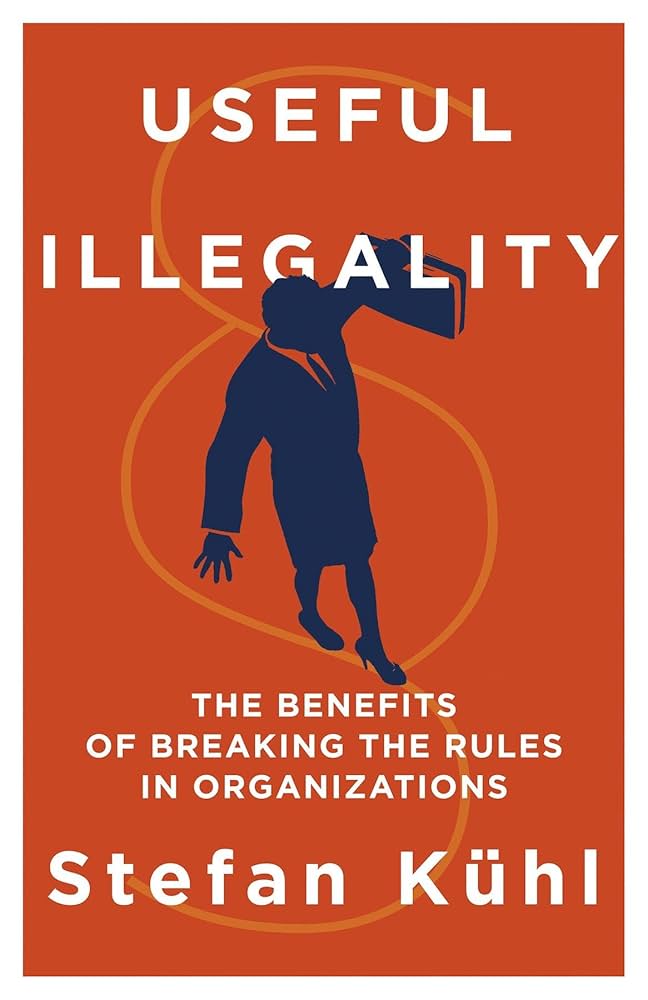
The organisational sociologist Stefan Kühl, building on Niklas Luhmann’s work, gives us the language for the first story. Luhmann called it useful illegality; usually not breaking the law but breaking the organisation's own rules in ways that lets it function as it needs to. That claim can be uncomfortable and, once seen, hard to unsee: no organisation can survive on its formal rules alone.
A rulebook is a single consistent picture written in advance. Reality arrives as a stream of situations its authors never saw — the tide that will not wait, the fourteenth student, the kit that fails on the morning of the dive, the two standards that cannot both be satisfied at once. Try this thought experiment: imagine a dive centre where every member did only and exactly what the standards formally require and questioned nothing. It would not become safer. It would seize. "Working to rule" is a recognised form of strike action precisely because strict adherence to the formal system stops the work.
Consequently, organisations grow a second layer underneath the formal one. A single improvisation is not the invisible layer. Useful illegality is not one instructor having a bad day; it is a network of reliable, repeatedly travelled pathways that have crept in and become expected. The test of whether you are looking at structure or a one-off is the reaction of others: if a deviation surprises and angers the people closest to the activity, it was an individual act; if everyone quietly expects it and is unbothered, it has become part of how the place works. Note, outcome bias can play a large part here. The more severe the outcome, the easier it is to drop into the individual blame even when it is clear it is an organisational and structural issue.
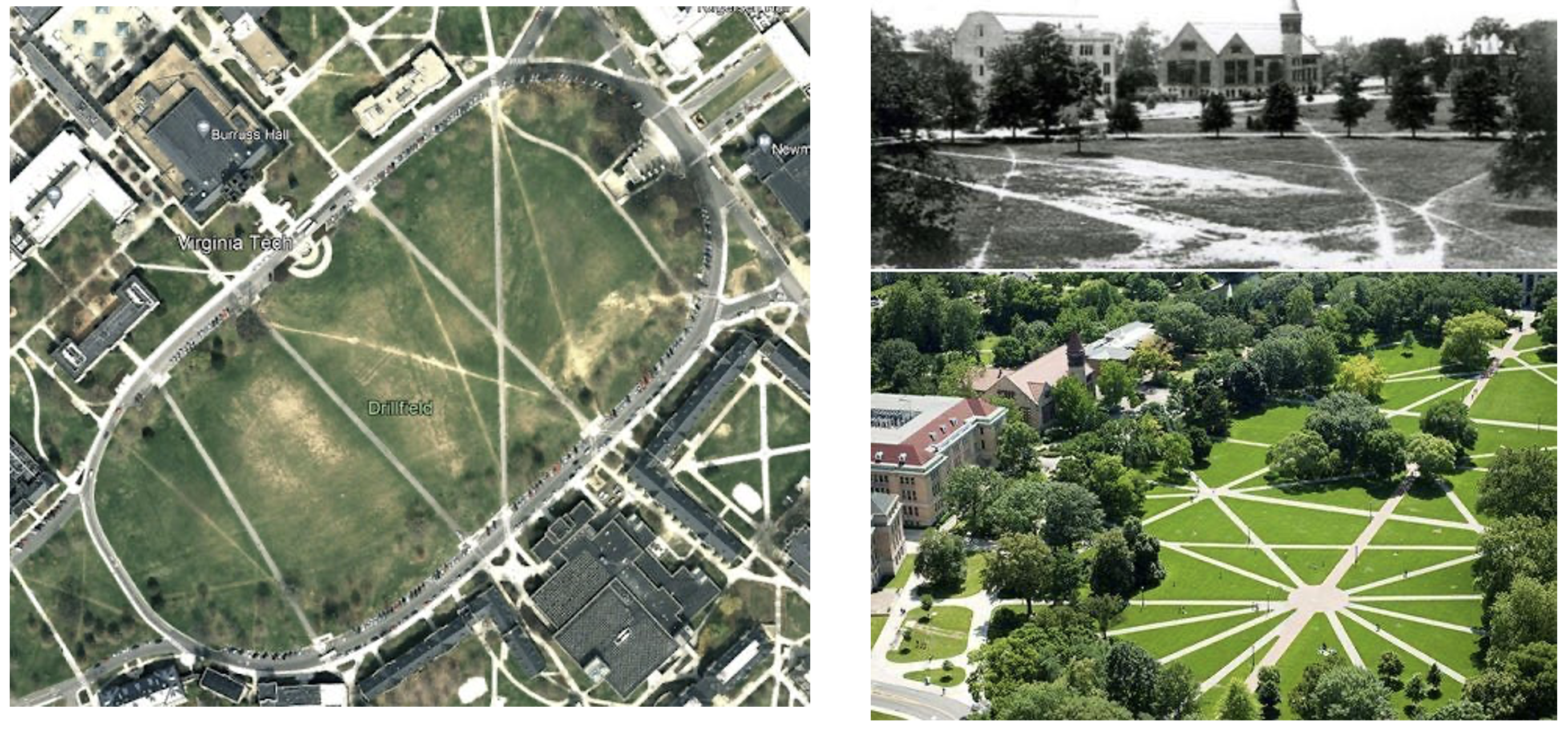
A metaphor can make things easier to recognise. Think of the formal standards as the surfaced, signposted pathway through a educational campus: official, mapped, the route you would point to if asked how to get across. Now look at the ground. Beside the path, and often cutting across it, are desire paths — the worn tracks where people actually walk because the official road takes too long or goes the wrong way for the trip they are on. Even when there are signs that say ‘DON’T WALK ON THE GRASS’
Nobody planned the desire path. Nobody maintains it on a chart. Yet it is unmistakably a path: trodden flat, obvious to locals, invisible on the map. The pre-signed form is a desire path. The organisation runs on both the paved and walked paths, and it could not run on the path alone.
This reframes the question. It is rarely "why did this person break the rule?" It is "why does this organisation need this rule broken in order to operate, and why has it never said so out loud?". This is what the recent blog about conditions was about.
The burden of proof — the mechanism that helps expose the challenges faced in reality
If formal rules do not actually determine what people do, what are they for? Kühl's answer is the single most salient point in this blog. Rules do not control behaviour. They allocate the burden of proof.
Follow the standard and something goes wrong, and you are covered: you did what was required, the system carries the explanation. Deviate — even sensibly, even in a way the organisation depends on — and something goes wrong, and the burden of proof lands on you. You must now demonstrate your action was reasonable, caused no harm, served the task. The rule did not stop the deviation. It decided who has to do the explaining when the outcome is bad. Take a look at what your agency standards or your insurance liability covers states on this matter…
This is the point the whole industry turns on without noticing. The blank form was useful illegality every day it produced no incident. The act did not change on the day of the bad fill — the outcome changed, and the burden of proof moved with it: from a diffuse organisational "this is how we cope" to a single person in front of an investigator, lawyer or law enforcement officer. The deviation was structural, but the accountability got personalised. That move — from system to individual, triggered by the result rather than the action — is hindsight bias having its most damaging effect: we judge the decision by how it ended, not by what was knowable and normal at the time.
Kühl adds something worth reading with a critical mind. Senior people within organisations often manage useful illegality by carefully not seeing it. To formally notice the pre-signed forms would mean having to act, because tolerating a known breach implicates them. Consequently, a tacit arrangement forms: the practice keeps the operation running, leadership keeps its distance, and things are arranged so that if it ever surfaces, responsibility falls downward to the person whose signature is on the form. This is rarely conscious villainy. It is how organisations protect the polished face shown to agencies, insurers and customers, while the informal layer does the work that keeps the doors open. The diver on the sharp end inherits a burden of proof for a practice they did not invent and were never formally permitted to use.
My research around reporting and storytelling brings this final point to life: I (agency) won’t ask and you (instructor) won’t tell, and if you do tell me, tell me via a voice message or face-to-face, don’t write it down…
Is all rule-breaking fine? No. Let’s look at the individual
It would be a serious misreading to take "the system depends on broken rules" as "rules don't matter." The important point here is that we need to be more discriminating, not less. The critical line is between rule-breaking that is based around the organisation and doing ‘more work’, and rule-breaking that serves the individual; convenience, ego, getting home sooner etc. Personal rewards, not organisational or team.
That second kind, serving the individual, is the fun dive. Skipping the analysis had no organisational or structural backing and solved no shared problem; it spared one diver a minor inconvenience and moved risk onto himself and anyone who would be diving with them.
If we apply the same logic for a closed-circuit rebreather diver who has slowly let the pre-dive checklist slide because it "always passes" — until the day the oxygen cylinder is not turned on, the check that would have caught it is the check that was skipped, and he then breaths down a loop that will not sustain life. That it "worked" every previous time is not mitigation. It is the trap: a self-serving deviation that keeps succeeding is a margin being slowly eroded until the day there is none left, and the diver can’t recover safely.
Hindsight erases this distinction. After a bad outcome, the careful organisational adaptation and the careless individual drift arrive at the investigation looking identical: "the diver did not follow the procedure."
The analytic task, the thing that separates real learning from learning theatre, is refusing to let the outcome collapse them into one. The question is not was a rule broken. What it should be is:
whose deviation was this,
what did it serve,
was it a worn path the system relied on or a private shortcut the system was carrying without knowing?
For the diver and wider diving community, this provides a level of calibration. Before judging a deviation, yours or someone else's, ask which kind it is. A worn path is expected, repeated, and serves the dive or the team because the formal route doesn't fit reality. A private shortcut serves you, is unspoken, and transfers risk onto people who didn't sign up for it.
The most dangerous deviations are private shortcuts dressed up, after the fact, in the language of useful adaptation. For the instructor or leader, the implication points away from the individual. If a standard is being broken structurally — silently, hidden, repeatedly, by competent people, because the formal route genuinely doesn't fit the work — disciplining whoever got caught on the path changes nothing except who walks it next. The path was a signal, telling you for free where your formal system and your real work have diverged.
The signal also points to the social system of buddy or team diving that failed to prevent such individual shortcuts to be carried through to the dive. Many adverse events have happened despite the team member or student noticing something but weren’t able to say anything, and the issue carries onto its catastrophic outcome. (Look up the guide about speaking truth to power)
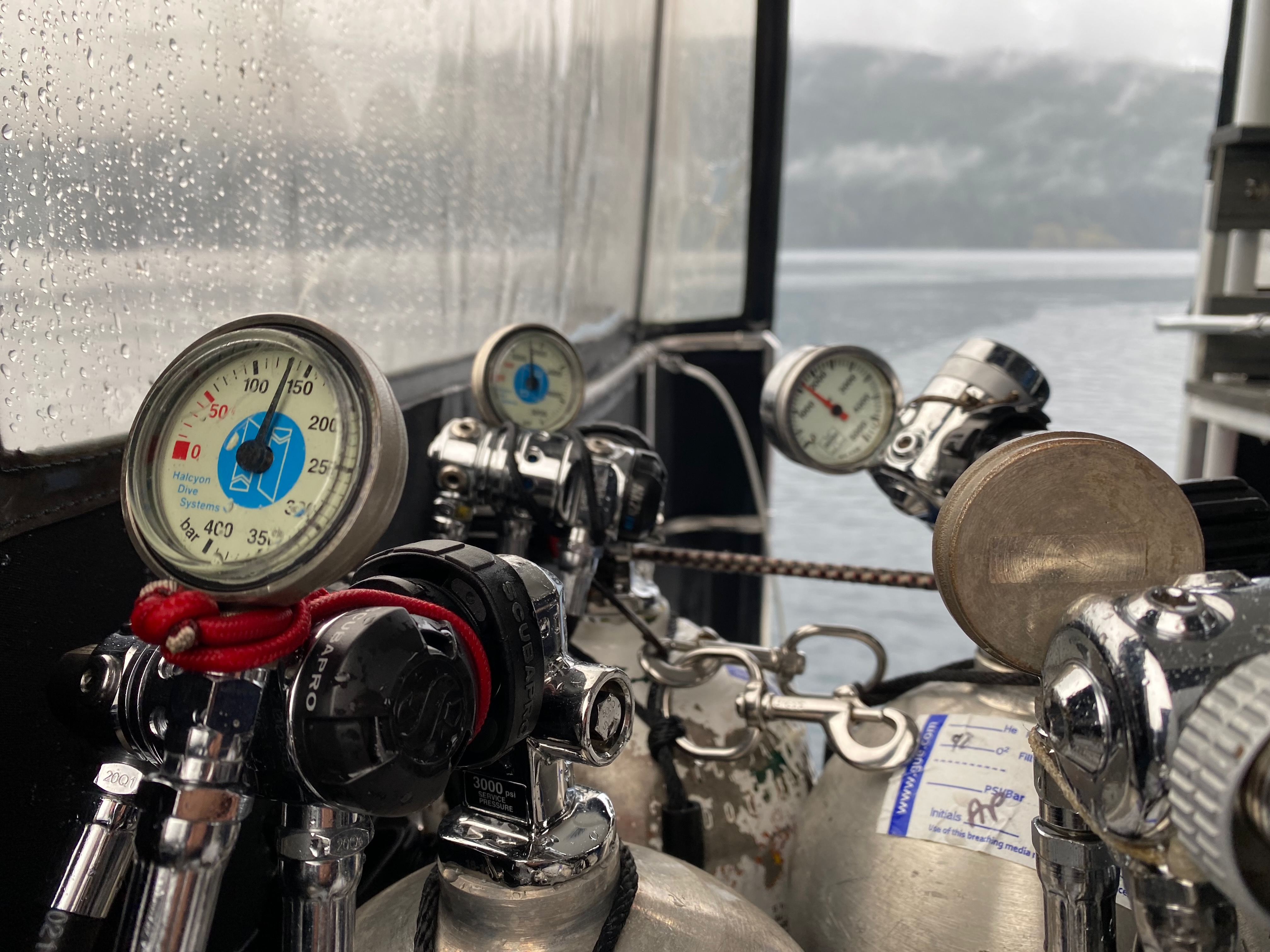
This leads us to the harder question, why the path was invisible to leadership in the first place. The answer from the literature is uncomfortable for those in leadership positions (or those outside the system): the silence around a worn path is not the failure of individual courage we usually take it for, but a structural feature of how organisations hold themselves together. Informal norms cannot be enforced formally — there is no clause in any manual that says "do not contradict the dive supervisor on the boat" — so they get enforced laterally, by colleagues. The diver who breaks the silence, Luhmann writes, "will not find any co-players for deviations." Practically, that means the team member who points out that the lead diver's gas plan is thin, or that the agreed exit plan won't work on this current, is not pushing back against one person. They are pulling at the thread of the team's shared self-presentation as a competent crew with a leader who knows what he's doing — and every other member is relying on that self-presentation too, because exposing it exposes them as well.
Consequently, the silence stiffens.
It looks like consensus from the outside and from the inside it feels like consensus, but in many cases no individual member privately agrees with the plan. Each is reading the others' silence as agreement and contributing their own silence to the pattern. This is what makes the worn path so persistent and so hard to surface: the people best placed to see it are the same people structurally discouraged from naming it, and the cost of naming it lands on them alone before the dive, while the cost of staying silent — if the dive goes bad — usually lands on whoever can most easily be made to carry it afterwards. The structure punishes the speaker before the event and the scapegoat after. Both routes individualise what is, in fact, a group phenomenon.

What can I do? (Not just we, I)
If it is possible to find the signal, and the social and moral courage exists to speak up, the concerns should be raised clearly, asking in a critical way, why it exists, and decide one of the follows paths deliberately:
formalise it,
resource the formal route so it works, or
accept it with eyes open.
These decisions are leadership and design problems, not behavioural ones. If your operation depends on a rule being broken while you have arranged not to officially know it, you have not removed the risk — only arranged for someone else, the scapegoat, to carry it.
The goal is not a diving community that breaks fewer rules, or more. It is one that can tell the difference between the worn path and the private shortcut before the outcome makes the different ‘obvious’ for us.
The takeaway question/reflection
Think of a rule you've broken, or watched broken, more than once. Was it a worn path your system relied on but never admitted to — or a private shortcut the team was carrying without knowing? And how would you describe each, when nothing goes wrong, and when something bad has happened?
Be better than yesterday.


