


You are entering water with known problems, and don't kid yourself that it's any different.
Diving is not mandatory. Everyone has the right to cancel a dive for any reason at any time. These are the phrases we like to repeat—as if they had protective powers in themselves. As if saying them out loud could change reality.
And then you stand on the boat or on the shore. The equipment is almost ready. Someone fastens a suit, someone checks the computer, someone adjusts the mask. Someone jokes, “Okay, let's get in, it's getting hot.”
And suddenly it turns out that mantras lose out to something much more human.
“Great dive site.”
“I don't know when I'll be back here.”
“Everyone is ready.”
"It'll be fine. “
”I've already paid.“
There is another force at work here that almost no one mentions: the need for consistency. Justification for the effort. Maintaining one's self-image. Since I sailed here, changed, set up my equipment, invested time, money, and energy—it has to make sense. And if it's going to make sense, it has to happen.
And this is where the trouble begins. Not underwater. On the surface.
Procedure as a promise
Recreational diving systems are built on a promise. Sometimes stated explicitly, sometimes implied: “we have a procedure for everything.” Loss or flooding of the mask, lack of gas, loss of a partner, emergency ascent, equipment failure – there is a method, an algorithm, a sequence of steps for every situation.
In the world of textbooks, it works perfectly. In a world where people are stable, attentive, rested, consistent, and stress is just a word in the chapter on “risk factors.” In a world where partners are partners, not two people in the same water. In a world where communication is clear, and the plan is shared. In a world where “procedure” means “practice.” In a world where nothing changes, and all fits the theory.
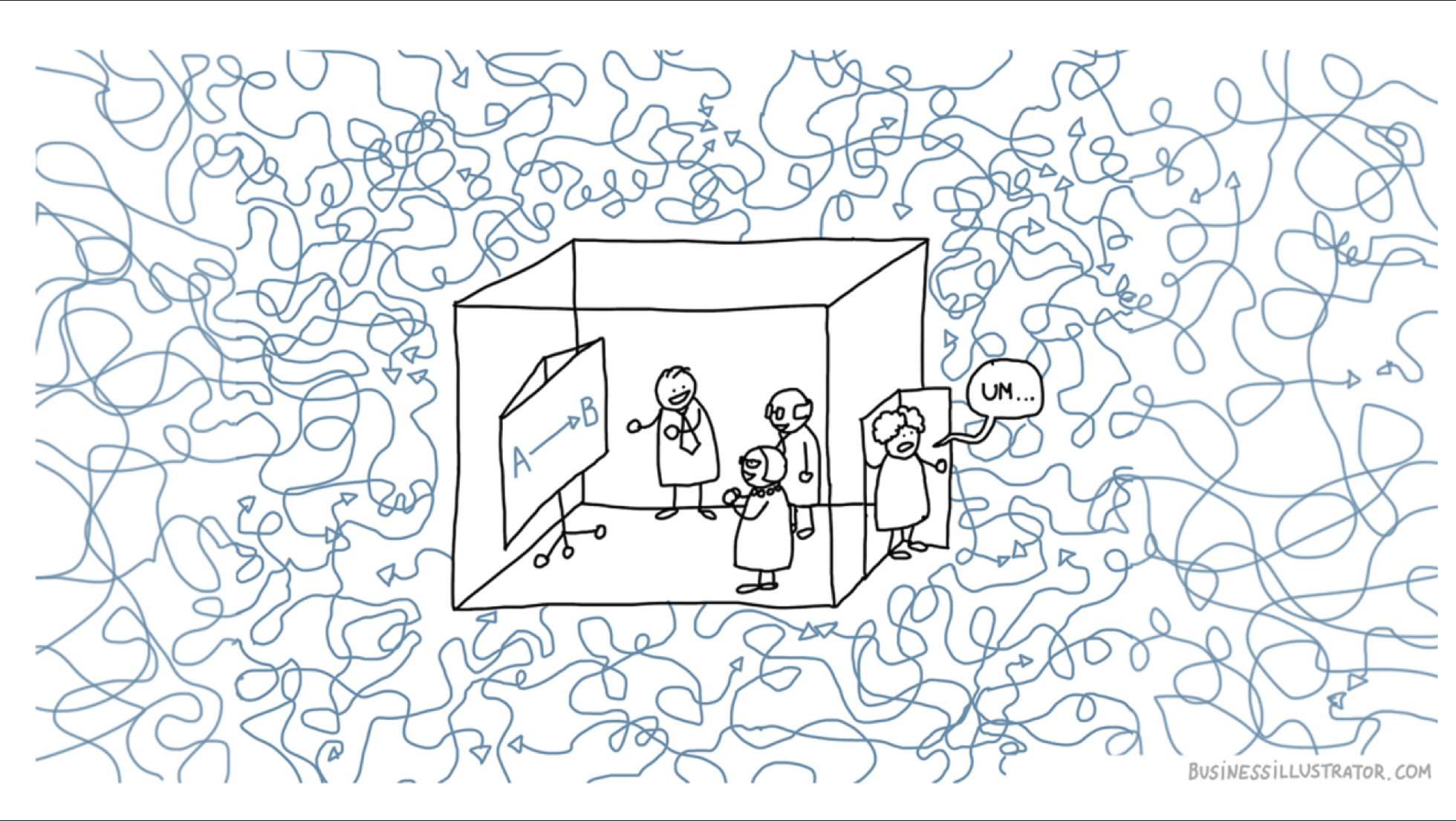
However, there is a condition that is rarely mentioned:
The procedure works if you follow everything down to the smallest detail.
And that is no longer a description of the world. This is a description of an idea.
Procedure as a system shield
Here we come to the part that can be uncomfortable: procedures are not just a safety tool. They are also a tool for defending the system.
After an incident, you can always open up and say:
“They didn't do a check before entering.”
“They didn't have the right experience.”
“They didn't maintain the team.”
“They didn't follow procedure.”
It acts as a moral fire extinguisher. It extinguishes the discomfort that arises after an accident. It allows you to close the topic in one sentence: “It's their fault.”
But this narrative does something else. It distracts us from the question that should really interest us:
Why did these people enter the water in a state where the safety margin was already compromised before they even submerged?
Because the real risk rarely starts with a spectacular failure. It starts with the dive beginning with a deficit – of attention, calm, communication, time, reserves.

A problem that doesn't look like a problem
Most divers recognise a problem when it takes the form of a malfunction: a leaking inflator, a leaky regulator, a broken fin strap, a lack of light. These are visible, named, and familiar things. There is a method for each of them. You can say to yourself, “I know how to do this, I know what to do.”
Except that most of the time, we don't enter the water with a malfunction.
We enter the water with little things that are not labelled “problems”:
fatigue that “can be endured,”
stress that “will somehow pass,”
rush, because “the boat is waiting,”
lack of briefing, because “we know what to do,”
an understatement of the plan, because “it's a simple dive,”
tension in the team, because “I don't feel like arguing,”
improvisation with equipment, because “it works, and better is the enemy of good,”
microscopic details that have become routine (e.g., gas analysis was performed, but the cylinder was not labelled).
Some of these problems are apparent, caused by our perception of pressure, assumptions about the expectations of others, and our perception of the situation. These are non-technical and invisible problems. And therefore more dangerous. Because they do not trigger an alarm. They trigger justification.
Erosion: risk as a process, not an event
Risk rarely appears suddenly. Risk in diving most often grows like erosion: slowly, layer by layer, particle by particle.
Few people wake up in the morning and think, “Today I'm going to make a stupid decision.”
It's more like this:
“Today isn't going perfectly, but it's no big deal.”
“It's just a simple dive.”
“We'll get in the water, it'll be better.”
“After all, that's what we always do.”
Accidents are rarely the result of one big mistake. They are usually the result of several small things coming together at one place and time. And the smaller the margin, the easier it is for a cascade to occur.
Drift and normalisation of deviation.
Drift is natural. It's a human trait. We save energy, simplify, optimise, and shorten paths. We want to achieve more, faster, and easier—often without feeling the cost at the moment we incur it. Drift does not have to result from ill will. It often results from good intentions: “I'll do it more efficiently,” “let's not overdo it,” “it's not the first time.”
Normalisation of deviance begins when drift becomes the social norm.
Not just “I do it,” but:
“That's how we do it here.”
"We always do it this way. “
”No one checks it.“
“Why all the fuss?”
Then the deviation ceases to be a deviation. It becomes a habit. And since it is a habit, it disappears from the radar. No one sees the problem anymore because the problem is transparent.
What does the normalisation of deviation look like in its pure form? A classic example is the Challenger space shuttle disaster: there were signals, there were concerns, and yet the system learned to live with the anomaly because “we're flying after all.” Rogers' report clearly states that decision-makers were not aware of the full history of problems with O-rings and that, despite earlier recommendations against launching in low temperatures, the pressure of the deadline won out over caution.

And that's exactly how cutting corners works in diving: not because the diver wants to die, but because the team and the environment have learned that deviations are normal. And normal things cease to be visible.
The difference between NASA and diving is that we don't have commission reports. We have commission reports.
That's why so many stories about incidents begin with the sentence:
“Everything was fine.”
Or: “Fine as always.”
Sometimes it sounds different: “Nothing was going right that day, but that was nothing unusual.”
Cut-off point: GO/NO-GO and “three failures”
The environment tries to counteract this by creating GO/NO-GO points. Simple rules: “I don't go in if...”, “I don't dive if...”. Sometimes it's a pressure limit, sometimes the number of new pieces of equipment, sometimes the conditions, sometimes the composition of the team.
The three failures method follows the same logic: if three problems arise before entering the water, NO GO.
The first problem means: you still have a buffer.
The second: your buffer is shrinking, and you start improvising.
The third: your reserve is running out.
Not because the third problem has to be “big.” Just because problems don't occur individually underwater, if you're already straining your margin on the surface, you may not have anything to pay for it underwater: calmness, attention, communication, time, or gas.
“We have a well-coordinated team; problems can be solved in the water.”
Yes. It is possible. And here's the catch.
This sentence sounds like competence, but it's an excuse. Solving problems underwater costs more. And the greater the friction at the start, the greater the chance that a minor issue will turn into a cascade.
A well-coordinated team is not there to save the dive.
A well-coordinated team is there to be able to say: STOP – and return home with everyone. Not physically, mentally, or emotionally damaged, but with new experiences to learn from.
Do we even have a problem?
That's the hardest question.
Because the biggest challenge is not how we deal with the problem. The biggest challenge is whether we see it at all. If behaviors are normalized, no one will consider them a deviation.
“Service? No, but it works.”
“Check? Everyone does it themselves.”
“Unmarked cylinder? I know what I have there.”
"Briefing? We know where we're going. “
”Roles? Why? Everyone knows what to do; no one asks anything."
These are not technical arguments. These are cultural arguments. Before we start creating methods for solving problems, we need to change the culture.
The culture we should strive for looks different:
“You're right, let's do it the right way.”
This is not a matter of politeness. It is a safety barrier.
Finally
Diving is not mandatory. But in practice, it often becomes a project to be delivered.
And projects are delivered at the expense of the margin.
If I am to leave you with one thought, it is this:
Don't ask, “Is it possible?”
Ask, “Do we still have room?”
Because if you go into the water with problems and then tell yourself that “it's okay,” you're not brave.
Only those who are blind to erosion, or thoughtless in consciously ignoring warning signs, there may not be any more.
How to start change when the problem is “off the radar”
You can't solve problems that aren't talked about. Nor can you solve problems that you cannot see. Non-technical problems—your state of mind, pressure, conflict, lack of a common plan—are just as real as equipment failures and should be treated with equal seriousness.
However, asking the question “What problems are you bringing with you?” before entering the water often doesn't work. It requires reflection, insight into oneself and others, awareness of what we are looking for, and psychological safety.
So start after diving.
Ask yourself two questions:
What would we improve?
If we were to do the same dive again, what would we do differently, better?
This is not a “nice discussion.” It is a way to make what was invisible today visible tomorrow. And this is the first step to not taking problems underwater.

Andrzej is a technical diving and closed-circuit diving instructor. He works as a safety and performance consultant in the diving industry. He is a psychologist by education, specialising in social psychology and safety psychology. His main interests in these fields are related to human performance in extreme environments and building high-performance teams. Andrzej completed postgraduate studies in underwater archaeology and gained experience as a diving safety officer in scientific projects - DSO. Since 2023, he has been a human factors instructor and heads the Polish branch of The Human Factors. www.book.podcisnieniem.com.pl


