

When you say it is easy to call a dive... If you've got POWER, it is easier
Every time someone shares a story about a dive that went wrong, or nearly did, the same advice comes back. Speak up. Anyone can call a dive at any time. Last week, Andrzej published a blog about quitting. His blog was as much about decision-making i.e., drawing lines in the sand before you get in the water, as it was about psychological safety and the ability to speak up. Unsurprisingly, there was an almost unanimous response in the thread that you should call the dive when you're not happy, and in fact, it isn't that difficult, because I did it here...
However, behavioural science and psychology says a different thing because the comments about speaking up and calling the dive skip the reasons people stay quiet in the first place.
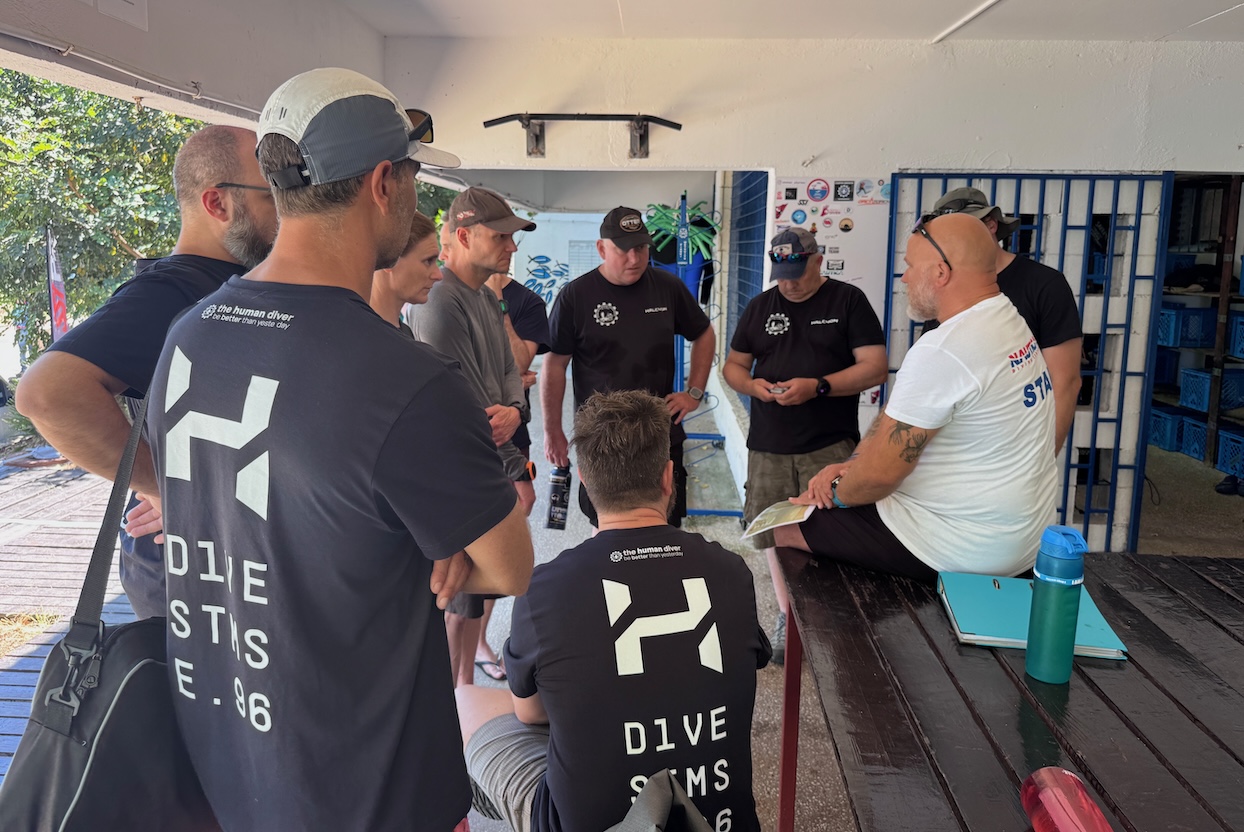
Staying quiet is rarely about courage, and it is almost never about not knowing what to say - it comes down to cost, a social cost. Every time a diver or dive professional thinks about raising a concern, they run a quick sum in their head without noticing: what does it cost me to speak, and what does it cost me to say nothing? The two costs are paid at different moments in time.
Speaking up carries an immediate social price.
The price of staying quiet comes later, if it comes at all.
We are wired to pay the smaller cost that sits right in front of us, and there is nothing weak in that. It is how people are built. This has been shown across multiple studies across multiple domains. Why would divers be any different?
This is where power comes in, and power on a dive is not what most of us picture. It has little to do with rank or a job title, and everything to do with how much you have to lose. If you dive every weekend, calling a dive costs you almost nothing, because there is another one next week. If you own the boat, run the shop, or have a couple of thousand dives behind you, you can say the awkward thing and carry very little risk, because your standing carries it for you. The people with the most power are usually the ones who need it least.
Now look at the other end.
The diver who has just paid a large chunk of money for a course has a lot to lose, and knows it (they've also sacrificed time they won't get back).
The guest who was invited on the exploration trip wants to be invited on the next one. The newer diver does not want to be the one who could not cope, or who ruined everyone's day.
The dive professional who sees something wrong with their operation, but their manager has told them what needs to be done.
Those in the industry who see gaps in the application of the safety science research, but can't say because of the closed network that exists.
These are the divers and professionals most likely to spot that something is off, because they are outside the norm and they haven't been absorbed into the culture - like a fish who doesn't know he's in water.
They are also the ones least able to act on it. Often the diver or professional who sees the problem most clearly has the least room to say so. They also might not know the significance of what is going on around them. How do you call something out that you don't know is wrong. They are incompetent and unaware. That isn't meant to be derogative, it is a fact. They don't know (incompetent) and they don't know they don't known (unaware).

Another group that we need to consider is those who have nearly lost something. They’ve had an adverse event – a rapid ascent, an out-of-gas situation, an entanglement, or a teammate/student has died or been seriously injured. They KNOW what can be lost, and don’t want to potentially lose it again. That loss might be confidence, control, money, equipment, peer standing...
We read this by the ‘labels’ we wear – the social markers that identify people and roles, and we read them fast: instructor, divemaster, trimix, cave, CCR, the dive count, the person who knows the site, the shop logo on the drysuit. Megan Reitz and John Higgins, whose research sits behind this blog and the linked resource, put it plainly. These labels decide who speaks and who gets heard before anyone has opened their mouth. The senior label quiets the junior one, and no one has to mean for it to happen.
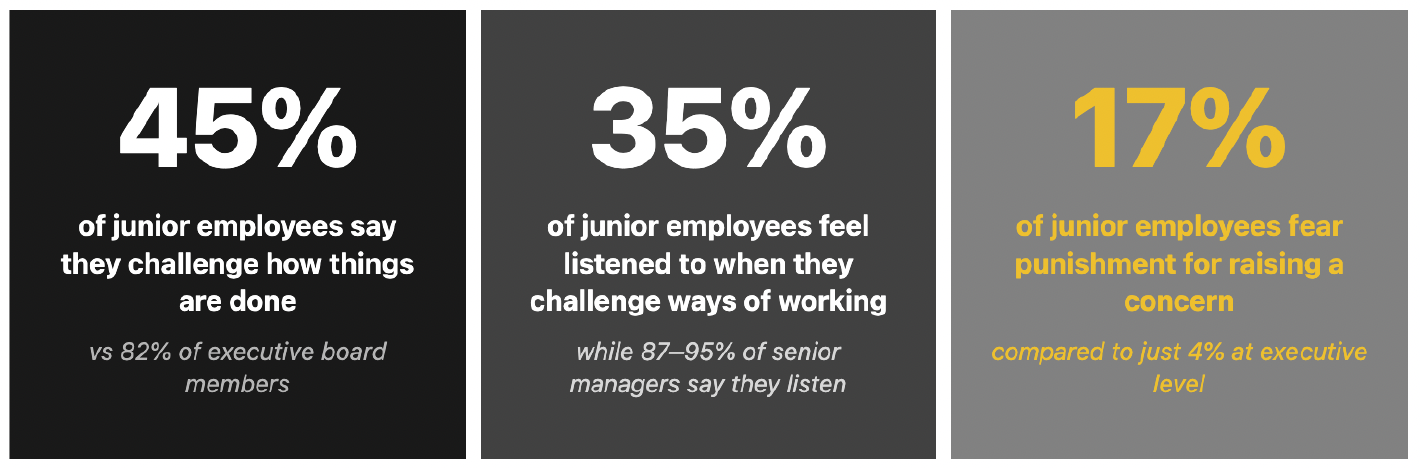
The numbers back this up. Across more than three thousand people, only about a third of junior staff felt they were really listened to when they challenged how things were done, while nearly all the senior people believed they listened well. Both sides were telling the truth as they saw it, but only one of them was working with the full picture. Reitz calls this the optimism bubble. The more senior you get, the more confident you feel that people are being open with you, and the harder it becomes to see the gap between what you believe and what your team actually feels. I know the Human Diver instructors don't tell me everything they want, so I work as hard as I can to expose those things, because a colleague of mine (Clive Lloyd) said, "You can't fix a secret."
Labels not only quiet the people below, they can trap the people above as well:
The instructor who is unsure about a piece of kit they have not used in a year may say nothing, because admitting it in front of students feels like breaking the role.
The dive leader who quietly thinks the conditions are marginal might push on anyway, because backing out would dent their standing.
Both ends of the hierarchy are stuck for the same reason, and the team loses out whichever way it falls. So if telling people to be braver does not work, what does? This is a design problem, not a behaviour problem, and it belongs to whoever carries the senior label into the water or the task. The job is to change the conditions so that speaking costs less than it does now.
It starts with how you react when someone does speak. When a diver calls a dive or questions the plan, what the rest of the team sees you do teaches them more than any briefing line ever will. When a team member challenges the status quo, ask them to dig deeper and provide their rationale. In each case, curiosity tells them that speaking is welcome here; a flicker of irritation tells them to keep the next concern to themselves. So treat a called dive as a sign of good judgement, whether or not you agree with the diver's rationale, because the moment you treat it as a problem to manage, you have shown everyone watching that the door is only open in theory.
It also means letting people see your own doubts, and giving near-misses somewhere to go. The divers you spend the most time with should hear about the times you were wrong and the dives that unsettled you, not only the success stories. Most dives that nearly ended badly leave no trace, because there was no safe, blame-free way to talk them through while the memory was still fresh, and nowhere to send what came out of it. Put that right and these dives stop being invisible. None of it needs an agency or a rule change, only a leader who treats those conditions as part of the job. Last week's blog brings this home - the difference between talking about these concepts, and embedding them into daily practice can have profound consequences.
The goal should never be a diving community where more dives get called. It is a community where speaking up, whether calling a dive or raising a worry about the plan, is the easiest and most normal thing to do. That is utopia or nirvana and will never be reached, but we can make small steps on that journey every dive we make. That means that the shift does not come from people getting braver, it comes from the people with the most power choosing to spend some of it on others, so that speaking gets cheaper for everyone else.
We like to leave you with questions to consider and ponder...
The real question isn't whether your team can speak up. I believe you think they would. The real question is whether, if one of them had a real worry about today's dive, they would tell you on the boat, in the car park, or never, and whether you are even the right person to answer that on their behalf. Nic's powerful blog shows that it isn't always as clear as we think it is, and we need to look inwards on a regular basis.
If you want to go deeper, the full resource this is drawn from, Speaking Truth to Power, is available as a free PDF from the resources community along with whole bunch of other free resources you can download and share with your own community.


