
Bad Things Happen to 'Bad' People: Meet the Bogeyman.
 by: Gareth LockPublished on: 24/09/2026
Why do we look for what a diver did wrong? Research into the 'Bogeyman' shows how the belief that 'bad things happen to bad people' keeps compliance looking safe while the adaptations and local ingenuity that make diving work stay hidden - a secret.
What Good Can Look Like
by: Gareth LockPublished on: 22/09/2026Criticising safety slogans is easy. This is the harder half: who is harmed when diving goes wrong, what they need, whose duty it is to provide it, and the five competencies I would put on the graphic instead of 'safety first'.
‘Safety First’ Slogans do not create safety, capacity or competencies do
by: Gareth LockPublished on: 21/09/2026Why 'safety first' cannot hold in an adventure sport, and why slogans and commitment statements hand divers and instructors nothing they did not already have. Drift, trade-offs and safety theatre in diving, using safety science rather than opinion.
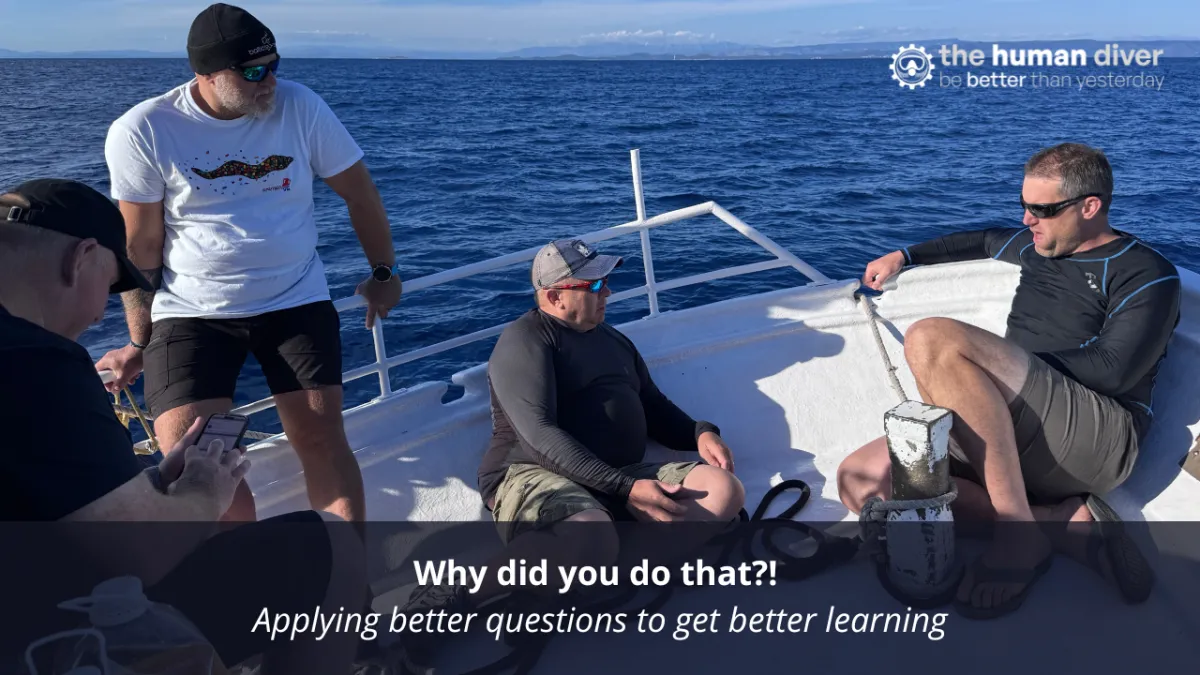
Why did you do that?! Applying better questions to get better learning
by: Gareth LockPublished on: 18/09/2026A healthcare safety investigator built 25 questions to understand why an action made sense at the time. Gareth Lock looks at what the Local Rationality Question tool offers dive debriefs, near-miss reviews and LFEO investigations.
The humaN DIVER
Be better than yesterday.
Human factors, non-technical skills and learning from emergent outcomes for the divers who refuse the bad-apple story.
programmes
The humaN DIVER
© 2026 The Human Diver. All rights reserved.
Built for the 1%
Contact Menu
© 2026 The Human Diver